Einkorn Sourdough Bread
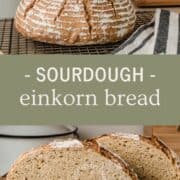
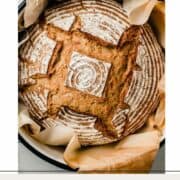
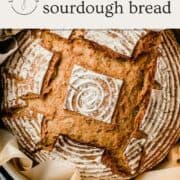
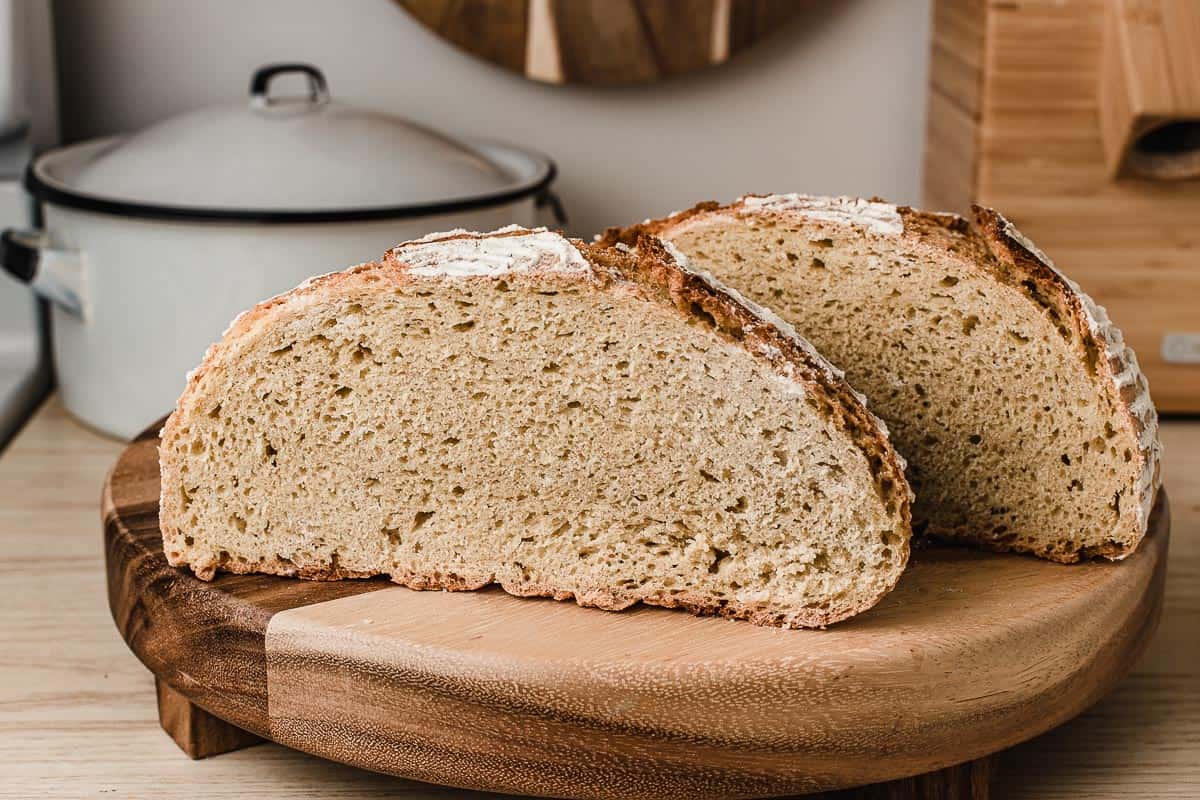
This no-knead einkorn sourdough bread recipe is as easy as it is delicious! With only four ingredients— all-purpose einkorn flour, salt, water, and sourdough starter— you'll have a healthy, naturally leavened bread in no time.
This simple recipe allows you to mix the dough and bake the bread all on the same day, making it perfect for busy schedules. The result is a wholesome, flavorful loaf with the natural sweetness of einkorn flour and a light sourdough tang.
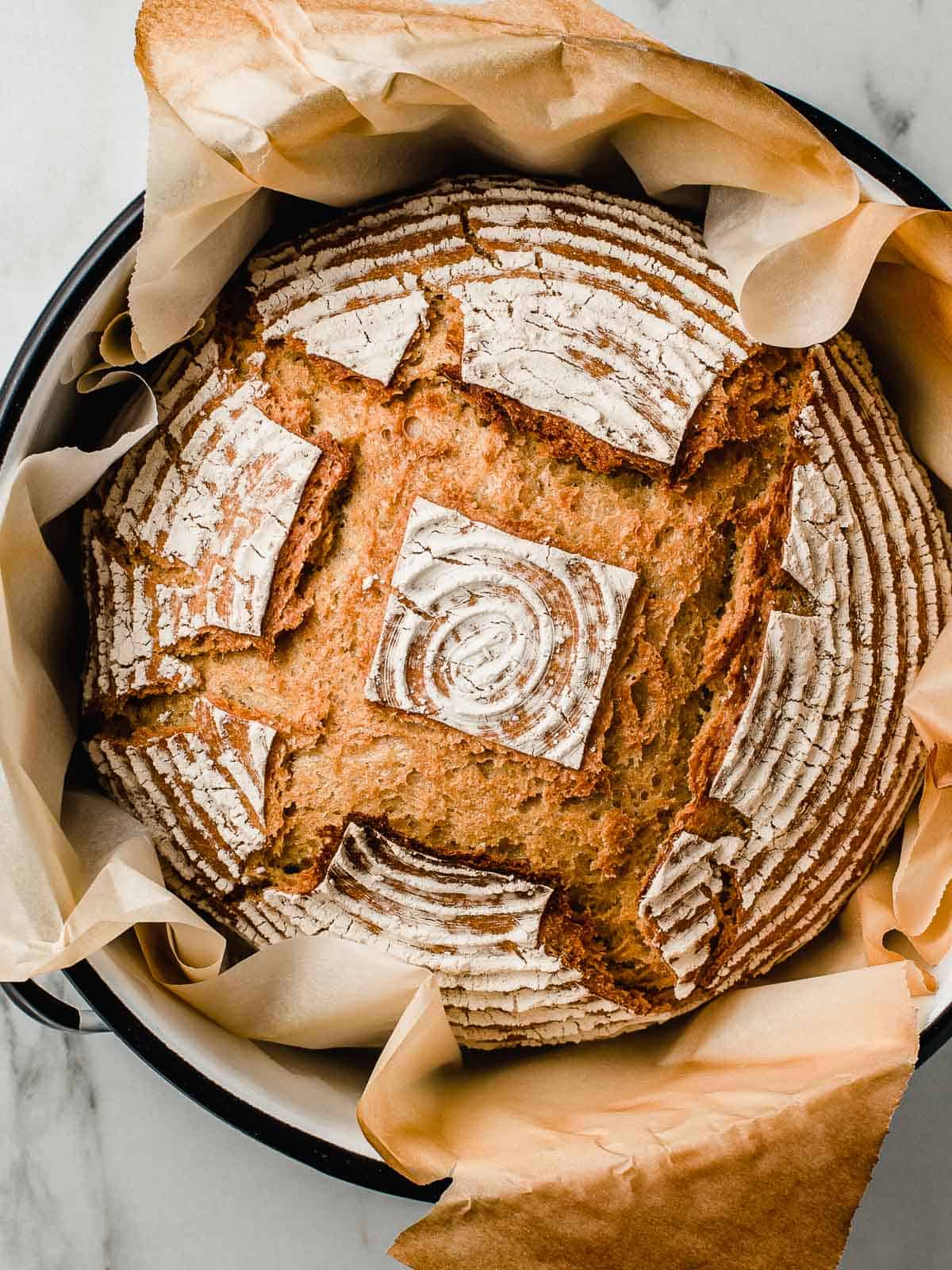
If you’re new to baking with einkorn flour, get ready for a fantastic experience! This fail-proof einkorn sourdough bread recipe is designed to bring success with every bake.
Follow each step closely, and you’ll achieve a light, airy loaf with plenty of oven spring. The crumb turns out even and tender—ideal for making sandwiches, French toast, or dipping into a cozy bowl of soup.
Einkorn wheat adds a subtle sweetness, making it our top choice for sourdough!
What is einkorn?
Einkorn, the oldest known type of wheat and often labeled as an ancient grain, is unique in its natural purity—it has never been hybridized. Organically grown, einkorn is free from glyphosate and bleach, offering a clean, wholesome option for baking.
Its gluten structure, lacking the y-gliadin protein group found in modern wheat, makes einkorn easier to digest. It’s also packed with more nutrients, including carotenoids, B vitamins, and essential minerals, delivering bread that’s not only delicious and richly colored but also nutrient-dense.
Ingredients & Equipment Needed
Just like our other sourdough bread recipes, the ingredients are simple.
- sourdough starter
- all-purpose einkorn flour (affiliate link)
- salt
- water
Equipment needed
(Amazon affiliate links) - Check out my favorite kitchen essentials.
- bakers scale
- dough whisk
- bench scraper
- bowl scraper
- mixing bowls
- Dutch oven
- parchment paper
- cooling rack
- lame razor
- banneton
- bread knife
Sample baking schedule
The night before
- 7 PM Feed your sourdough starter so that it is bubbly and active in the morning.
The next morning
- 7 AM: Mix the dough ingredients and let rest for one hour.
- 8 AM: Fold the dough, cover, and let rest for 15 minutes.
- 8:15 AM: Fold the dough, cover, and let rest for 3 hours.
- 11:30 AM: Shape the dough and place it in a floured banneton. Set a timer for 30 minutes to preheat the oven.
- 12 PM: Place the Dutch oven into the oven and preheat it to 500°F (260°C) for 1 hour.
- 1 PM: Turn the dough onto a piece of parchment paper and score the top. Transfer to the Dutch oven, cover, and bake for 40 minutes. Let cool for 2 hours.
This is the schedule I follow to bake Einkorn sourdough bread. My kitchen stays at 68°F (20°C). The dough will rise faster if your kitchen is warmer, so you may need less time. If it's cooler, allow for more time. Adjust as needed!
How to make Einkorn Sourdough Bread
Step 1
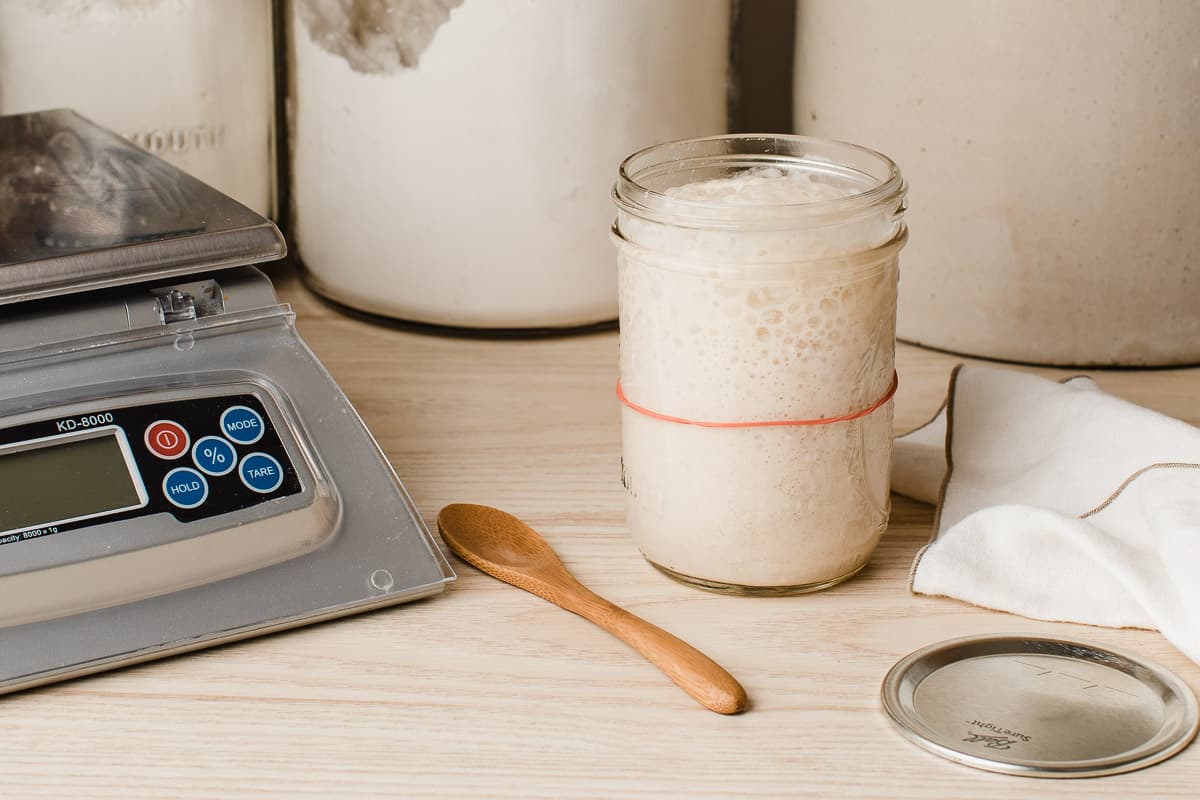
To prepare your sourdough starter for this bread, mix it the night before you want to make your dough. Use a ratio of 1 part starter to 4 parts flour and water to encourage a slow rise overnight.
In a clean jar, combine:
- 25g sourdough starter
- 100g water
- 100g all-purpose einkorn flour
Stir well, cover lightly, and let it rise at room temperature overnight.
Step 2
In a large mixing bowl, combine the following ingredients:
- 200g of active sourdough starter
- 300g of water
- 10g of sea salt
- 540g of all-purpose einkorn flour
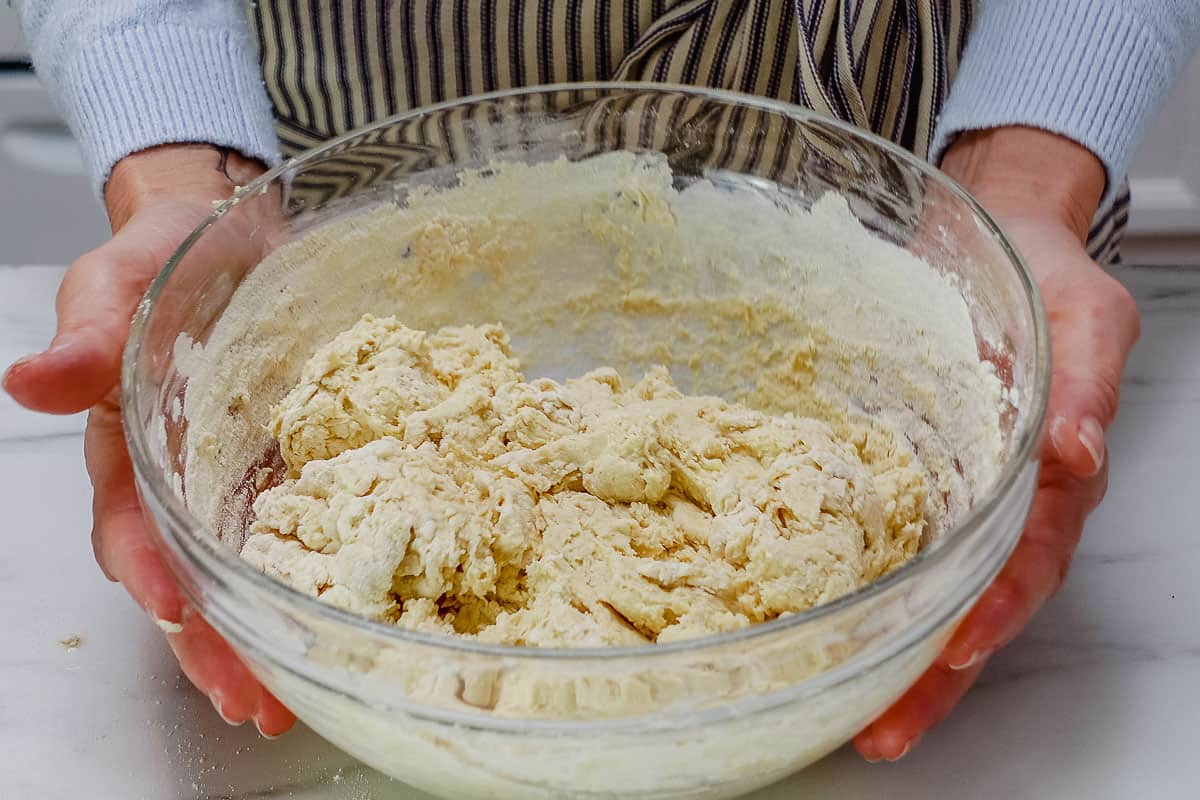
Mix the ingredients with a stiff spatula or dough whisk until they come together. The dough will look dry and "shaggy" at this stage, which is normal. Cover the bowl and let the dough rest for 1 hour on the counter.

Pro Sourdough Tip
If you already have a sourdough starter made with a different variety of wheat, it can be used to make this recipe.

Step 3
Once you've mixed the dough, use a bowl scraper to turn it out onto a floured work surface. Lightly flour the top of the dough, then gently press it out with your fingers to form a rectangular shape. Be careful not to deflate the dough too much as you shape it.
Starting with one side of the dough, lift it and fold it toward the center of the dough.
If the dough is sticking to the work surface, use the bench scraper to help it release.

Step 3 cont'd
After pressing out the dough into a rectangle, repeat the folding process on all four sides, bringing each side toward the center. Once folded, place the dough back into the bowl, cover it, and let it rest for 15 minutes. After the rest period, repeat the folding process one more time to strengthen the dough.
Step 4
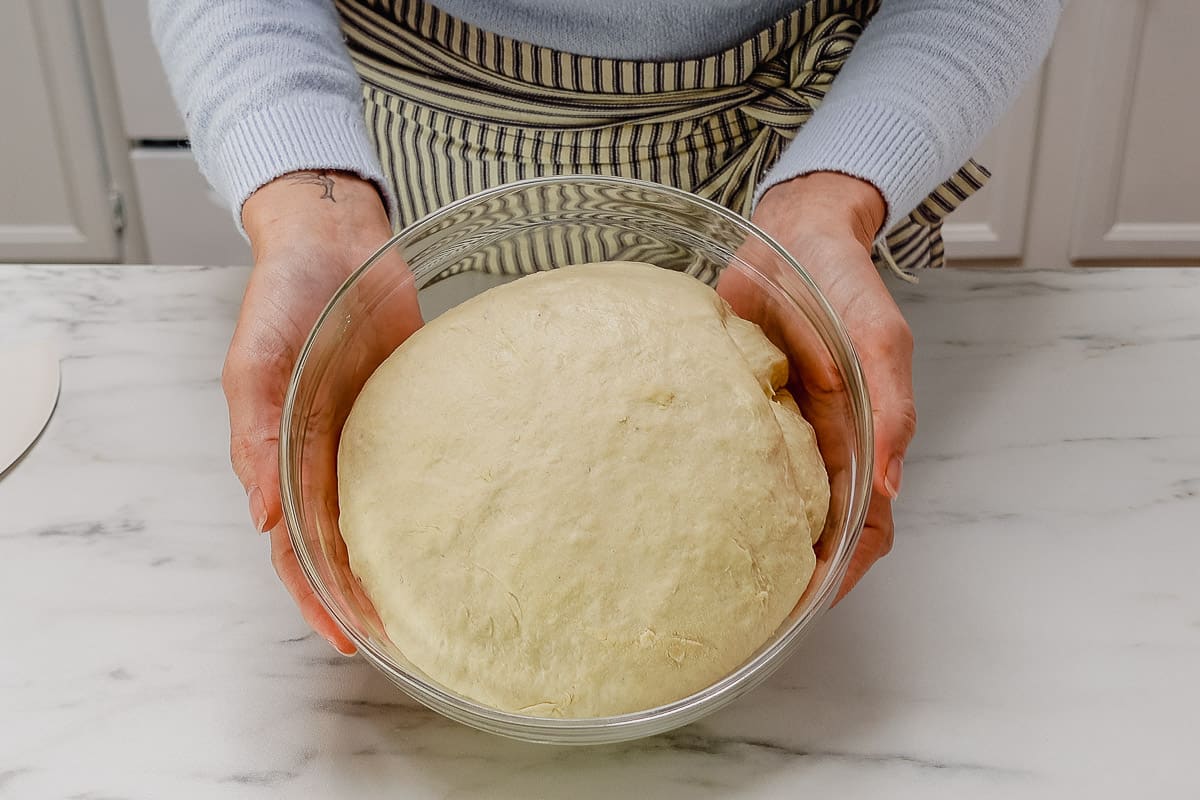
Cover the dough and let it rest at room temperature for 3-4 hours, or until it has risen by about 20-30%.
Step 5
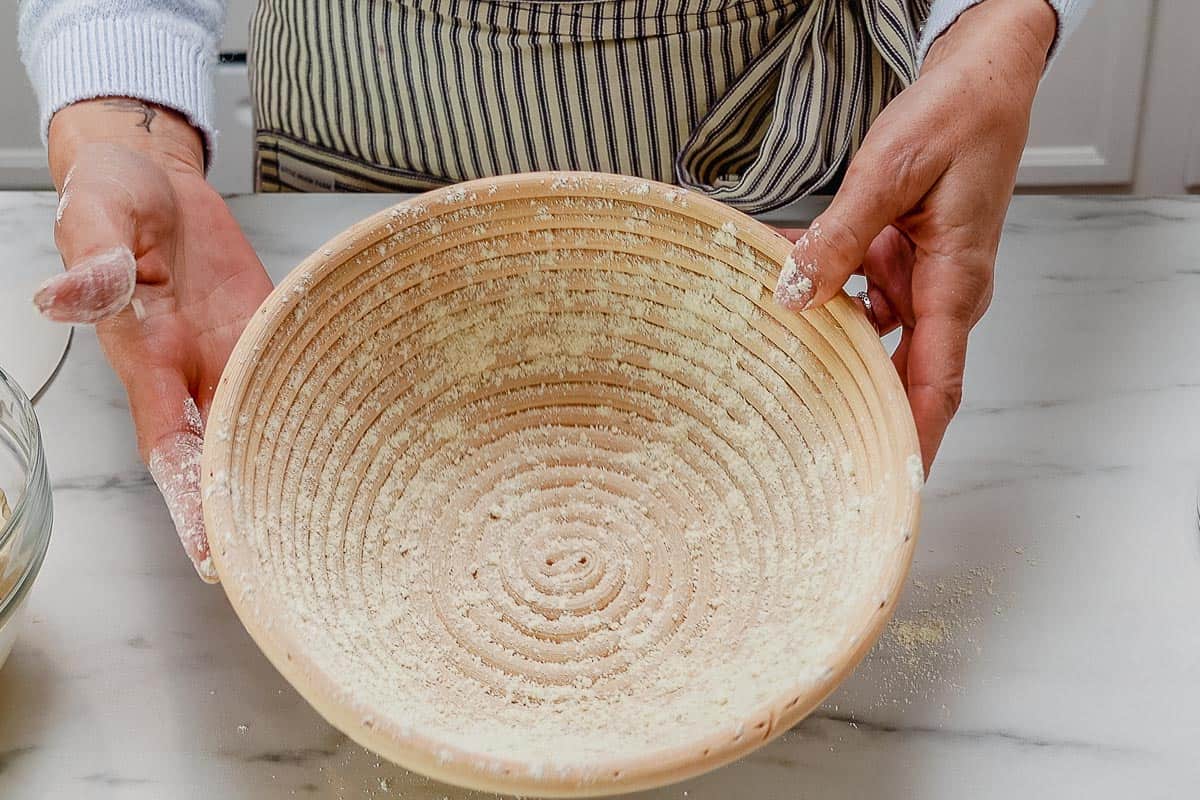
Generously flour a banneton or line it with a clean tea towel.

Step 6
Turn the dough onto a floured surface, but this time, do not flour the top.

Step 7
Pull the sides of the dough into the center.
Pro Sourdough Tip
Einkorn flour absorbs water differently than modern wheat, making the dough much stickier. Don’t hesitate to sprinkle in extra flour as you fold and shape it. A bench scraper will be your best friend when handling the dough, so be sure to keep one nearby!
Step 8
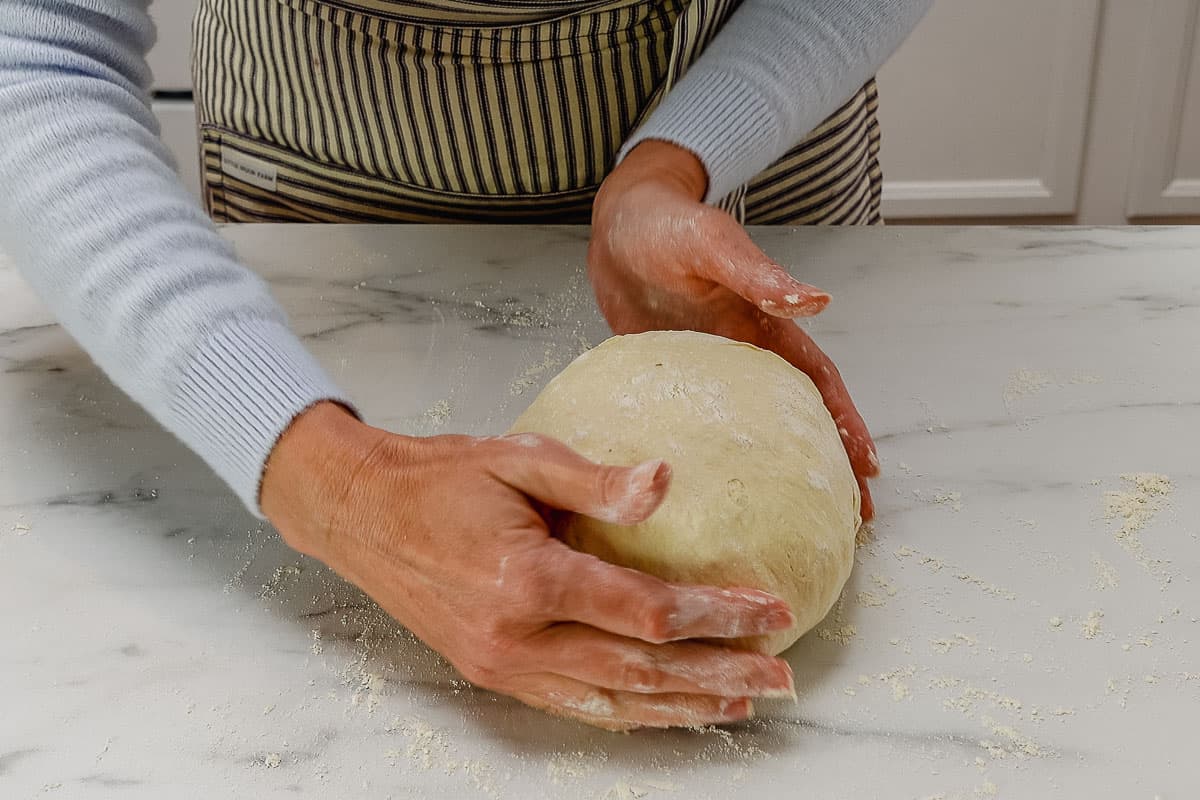
Use the bench scraper to lift and flip the dough so the seam side faces down. Then, use your hands to cup the dough and gently turn it in a circular motion on the work surface.
If your hands start to stick to the dough, you can lightly flour them but try to avoid using too much flour to maintain the dough's texture. This process will help shape the dough into a smooth ball.
Step 9
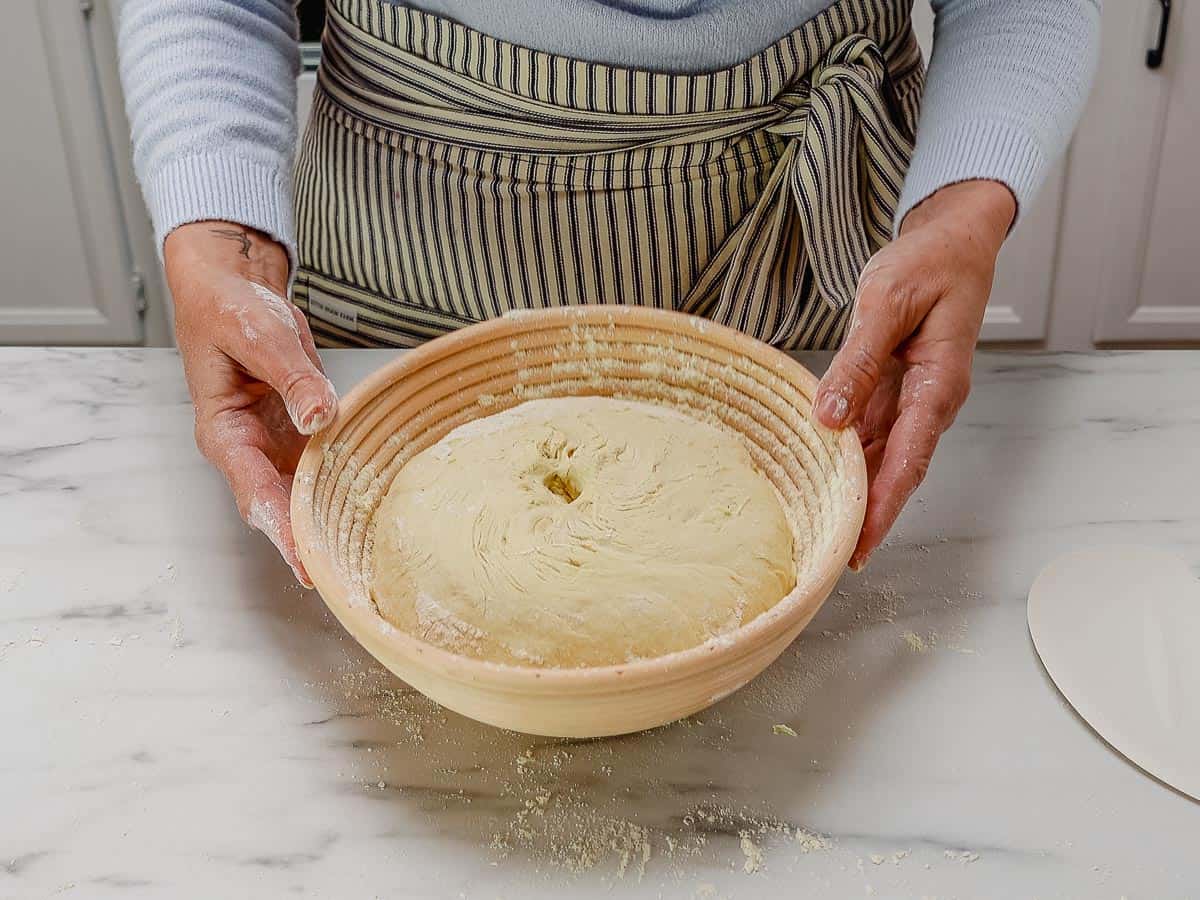
Use the bench scraper to pick up the dough and turn it over into the banneton, with the seam-side facing up.
Cover the bowl and set a timer for 30 minutes. (This is when you'll preheat your oven.)
Allow the dough to rest at room temperature during the second rise.
Step 10
The second rise will take about 90 minutes from start to finish, with the oven preheating in the final hour.
After the dough has rested for 30 minutes in the banneton, place your Dutch oven on the second-to-lowest rack of the oven.
Allow the oven to preheat at 500°F(260°C) for 1 hour.
NOTE: When it is ready to bake, the dough will have risen about 1 to 2 inches in the banneton.
Step 11
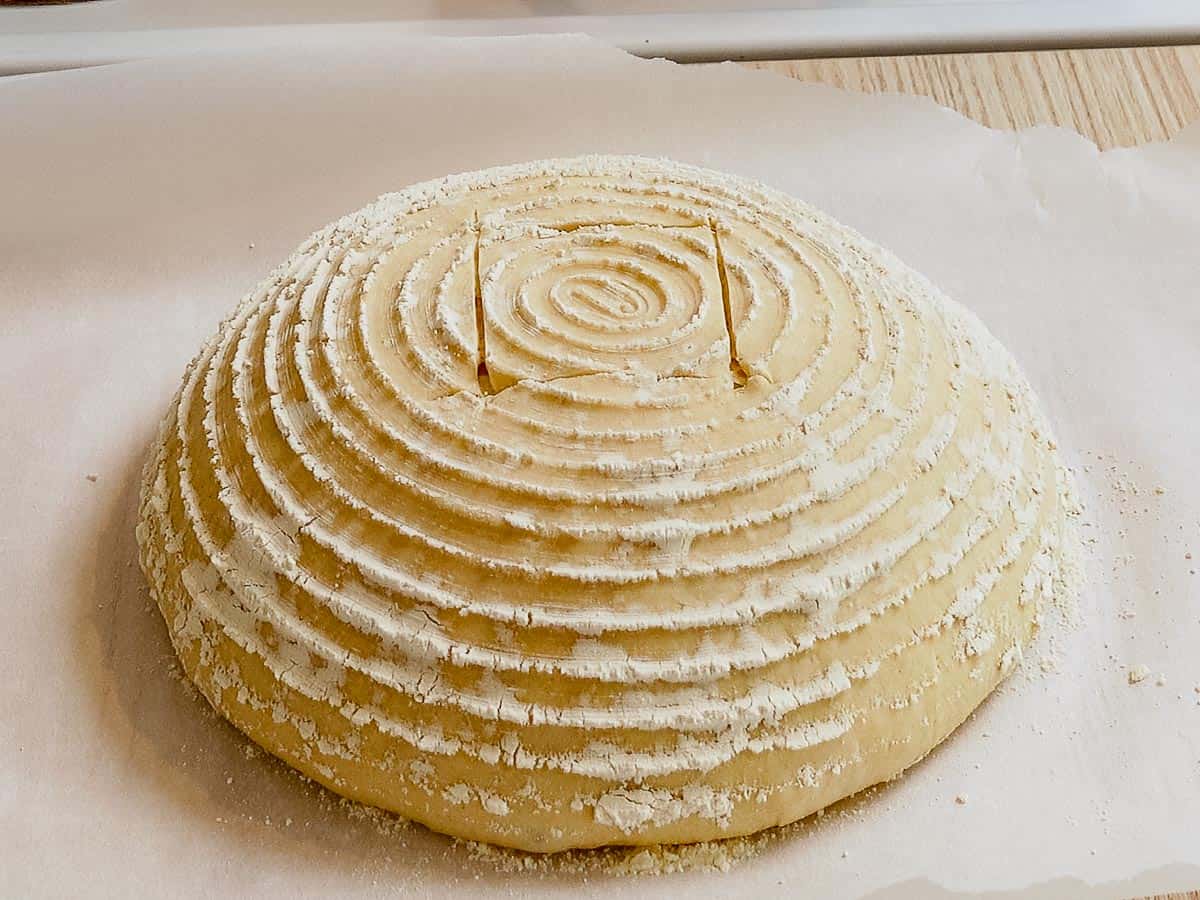
Turn the dough out onto a piece of parchment paper and use a lame or sharp razor to score the top of the dough.
Use the parchment paper as a sling to lift the dough and transfer it to the Dutch oven. Once the dough is in the pot, place the lid on top.
Step 12
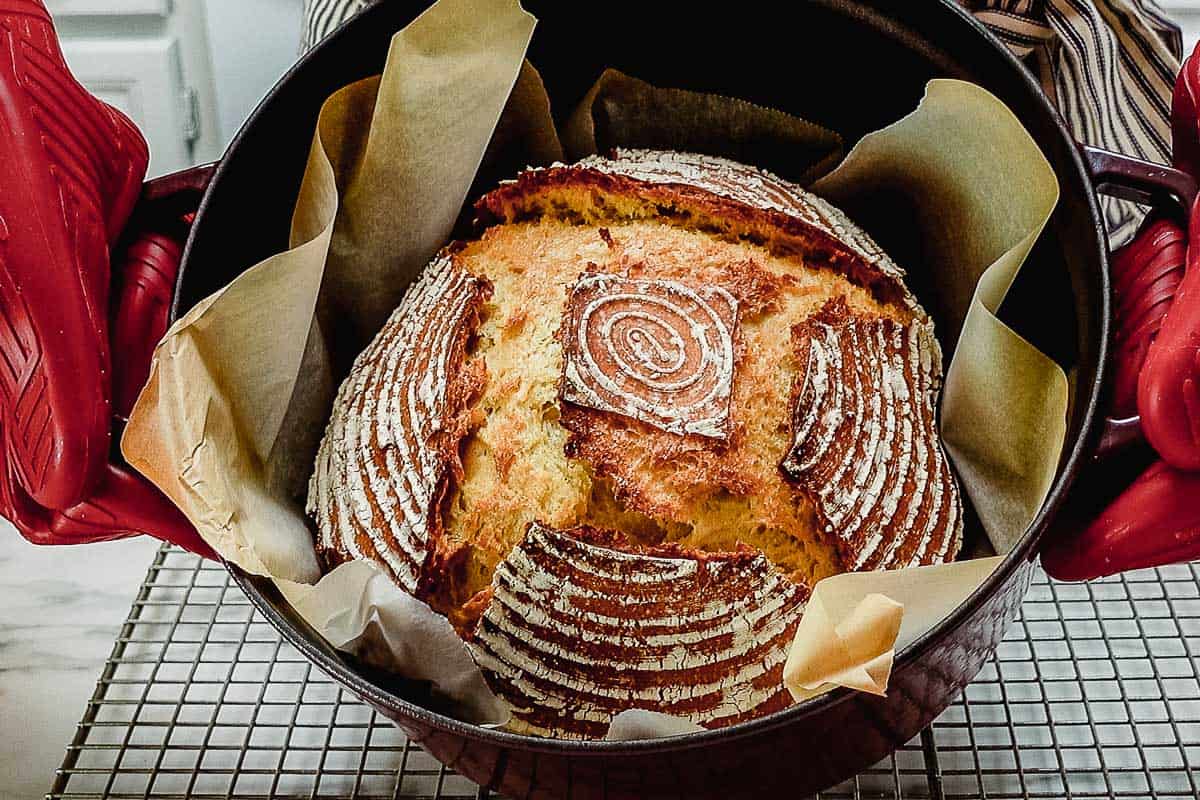
Next, turn the oven temperature down to 450°F (232°C) and bake the bread for 40 minutes.
After 40 minutes, carefully remove the lid and check if the crust has reached your desired darkness. You can bake the uncovered bread for 5-10 minutes if you prefer a darker crust.
Pro Sourdough Tip
Due to einkorn's weak gluten structure, it's important to score the top of the dough with a shallow cut, making sure not to cut deeper than ¼ inch. Avoid scoring the sides of the dough to help maintain its shape as it bakes.
Step 13
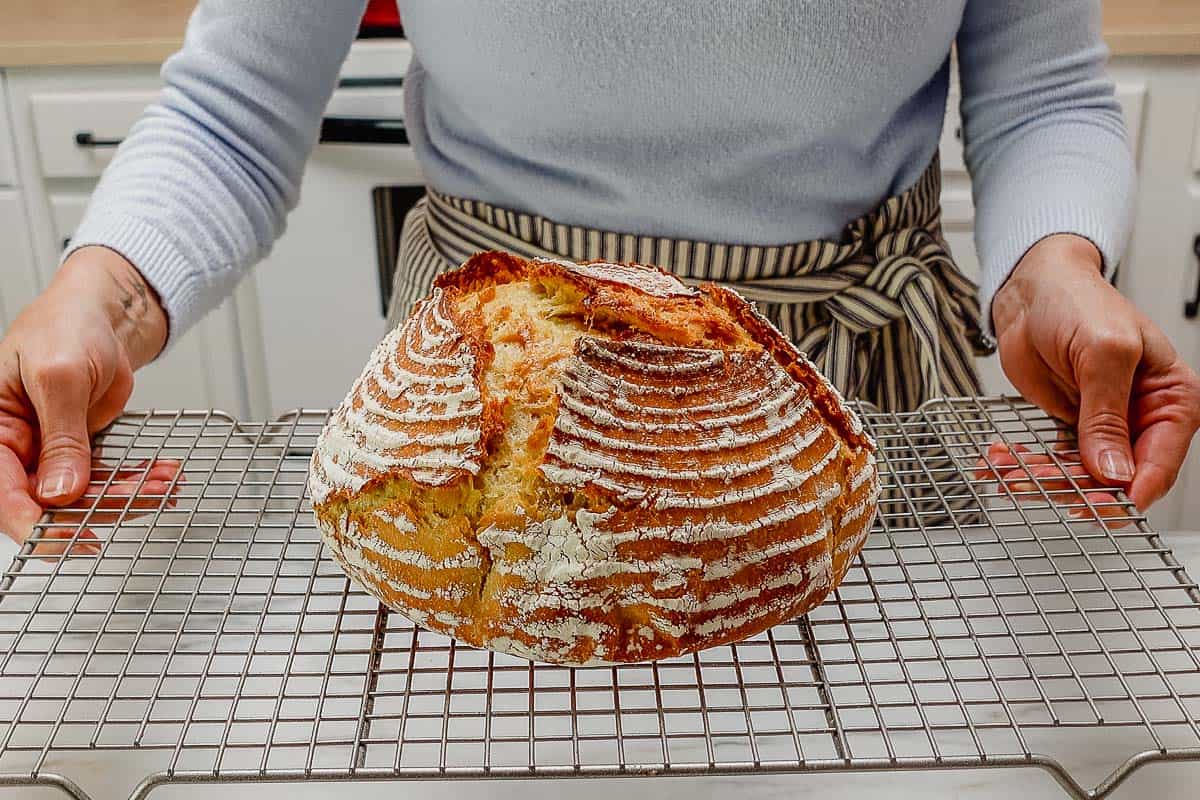
Once the loaf is baked, transfer it to a cooling rack and let it rest for 2 hours before slicing. Slicing the bread while it's still hot can result in a "gummy or sticky" texture in the crumb due to the heat and moisture. Patience is key for the best texture!
How to Store
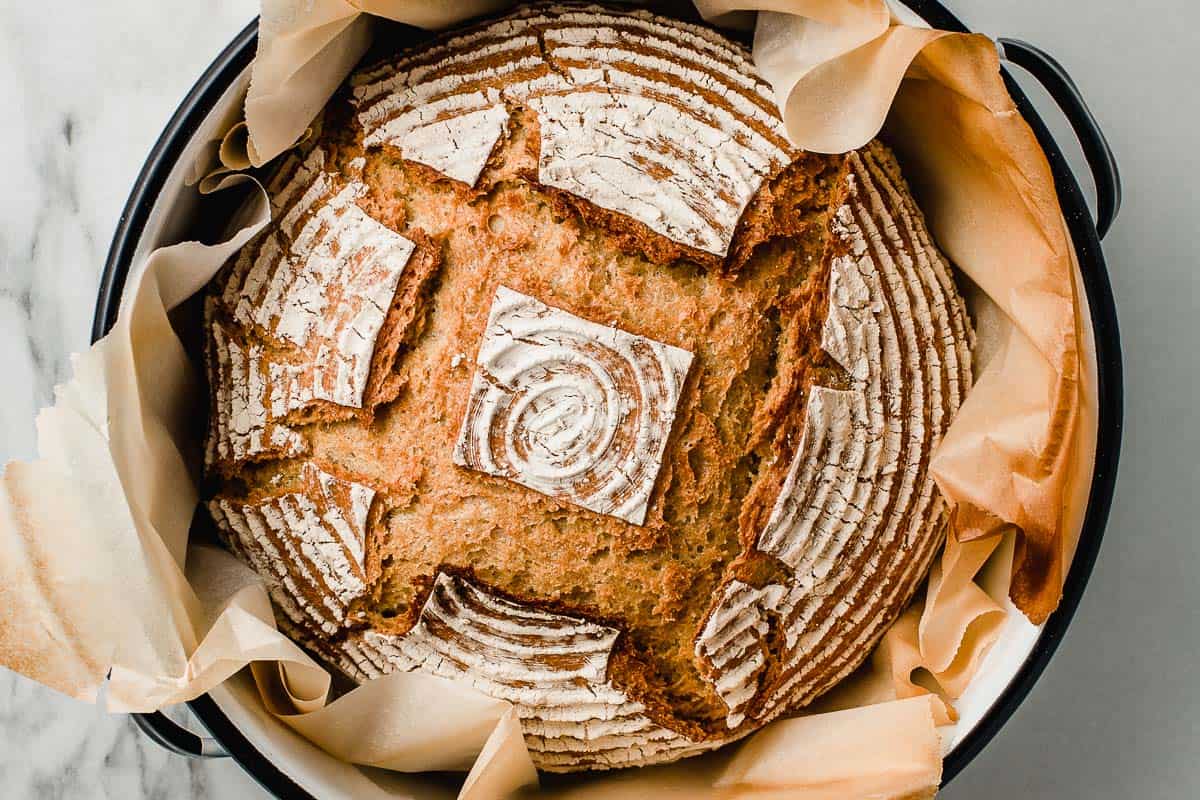
To store your einkorn sourdough bread, keep it at room temperature for up to 2 days. Wrap it in a beeswax wrap, place it in a bread box, use a bread bag, or set it cut-side down on a cutting board covered with a cake stand cover.
For long-term storage, slice the bread and freeze it in a freezer-safe container for up to 1 month. Stasher bags are a great option for freezing sourdough bread slices!


Subscribe to our newsletter and we'll send you more fresh recipes, valuable troubleshooting advice, useful tips, and other information we believe will be helpful to you!


Einkorn Sourdough Bread
INGREDIENTS
INGREDIENTS TO MAKE 1 CUP (200 G) OF ACTIVE SOURDOUGH STARTER
- 1 ½ tablespoons (25 g) sourdough starter
- ¾ cup + 1 tablespoon (100 g) all-purpose einkorn flour
- 7 tablespoons (100 g) water
Dough Ingredients
- 1 cup (200 g) active sourdough starter
- 1 ¼ cup (300 g) water
- 4 ⅕ cups (540 g) all-purpose einkorn flour
- 2 teaspoons (10 g) sea salt
INSTRUCTIONS
Feed your sourdough starter
- 12 hours before you plan to mix the dough, add the ingredients to make 1 cup (200 g) of active sourdough starter to a clean jar: 25g sourdough starter, 100g einkorn all-purpose flour and 100g water. Stir until combined, loosely cover the jar and let the starter rise at room temperature. (The ingredients will create a total of 225 g active starter but, because some of it will stick to the sides of the jar during the transfer, we are making a little more than needed.) The sourdough starter is ready to use when it has doubled in size and there are plenty of bubbles on the surface and sides of the jar.
Make the dough
- Mix the dough ingredients. Add the 200g active sourdough starter, 540g all-purpose einkorn flour, 300g water and 10g salt to a large mixing bowl. Use a dough whisk or an off-set spatula to mix the ingredients together until there are no dry bits left in the bowl. Cover the bowl and let the dough rest for 1 hour.
- Fold the dough. Use a bowl scraper to turn the dough out onto a floured work surface. Flour the top of the dough and use your fingers to gently press it out into a rectangular shape.Starting with one side of the dough, lift it up and fold it toward the center of the dough. If the dough is sticking to the work surface, use the bench scraper to help it release. Repeat this on all four sides of the dough and place the dough back into the bowl. Cover the bowl and let the dough rest for 15 minutes. Repeat the folding process one more time.
- First rise. Place the dough back into the bowl and cover. Allow the dough to rise at room temperature for 3-4 hours or until it has risen by 20-30%.
- Shape the dough. Turn the dough out onto a floured surface. Pull the sides of the dough into the middle, working all the way around the outside and then flip the dough over. Use your hands to cup the dough around the bottom near the work surface and turn it so that the dough forms a taut ball.
- Second rise. Place the dough, seam-side up in to a floured banneton or one lined with a clean tea towel. Cover the dough and allow to rise at room temperature. Set a timer for 30 minutes.When the timer goes off, turn on the oven to preheat to 500°F (260 °C) with the dutch oven inside. Set a timer for 1 hour and allow the oven to preheat for the final hour of the second rise. (The dough will rise for a total of 1 hour and 30 minutes.)
- Score the dough. Remove the dutch oven and set on top of your stove. Turn the dough out onto a piece of parchment paper. Score the top of the dough with a razor or sharp knife no deeper than ¼". Use the parchment paper like a sling to transfer the dough to the dutch oven. Cover with the lid and place it back into the oven. Turn the oven down to 450°F (232 °C)
- Bake for 40 minutes with the lid on. Remove the lid and check to see if the crust is dark enough to your liking. If it is, remove it and let cool. If not, bake for an additional 5-10 minutes uncovered.
- Cool. Allow the bread to cool for 2 hours before slicing.
NOTES
Nutrition
Common questions
Einkorn is a wheat flour, making it good for sourdough bread baking. Using einkorn flour, a sourdough starter can be created and maintained.
There are two ways to make a sourdough starter with einkorn. You can start from scratch with our sourdough starter recipe using einkorn flour OR convert the sourdough starter you already have.
To convert your existing sourdough starter into an einkorn sourdough starter, take 25g of your existing starter and transfer it to a clean jar. Add 100g of einkorn flour and 100g of water, stir, and let rise at room temperature. After about 4 feedings, your starter should be completely converted to einkorn.
Einkorn wheat contains the protein gluten and is NOT safe for anyone with celiac disease to eat. Einkorn sourdough is not gluten-free.
I love this recipe! It comes out perfect everytime. I would like to add honey or maybe cinnamon, when should I add, add-ins? Thank you!!
Thank you so much for this recipe. It was the first one I tried and it came out perfect. I used Einkorn All Purpose Flour.
I do have a question. I didn't see if anyone else asked this in the comments. Unless, I may have missed it. Can you add 20 grams of oil or butter to this recipe and also 25 grams of honey as well like when you make a sourdough loaf using regular All Purpose Flour? Thank you again
Consistently turns out great. Easily digestible. It makes a hearty and filling bread.
Love this recipe. If I wanted to double or triple, when would I split it into separate loafs? After the bulk fermentation and before the proof?
Split it after the bulk fermentation.
finally baked this recipe. I added Sunflower lecithin as I used fresh milled Einkhorn. This recipe worked well except next time I will bake my bread in the middle of the oven & not on the lowest rack as the bottom of my loaf turned black.
Just making the bread now. do far everything turned out but the bottom stuck in the banneton. I guess I didn't put enough flour in it. anyway it is baking & so far so good.
I had no idea how much more delicious heritage flour could be. Einkorn flour brings a new dimension to sourdough!
Hi! If I use whole wheat einkorn flour how does that change things?
Hi Alexa. I haven't worked with whole wheat einkorn flour a whole lot but I believe it would require more hydration.