Essential Tools for Sourdough Bread Baking
Starting your sourdough journey? You don’t need a lot of fancy equipment, but having the right tools can make the process easier and more fun! Here’s a simple list of essential sourdough baking tools I recommend, plus a few optional ones if you want to level up.

Must-Have Sourdough Tools For Beginners

Sourdough Starter
Creating a sourdough starter from scratch takes about 7–10 days. Our tutorial makes it easy!
Alternatively, you can purchase one from a local bakery or online.
Container to Store Your Starter in
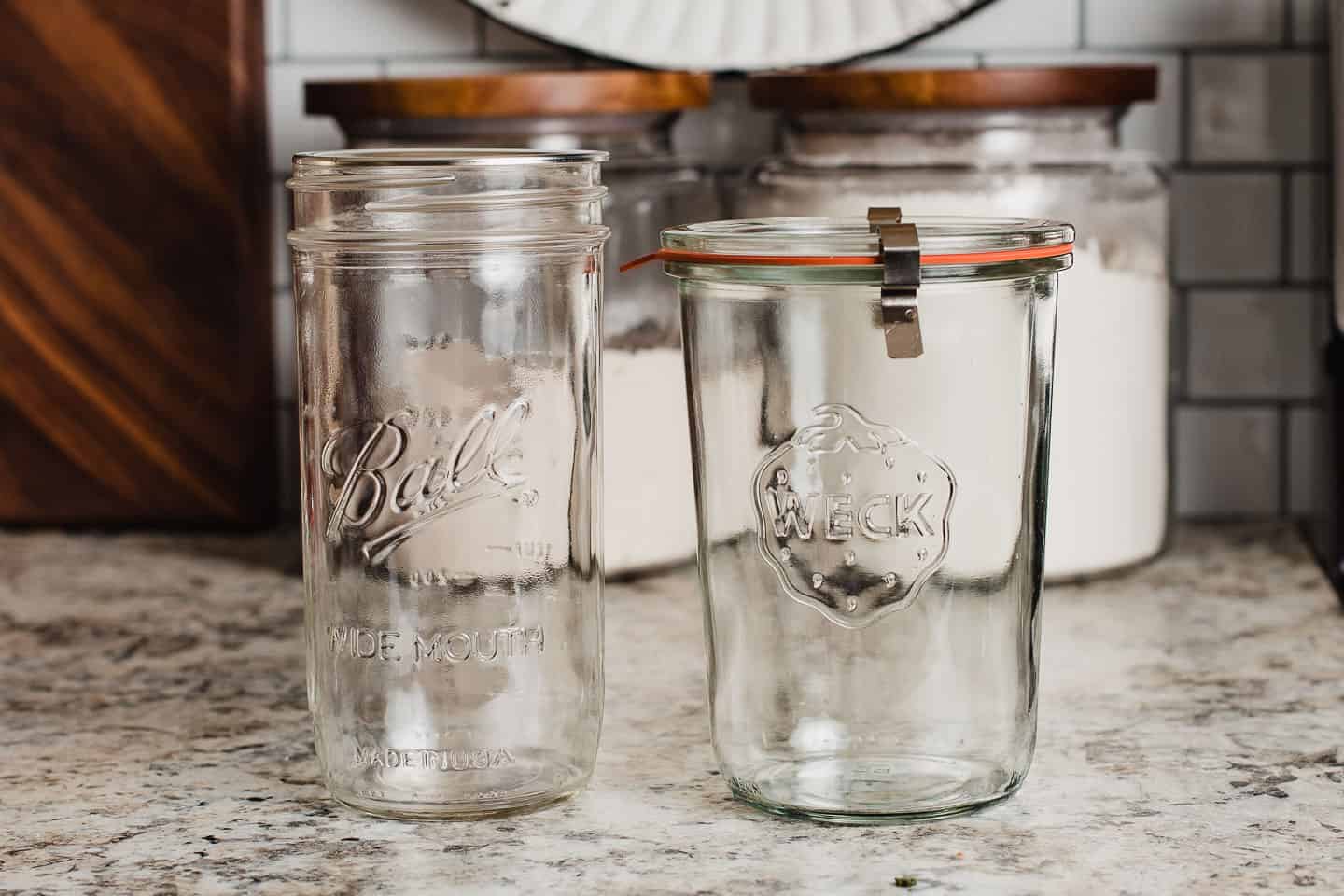
Glass containers with straight sides are invaluable because they let you quickly see how much your sourdough starter has risen after feeding. My favorite container options include mason jars, Weck jars, and a glass crock.
Each container has a lid or cover to protect your starter while it rests. I recommend keeping two containers on hand, one for storing extra starter in the fridge and another for feeding a smaller amount when you're ready to bake.
Baker's Scale
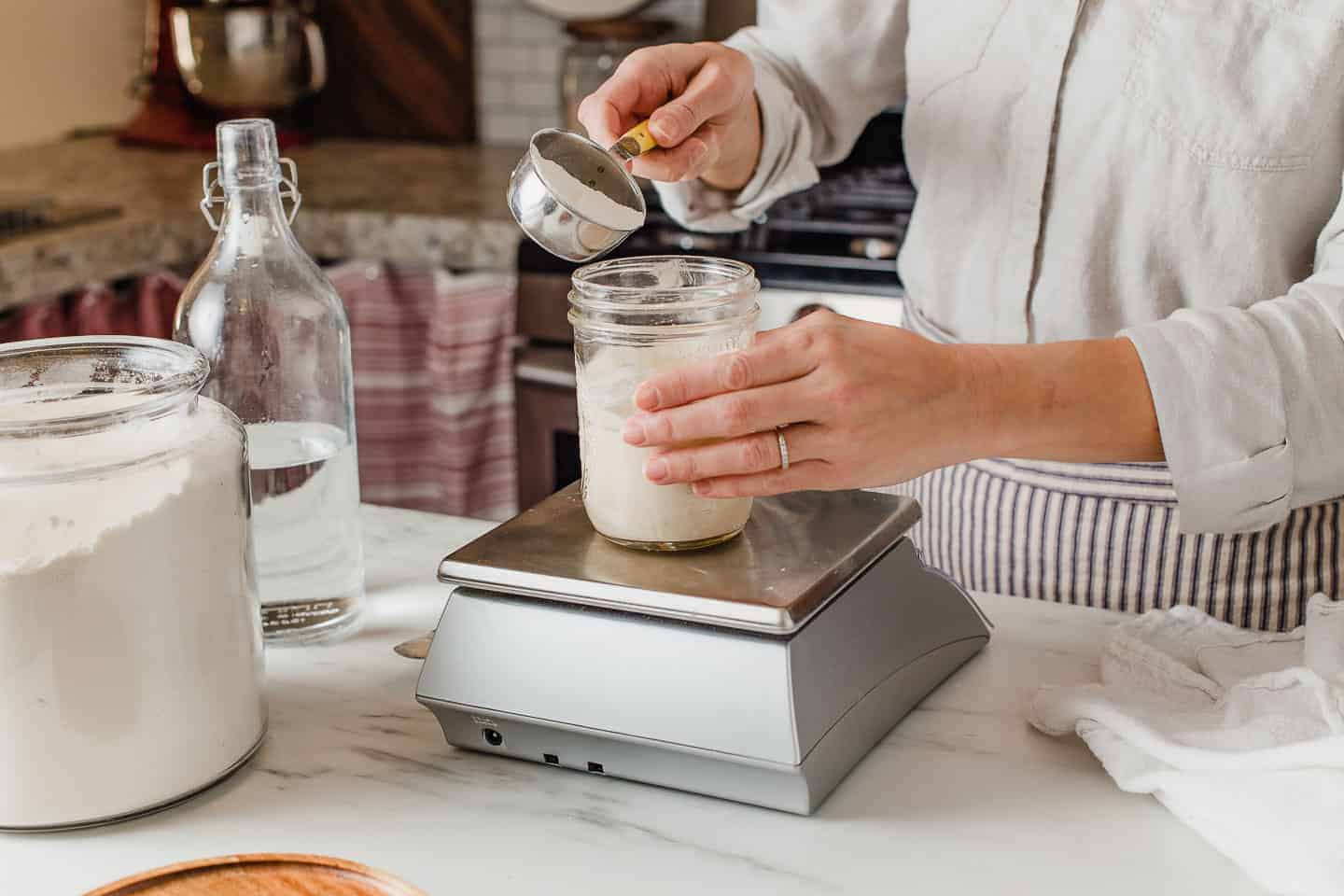
The most accurate way to measure ingredients for sourdough recipes is by using a kitchen scale. Measuring by weight, especially for flour and water, ensures consistent results, since cups and spoons can vary.
Dough Proofing Bowl
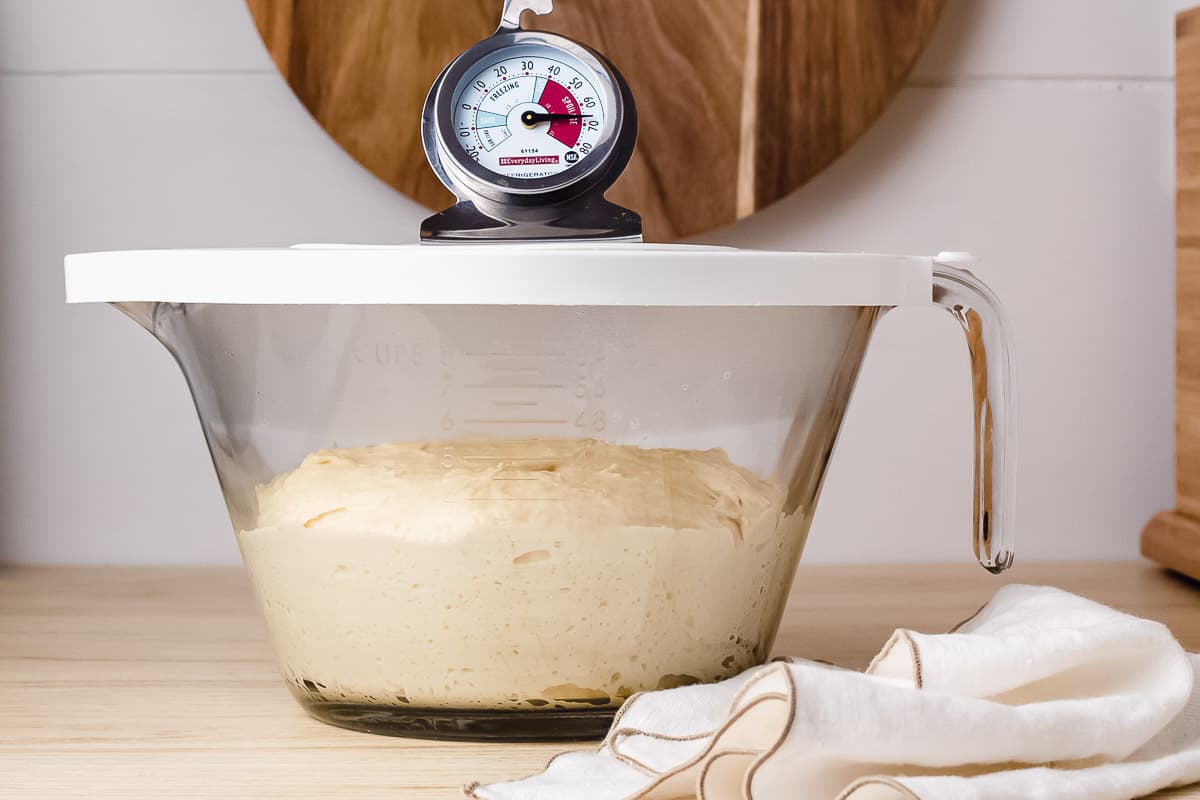
A batter bowl with a lid is a versatile tool for mixing and resting dough. Its clear sides let you track how much the dough has risen, and the built-in measurements make it easy to see progress at a glance.
My two favorites in my kitchen are the Pampered Chef batter bowl and the Anchor Hocking batter bowl.
Bench Scraper
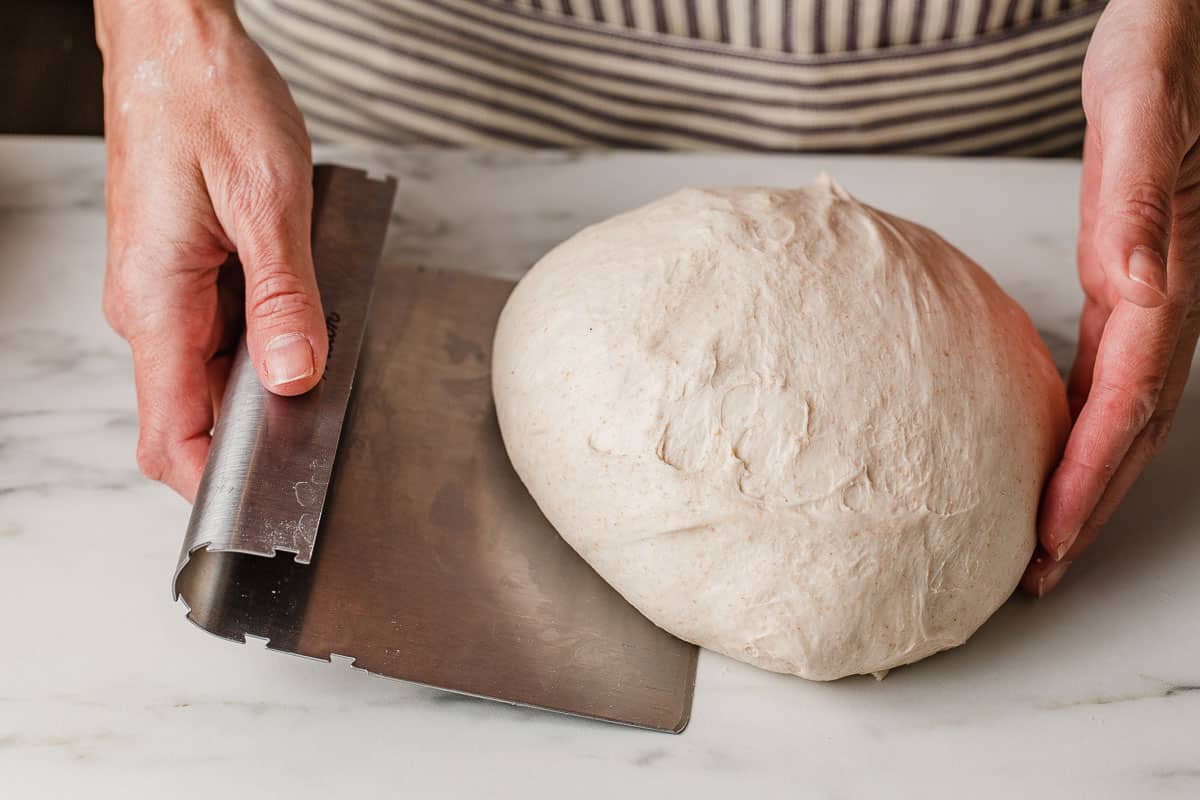
A bench scraper and/or bowl scraper are essential when making sourdough. It's one of my most-used tools!
A bench scraper helps shape and divide the dough, turn it during stretching and folding, and keep your work surface clean and dough-free.
Banneton or Proofing Bowl
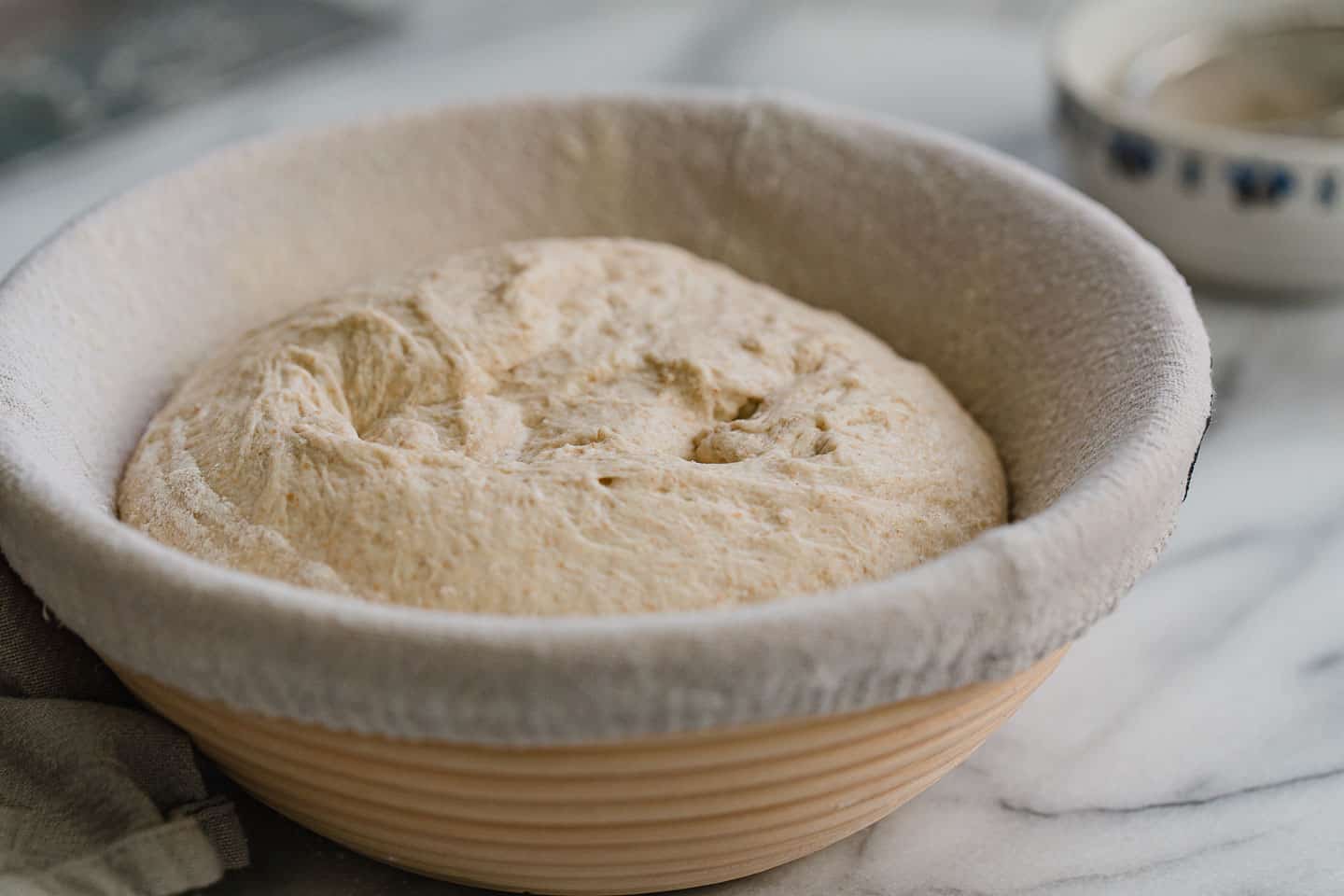
A banneton is a proofing bowl made from organic materials and is anywhere from 8-10" in diameter at the opening. After the dough has had its final shape, it is placed in a proofing bowl for the second rise.
The proofing bowl provides structure to the sides of the dough as it rises, which helps the dough keep its shape when it bakes.
The bowl can be lined with a kitchen towel or floured to prevent the dough from sticking as it rises. Any similar-sized bowl can be used as a proofing bowl.

Bowl Covers
Silicone bowl covers are best for covering dough because they can be used repeatedly and keep the dough from drying out on the surface. Plastic wrap, plastic shower caps, a damp flour sack towel, or a plate can cover a dough bowl.

Bread Lame
A bread lame is a stick-shaped tool with a razor on one end. It is used to score or slash the dough before it bakes. A very sharp knife can also be used to score the dough. Because dough expands at its weakest point as it bakes, it is slashed to control the expansion.
Dutch Oven
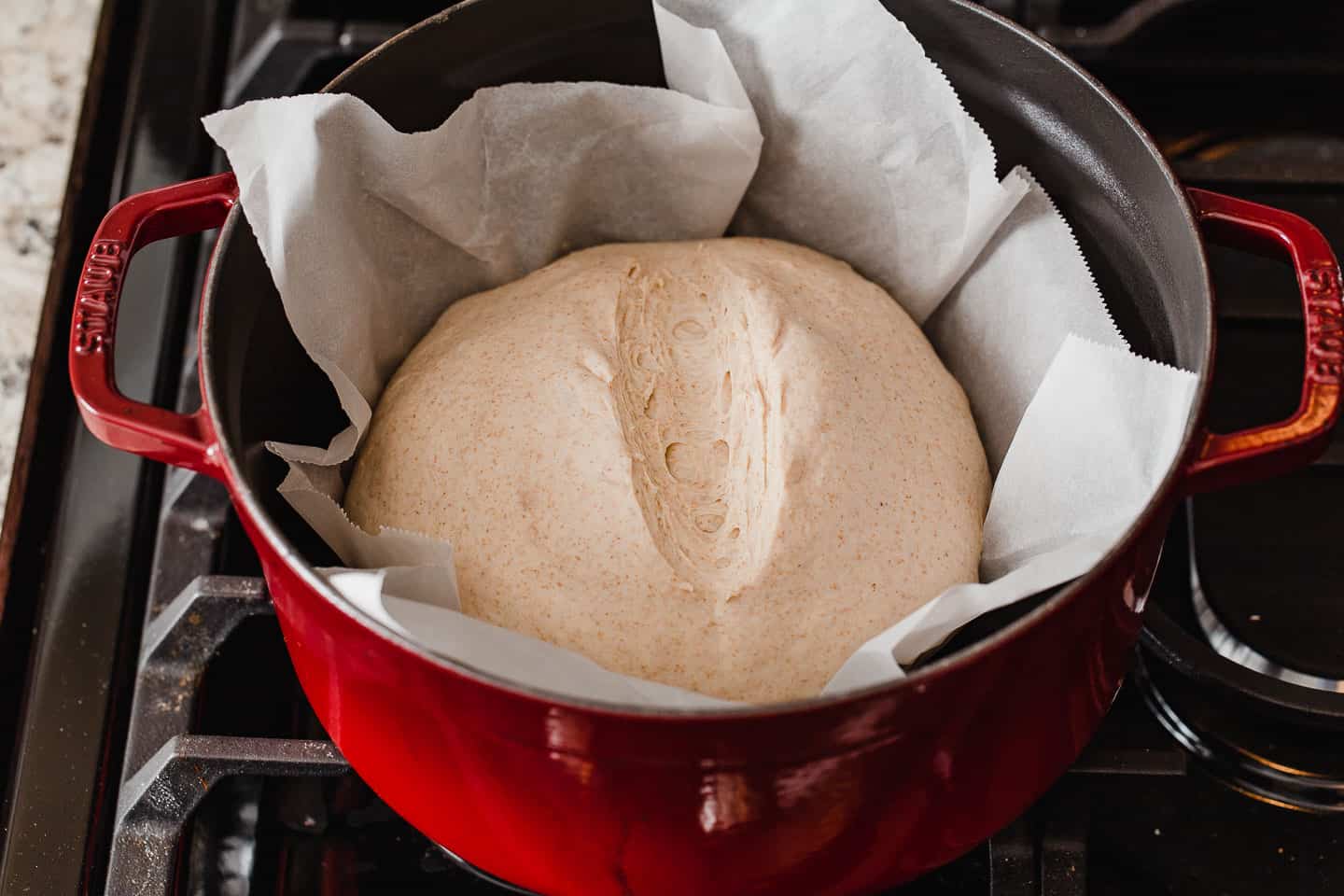
A Dutch oven or 3.2-qt cast iron pan with a lid is ideal for baking sourdough bread because it mimics the steam environment of a commercial oven. During the first few minutes of baking, steam from the dough is trapped inside, helping the bread rise higher and develop a beautiful crust.
Gloves
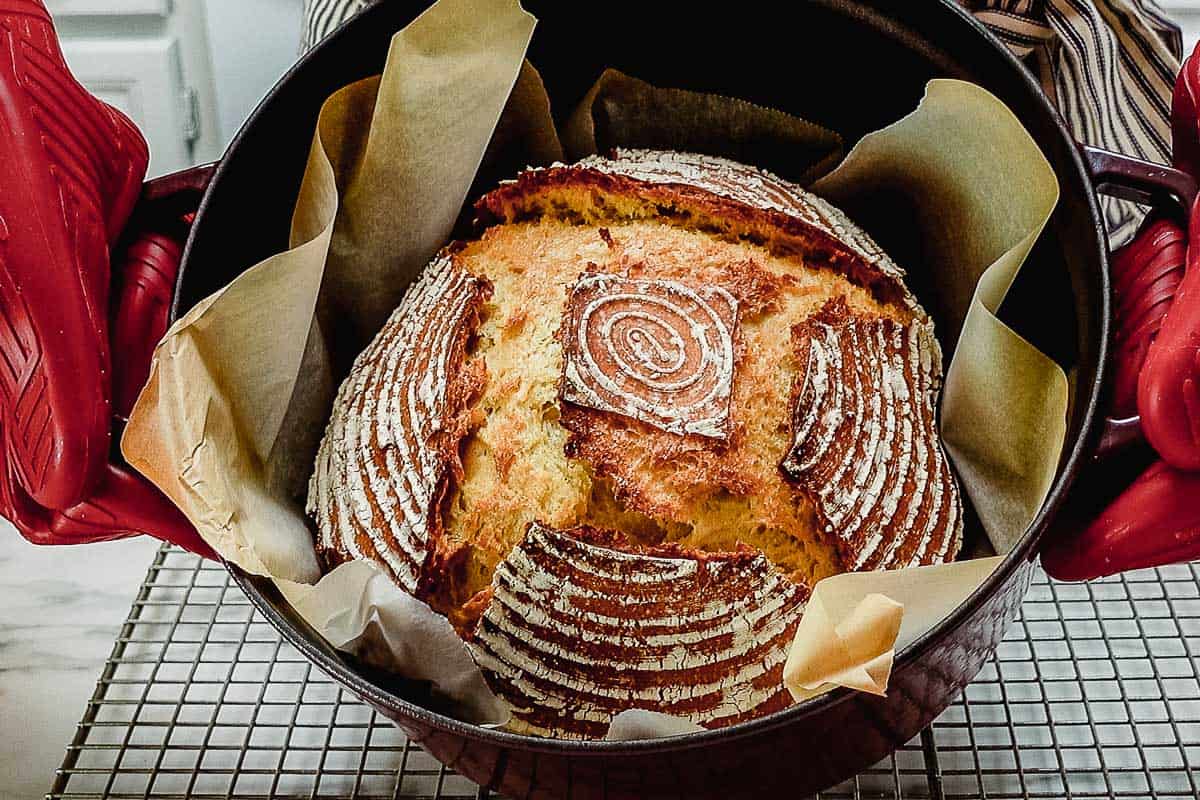
Sourdough baking requires very hot oven temperatures. Invest in long silicone gloves to protect your hands and forearms from getting burned.
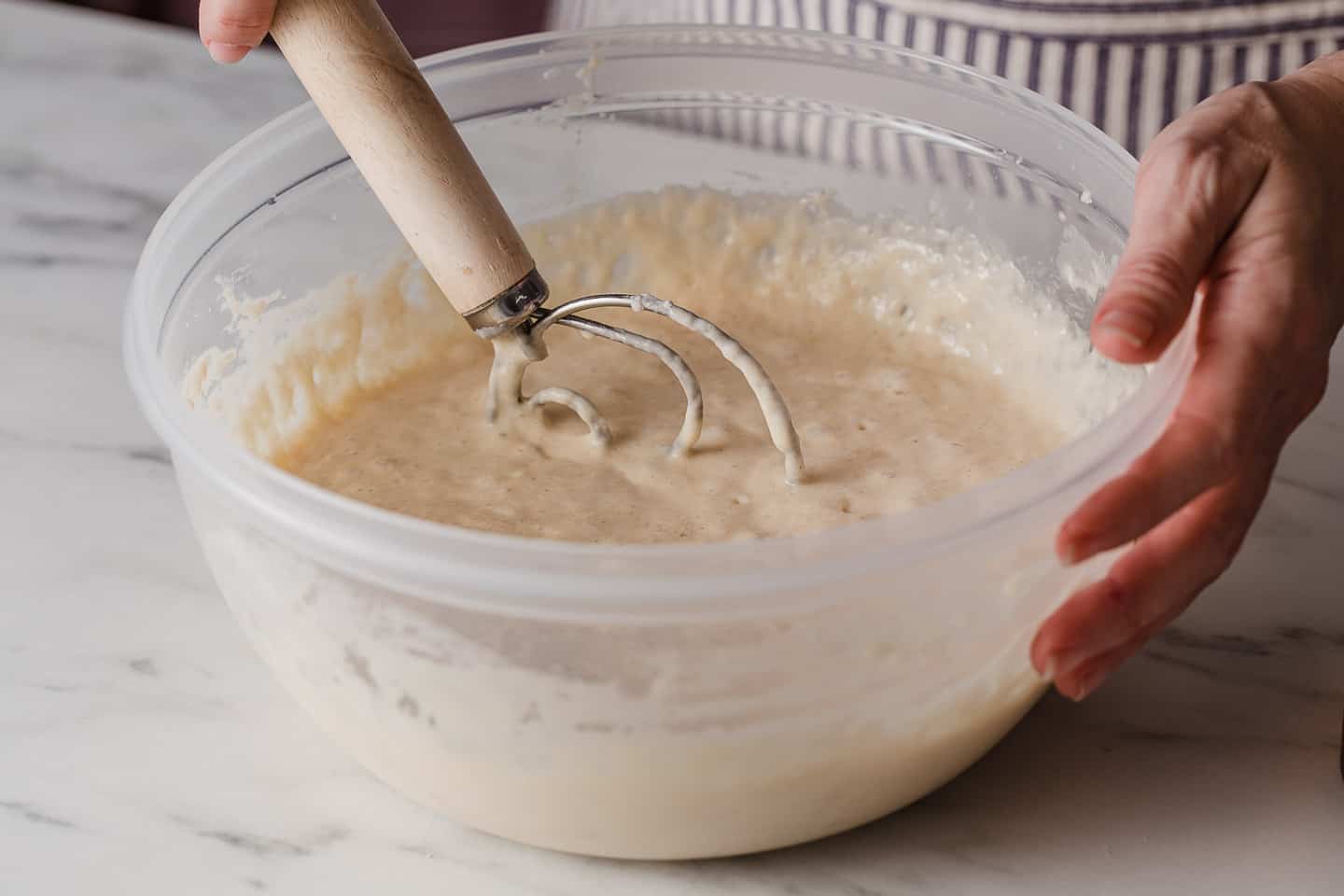
Dough Whisk
A Danish dough whisk or a stiff spatula helps you mix your dough without tiring your arm. It’s designed to cut through thick dough and combine ingredients easily.
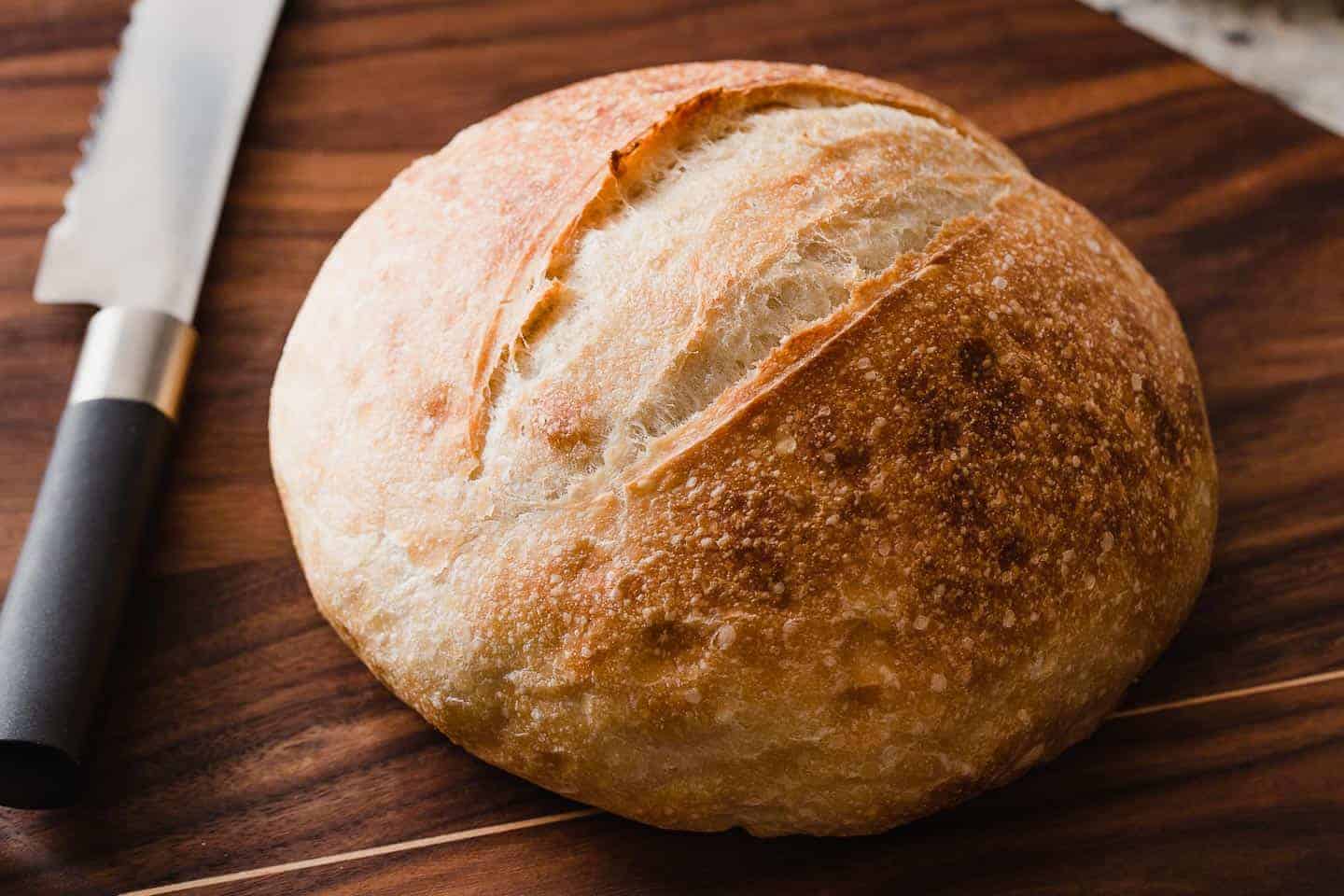
Bread Knife
The crust of sourdough is thick and can be hard to cut. Invest in a good bread or electric knife to cut sourdough bread.

Parchment paper
Parchment paper makes it easy to transfer the dough to and from the Dutch oven and keeps it from sticking to the bottom of the baking vessel. You will also need it to bake other sourdough recipes, like cookies.

Tips for Beginners!
Start Simple: Focus on learning the process first. You can always add tools later!
DIY: Household items work in a pinch. You don’t need to buy everything right away.
Keep it Clean: Wash tools right after use, especially anything that touched sticky dough. When sourdough starter dries, it's like concrete and tough to get off of your tools!
More sourdough baking resources
- How to make a sourdough starter
- When is sourdough starter ready to bake with?
- Baking conversion chart
- How to maintain a sourdough starter
- Sourdough glossary
Subscribe to our newsletter and we'll send you more fresh recipes, valuable troubleshooting advice, useful tips, and other information we believe will be helpful to you!

Subscribe to our newsletter and we'll send you more fresh recipes, valuable troubleshooting advice, useful tips, and other information we believe will be helpful to you!
Hi, I have a question about my starter, I am on day 4 and every morning when I remove the tea towel there are bubbles but a thin harder film layer on top. Why is that and how do I handle it? I have been discarding it with my half before I feed it again. No mold so thats good lol😊 Thanks Lori
Hi Lori, it sounds like the top is drying out. I would switch from the tea towel to a loose fitting lid. This will keep too much air from getting into the jar.
Hi Amy, thanks so much! I have been discarding the “crust”, had thought about doing a wet tea towel but will try your suggestion! Lori
Third loaf I have ever made and using your methods this one turned out fantastic. Soft inside with a crunchy crust. Thanks for sharing!
I love your recipes, but have lacked the confidence to try after an epic failure of a boule. I forced myself to just DO it or dump it. I just finished baking your bagels. My kitchen smells like a bagel shop and I cannot WAIT to taste them. Thank you, thank you, thanks you for the detailed, but simple steps and pictures.
You are welcome 🙂
Stay with the basics and follow the instructions. Your results will be like mine. The best sourdough consistently. Tried many others that were never as good. Thank You Amy
Hi Amy,
Your instructions are very helpful for an aspiring sourdough baker. Thank you so much!
Quick question - while not a specifically sourdough tool, what are the glass jars you keep your flours in? They seem glass and wide mouthed, which is exactly what I am looking for. Thanks!
yes, I'd love to know, too. thanks!
YEARS ago I made sourdough goodies. My daughter has just re-introduced me. I have made some good stuff already! Anxious to follow ou!
What size of dutch oven do you recommend? Thanks!
4.5-6 quart is what I like best.
Does the Dutch oven need to be cast iron?
Hi Kimberly! No, it just needs to be oven safe.
What size and kind of offset spatula do you recommend? Thank you 😊
I have a 4 1/2 inch that I love!
Hey! I made your sourdough cinnamon rolls and they are delicious!! My question is how do I make my sourdough loaf bread not so sour. It’s unbearably sour. If I make anything with my starter it has to be a sweet recipe. Any suggestions?- Jamie
Hi Jamie! If you feed your starter for a few days in a row, the starter should start to lose some of its sourness. When the acid gets built up from infrequent feedings, that can happen. Then you can bake with it and the bread will not be so sour. 🙂
Hello Amy, kudos to you girl. You are the best! I made sourdough bread following your step by step instructions and for the very first time, after dozens of experiments and much wasted flour my bread was amazing, in looks and taste. Thank-you so very much, I feel confident to try some of your other recipes as well. A fan, Judy.