How to Feed Sourdough Starter
A strong, healthy sourdough starter is essential for making great sourdough bread. Knowing how and when to feed it ensures consistently delicious sourdough baked goods every time.
This simple guide covers everything you need to know about feeding and maintaining a sourdough starter. Expert tips and troubleshooting help keep it healthy and ready for baking delicious homemade sourdough bread.
Jump to:
- How Often Do I Need To Feed My Sourdough Starter?
- Going on vacation? Your starter can take a break, too!
- How much should I feed my sourdough starter?
- Frequently asked questions
- Can I use the discarded sourdough starter in recipes?
- How to make a backup of sourdough starter
- Troubleshooting guide
- similar recipes
How Often Do I Need To Feed My Sourdough Starter?
The frequency of feeding your sourdough starter depends on various factors such as ambient temperature, how fast you need it to rise, and your baking schedule. Let's answer a few questions to determine what category you fit into.
How Often Do You Bake with a Sourdough Starter?
When determining how often to feed your sourdough starter, you must first decide how often you like to bake.
- 3-7 days per week: Baking with a sourdough starter multiple days per week is considered frequent baking, and so it is best to feed your sourdough starter daily to ensure you always have an active starter available to bake with.
- 1 to 2 days per week or less: If you only bake with sourdough starter occasionally, it’s best to store it in the fridge and feed it once a week to keep it healthy and active.
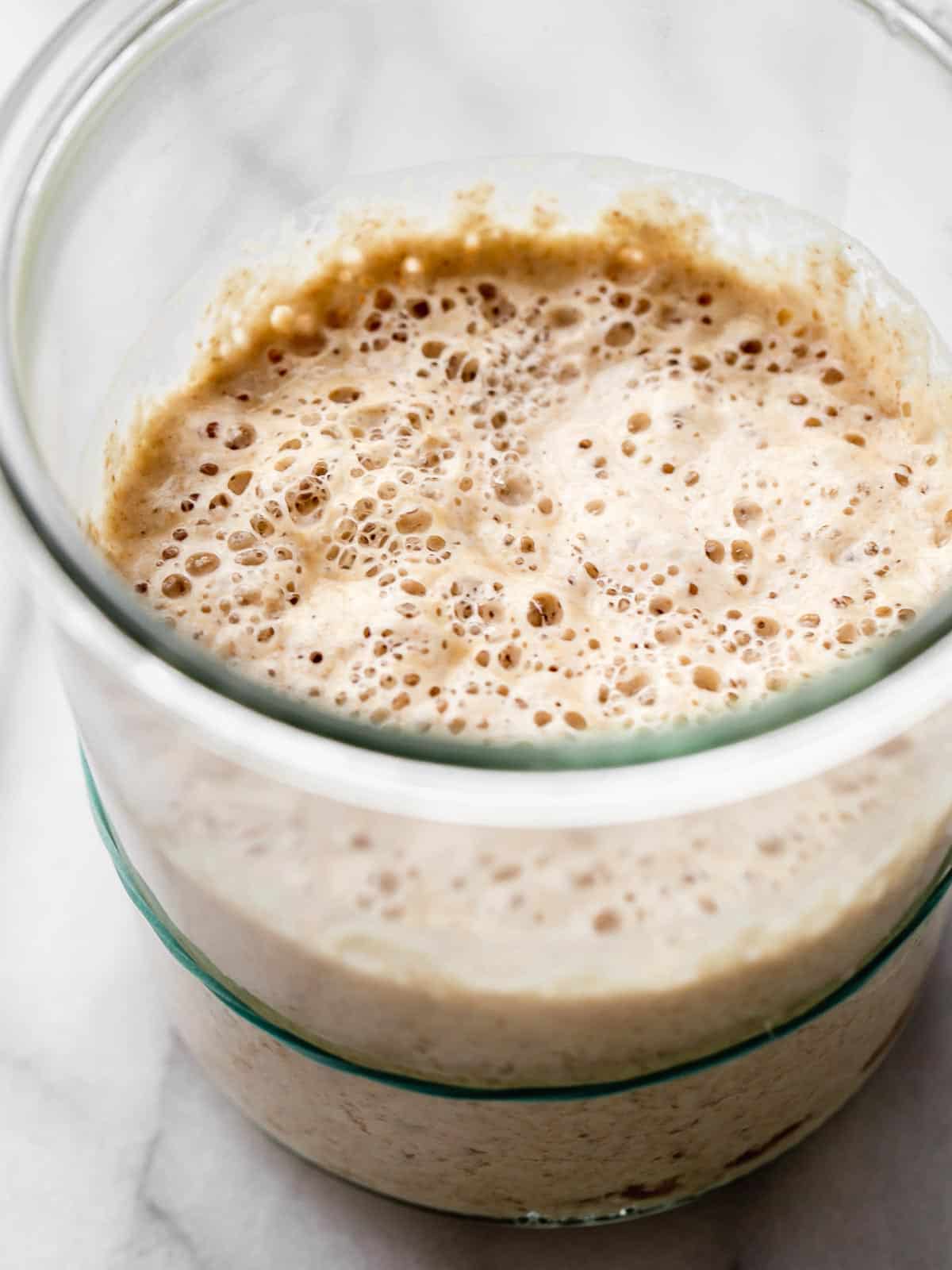
The key is to observe your starter's behavior and adjust the feeding frequency accordingly. If it starts to develop a strong sour smell, becomes overly bubbly, or shows signs of slowing down (e.g., taking longer to rise after feeding), it may be an indication that your starter needs more frequent feedings.
Feeding your starter once a day or once a week is a common practice. However, the frequency can be adjusted based on the following guidelines:
Daily Feeding
Daily feedings are recommended if you maintain your starter at room temperature (around 70-75°F or 21-24°C) and want it ready for baking within a day or two. Discard a portion of the starter and feed it with fresh flour and water every 24 hours.
Twice-Daily Feeding
In warmer environments or when faster fermentation is desired, feed your starter every 12 hours. This promotes a very active starter.
Refrigerator Storage
Not baking often? Store your starter in the fridge. Feed it, let it sit at room temperature for 1–2 hours, then refrigerate. You’ll only need to feed it once a week or even every two weeks if your fridge is very cold.
Going on vacation? Your starter can take a break, too!
Got a trip planned but not sure what to do with your sourdough starter? The good news is your starter can take a break, too. With just a little prep before you leave, it’ll be waiting patiently in the fridge, ready to bounce back when you return.
How Long Can a Sourdough Starter Stay in the Fridge?
Once it’s been fed, your sourdough starter can safely rest in the refrigerator for 2–3 weeks without another feeding. The cool temperature slows fermentation and keeps your starter fed while you're away.
What to Do Before You Leave
Here’s how to prep your starter before heading out:
- Feed it as usual. Stick with your regular flour and water ratio.
- Let it sit out for 1–2 hours to give the microbes time to ferment.
- Cover loosely and refrigerate. Use a lid that isn’t airtight so gases can escape.
That’s it! Your starter is now ready to rest while you enjoy your trip.
What to Expect When You Return
Your starter might look a little sleepy, but it’s not dead! Here’s how to revive it:
- Spoon out most of it, keeping about a tablespoon.
- Feed it with equal parts flour and water by weight (e.g., 100g each).
- Let it sit at room temperature until bubbly, then repeat as needed.
Most starters bounce back after 1–3 feedings.
Note: A layer of dark liquid (hooch) is normal; it’s just a sign your starter is hungry. Pour it off or stir it back in before feeding.
How much should I feed my sourdough starter?
Feeding ratios in sourdough starters refer to the proportion of flour and water used when refreshing or feeding the starter. The feeding ratio is typically represented as a ratio of flour and water to starter.
The ratios listed below result in a hydration level of 100%, meaning the weight of water equals the weight of flour.
Common feeding ratios for sourdough starters include:
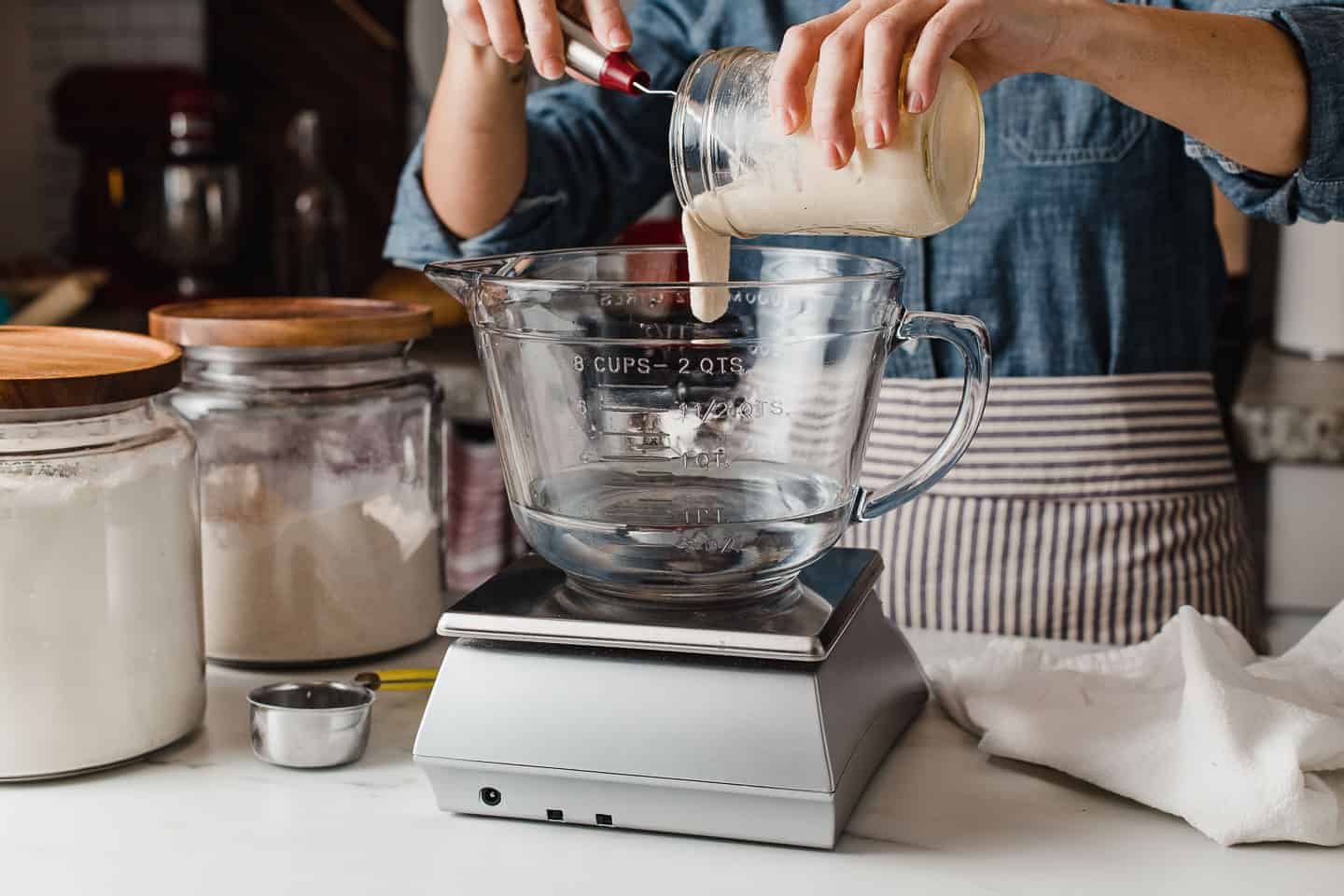
1:1:1 Ratio: This ratio means using equal parts of flour, water, and starter by weight. For example, if you have 100 grams of a starter, you would feed it with 100 grams of flour and 100 grams of water.
This starter will rise quicker than a higher ratio of flour/to water in the starter. Use this ratio if you want a starter that is ready in 4-6 hours.
1:4:4 Ratio: This ratio involves using four times the weight of flour and water compared to the starter. For instance, if you have 25 grams of starter, you would feed it with 100 grams of flour and 100 grams of water. Use this ratio if you want a sourdough starter that is ready to bake within 10-12 hours.
It's a good practice to experiment with different ratios and observe how they impact your sourdough baking results until you find a ratio that works well for your desired bread texture and flavor.
How to refresh your starter after it has been in the fridge for a while
A mature sourdough starter can last several weeks and be kept in a refrigerator without being fed.
If your sourdough starter has been in the fridge for a while and you want to refresh it, follow the steps below.
- Discard all but 25 grams and add 100 grams of filtered water and 100 grams of flour.
- Mix vigorously with a spatula, cover lightly, and set on the counter for a few hours to allow the yeast to multiply.
- Place the jar back into the fridge until the next time it needs to be refreshed or you wish to bake sourdough.
Frequently asked questions
What is the best flour to feed my sourdough starter?
When feeding your sourdough starter, it is generally recommended to use high-quality, unbleached organic flour. The type of flour you choose can impact the flavor, activity, and overall health of your starter. Here are some common flour options for feeding your sourdough starter:
- All-Purpose Flour: All-purpose flour, a blend of hard and soft wheat, is a popular choice for feeding sourdough starters. It provides a good balance of protein and starch, which promotes a healthy fermentation process.
- Bread Flour: Bread flour has a higher protein content than all-purpose flour. This increases gluten development and gives your sourdough starter extra strength and structure.
- Whole Wheat Flour: Whole wheat flour adds nutritional value to your starter as it contains the bran and germ of the wheat kernel. It can provide a slightly nuttier flavor and enhance the complexity of your sourdough bread.
- Rye Flour: Rye flour can be used in combination with other flours or as a standalone option for feeding your sourdough starter. Rye flour contains enzymes that can help boost fermentation activity and contribute to a distinct flavor profile.
- Spelt Flour: Spelt flour is an ancient grain that can feed your sourdough starter. Its nutty flavor can add a unique character to your bread.
It's worth noting that different types of flours may result in variations in flavor, fermentation speed, and texture.
You can experiment with different flour combinations and ratios to find the ones that produce the desired results for your baking preferences.
Additionally, using organic or locally sourced flours can add further depth to the flavor of your sourdough starter and bread.
What kind of water should I use in my sourdough starter?
When it comes to choosing water for feeding your sourdough starter, using water that is free from chlorine, chloramine, or other strong chemicals is generally recommended. Here are a few considerations:
- Filtered Water: Using filtered water, such as water from a home filtration system or a countertop filter, is a popular choice. It helps remove impurities and chemicals that could potentially hinder the activity of the natural yeasts and bacteria in your sourdough starter.
- Spring Water: Natural spring water can be an excellent option for feeding your sourdough starter. It is generally free from chlorine and other additives, and it often contains beneficial minerals that can contribute to the overall health and flavor of your starter.
- Tap Water: If your tap water is chlorinated, it's advisable to let it sit in an open container for at least 24 hours before using it to feed your starter. This allows chlorine to dissipate, as it can potentially have a negative impact on the fermentation process.
It's important to note that the quality and characteristics of water can vary depending on your location.
If you're unsure about the quality of your tap water, consider using filtered or spring water, which is a more reliable option.
Ultimately, the goal is to provide your sourdough starter with water that is free from chemicals that could inhibit its fermentation activity.
Can I use the discarded sourdough starter in recipes?
Yes, you can save and make use of sourdough discard in recipes. Sourdough discard refers to the portion of the starter that you remove and discard during the feeding process.
Instead of discarding it, you can repurpose the discard in various recipes to avoid waste and enjoy its unique flavor.
Collect the discarded sourdough starter in a separate container and store it in the fridge.
Here are a few ideas for using sourdough discard:
- Pancakes and Waffles: Incorporate the sourdough discard into pancake or waffle batters for added tanginess and flavor.
- Bread and Rolls: Add sourdough discard to zucchini bread or cinnamon rolls to enhance their flavor and texture. It can be used in combination with commercial yeast or in recipes specifically designed for sourdough discard.
- Crackers and Flatbreads: Use sourdough discard to make homemade crackers, tortillas, or naan. It adds a pleasant tang and complexity to these snacks.
- Quick Breads and Muffins: Incorporate sourdough discard into quick breads like banana bread or muffins. It adds moisture and a unique flavor profile to the baked goods.
- Pizza Dough: Make our easy sourdough pizza crust recipe for a unique flavor and improved texture.
How to make a backup of sourdough starter
Creating a backup of your sourdough starter is recommended in case of accidental loss or contamination. Here are a couple of ways you can make a backup.
How to dry sourdough starter
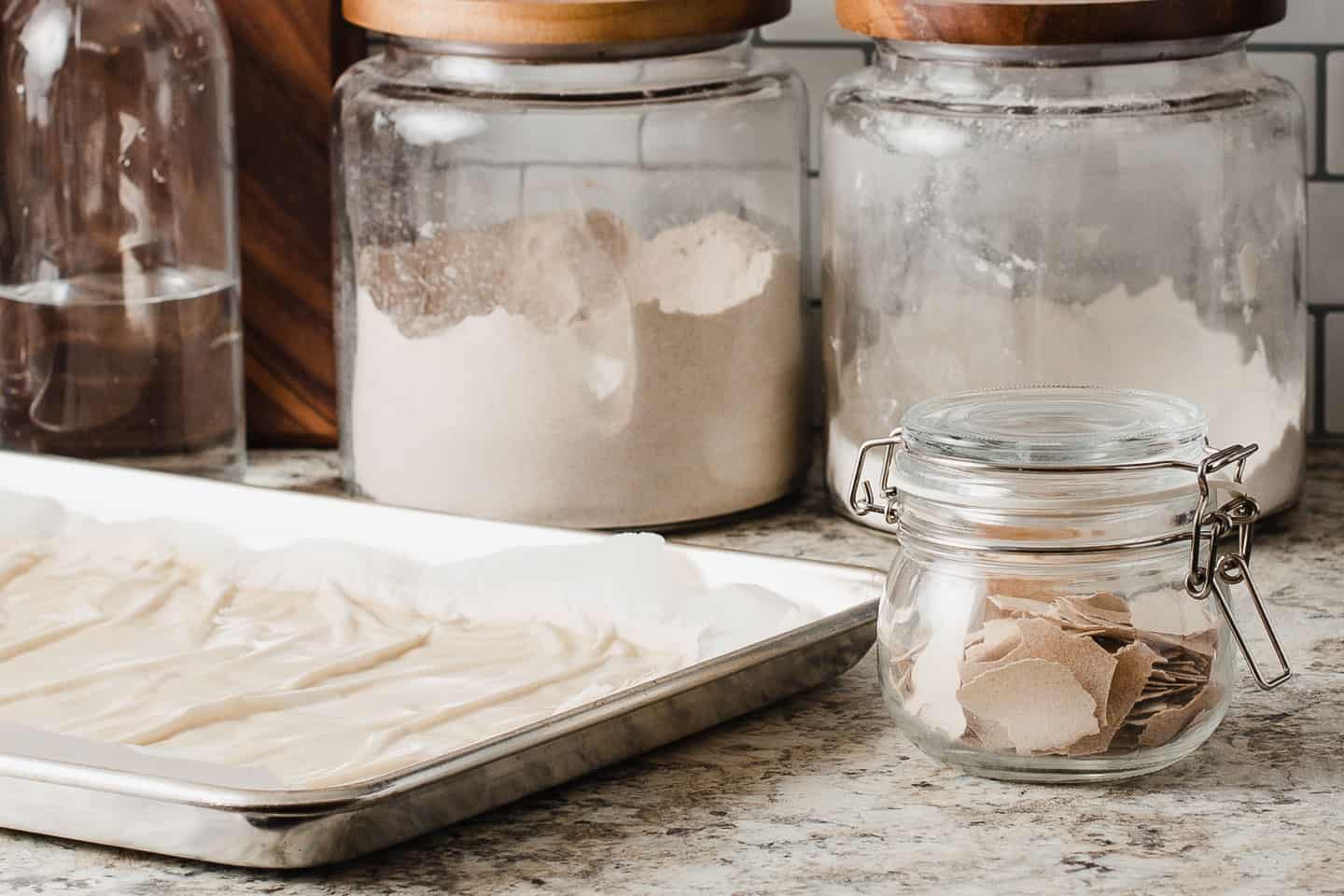
Spread 200 grams of active sourdough starter into a thin layer on a silicone mat or a piece of parchment paper. Allow it to air dry completely, for about 3-4 days, depending on the temperature and humidity of your kitchen.
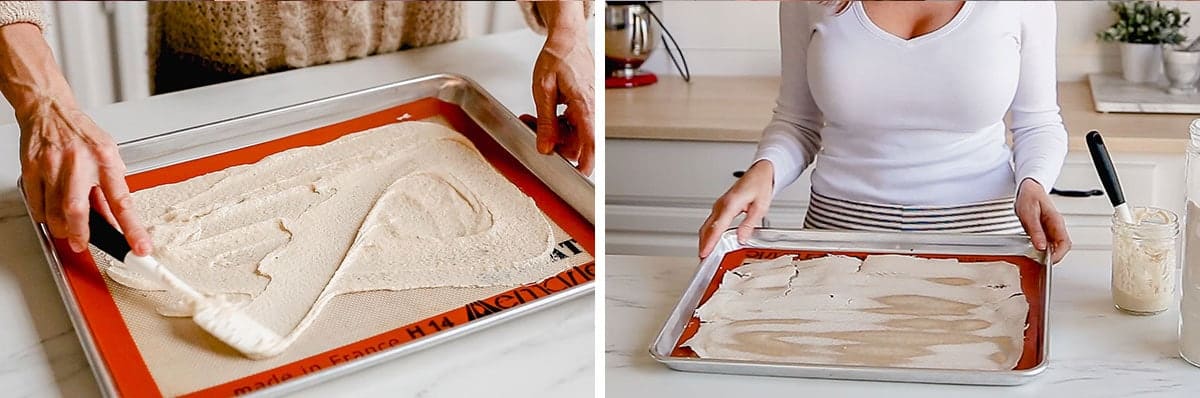
TIP: Store the sheet in a cold oven to keep it free from any debris that might be floating in the air. Place a sticky note on the stove so that you don't forget it's in there!
Once it's dry, break the starter into pieces and place them in a glass jar with a tight-fitting lid. Store in a cool, dry place for 6-12 months.
How to revive dried sourdough starter
Add 50 grams to a clean jar with 100 grams of water and 100 grams of flour to revive the dried sourdough starter. Let it sit for 24 hours at room temperature.
The next day, transfer 25 grams to a new jar and feed with 100 grams of water and 100 grams of flour. Feed the starter once a day until it starts to double in size.
How to freeze the sourdough starter
Pour the starter into an ice cube tray and place it in the freezer until solid. Transfer the cubes to a freezer-safe container and store them in the freezer for up to one year.
How to revive frozen sourdough starter
- Place a cube of the frozen starter in a jar and allow it to thaw. Once fully thawed, feed with 100g of water and 100g of flour.
- The next day, transfer 25 grams to a new jar and feed with 100 grams of water and 100 grams of flour. Feed the starter once a day until it starts to double in size.
Troubleshooting guide
If your sourdough starter isn’t behaving as expected, don’t worry, most issues are easy to fix. Here are some common problems and simple tips to help get your starter back on track
Slow Fermentation or Lack of Activity
- Check the temperature: For optimal fermentation, ensure that your sourdough starter is kept in an environment with a consistent temperature between 70-75°F (21-24°C).
- Adjust feeding schedule: Consider increasing the frequency of feedings to provide more food for the microorganisms, or try using a higher hydration ratio to boost activity.
Foul or Off Odor
- Evaluate your feeding routine: Ensure you feed your sourdough starter often enough. A strong, unpleasant smell can indicate that the starter needs more frequent feedings.
- Discard and rebuild: If the off-odor persists, you may consider starting over, as the area may be contaminated.
Hooch (Liquid) Separation
- Adjust feeding frequency: Hooch (a brownish liquid) that forms on top of your starter between feedings indicates that the starter is hungry.
- Stir or pour off excess hooch: If hooch forms, stir it back into the starter or pour it off before feeding.
- Reduce hydration: If your starter consistently produces excessive hooch, try lowering the hydration level by using a lower water-to-flour ratio during feedings.
Mold Growth
- Maintain cleanliness: Ensure that all equipment used for your starter is clean and free from any contaminants.
- Avoid cross-contamination: Store your starter away from other ferments or food sources that could introduce unwanted molds or bacteria.
- Discard and start fresh: If mold growth occurs, it's best to discard the affected starter and begin a new batch using a thoroughly cleaned container and fresh ingredients.
Remember, sourdough starters can be resilient and may require some experimentation and adjustments to find the best practices for your specific environment and routine.
Observing your starter's behavior, making small modifications, and maintaining a consistent feeding schedule will help troubleshoot and maintain a healthy and active sourdough starter.


Subscribe to our newsletter and we'll send you more fresh recipes, valuable troubleshooting advice, useful tips, and other information we believe will be helpful to you!


Hello, I am new to this, I just received a starter from a friend. How much should I feed it? Love your site.....
Hi Carol, congrats on your new starter! I would discard all but 2 tablespoons and feed it with 100 grams of water and 100 grams of flour. Let it sit overnight and after it rises, pop it in the fridge until you are ready to bake.
I have a question during the feeding times, is it normal for the top part of the starter to get hard? what causes this and do i take it off or just stir it in and continue feeding it? thank you
It sounds like there is too much air getting into the jar and drying out the top of the starter. I would take off the hard parts before feeding. You want to use a lid that is loosely screwed onto the jar to allow it breathing room.
Hello Amy, I am just starting my starter and you had an AM and PM schedule for making sourdough and now I can't seem to locate it. I would love to record it, if you could direct me. Thank you your site has been so helpful!
Here you go sourdough starter recipe.
Hi!
I am finally coming to a day where I am able to make my sourdough only to realize I may have been doing it wrong.
I have been discarding all but 25 grams of my starter and adding 60 grams each of water and flour mixture for roughly 2 months now. I didn't realize I was suppose to up it to 100 grams water and flour until now... Is this still salvageable? Can i go ahead and do the 100 grams?
Thanks so much!
Hi Loren, your starter is good if it's rising and falling after you feed it. If this has been working for you, don't change it. I just provide a guideline for those just starting out. The important thing is to make sure it's fed regularly 🙂
Hi Amy, thank you very much for your content. I just discovered your blog which is great ! I created my sourdough starter on January 2 and it's been ready since about the 12th, bubbling and doubling in volume in about 5/6 hours. I used a different method from yours, which is to feed it in a 1:1:1 ratio: 60g / 60g / 60g.
I'm a bit confused now, I wanted to feed him once a day maximum (to reduce waste), which I do, but is it reasonable to leave him once he's up at the end of the 6h, until the next day to make it 24h? Won't this make it bad or kill it? Are we agreed that I'm supposed, once at its maximum peak, to either make bread or feed it? Or have I misunderstood?
What would you advise, the idea being to reduce waste and make bread twice a week? I'm hesitating to put it in the fridge, but I don't think it's worth it as you'll have to take it out in advance for each loaf and it won't spend that much time in there.
Sorry for my limited English (I'm French), and thank you in advance if you can advise me. It's so hard to find answers to our questions when we're just starting out.
Hi Lena! It sounds like you want to make bread twice a week, so I am guessing about every 3-4 days. If this is the case, I would keep my starter in the fridge until the day before you make your dough. I like to feed my starter before bed so that I can mix the dough first thing in the morning. After you have mixed your dough, you will have a small amount left in the jar. Simply put the jar back in the fridge, there is no need to feed it at this point.
Take it out the night before and feed it the amount you need for the recipe. For example, let's say you have about 2 tablespoons of starter left in the jar and you need 100 grams of active starter for a recipe. I would add 60 grams of water and 60 grams of flour and let it sit over night. Take the 100 grams for the dough and you should have enough left in the jar to repeat the process. You'll eventually get a feel for how much you need to keep in the fridge to have enough to feed for the next bake. I hope this makes sense. Please let me know if you have more questions. I am happy to help!
Good morning Amy! Yes, and I also printed the Beginner Recipe. Did Day 2 per instruction. Home temp 70F and I felt Starter might be “Sluggish”, but it did rise in Mason jar after 12 hours. When should I move to Days 3-7?
You can go ahead and move to day 3 🙂
Hi AMY, My name is Wayne, I'm in Queensland Australia where it can be 35+ during the day and about 5deg (C) at night.
I've been doing this on and off for 40 odd years and learnt on large Cattle Stations in the 'Outback' and in the Territory where we make just about everything (because there are no shops.
Your advice is awesome, I especially love the 'Freezing' the 'Starter', in an ice cube maker, I've already fed 1 of my starters to try this as I can spend a week or so away for work, freezing it solves sooo much.
In fact all your advice is pretty good, if you want I could write down our "Damper" recipe, we feed the starter at night, In the morning we make the damper and foll it in foil and stuff it our 'saddle bags' , we cook it in the coals of the 'smokoh' (morning tea) or at lunch, it's pretty filling.
Thank you
Yours
Wayne
You're welcome 🙂
I would love your damper recipe!
I've been trying to start sourdough. Each time my starter doubles in the first 24 hours, usually triples after the next feed, within 4-6 hours, but I can't get any activity after that. Should I switch to 12 hour feeds from day 2?
Yes, it might be a good idea to feed twice a day and see if that helps.
Amy,
WOW... I'd never knew I could dry and store it!
I will do some as soon as this batch reaches maturity!
I'm making the zucchini bread, as muffins with this first batch of discard.
Im about 8 days in on my starter and I still have none to very little activity. I’ve added another feeding at 12 hrs a couple of days ago too. Is this normal? Should I persisti or give up and restart?
Also, if I can’t feed for a couple of days should I store it in the fridge?
I would keep going! If you are seeing any bubbles at all, that is an indication that there is activity. Yes, store in the fridge if you can't feed for a few days.