
Signs that your sourdough starter is ready to bake with


This detailed guide teaches how to tell when your sourdough starter is ready to bake.
Is my sourdough starter ready to bake with?
There are several ways to determine if your sourdough starter is ready to use for baking sourdough bread or other sourdough recipes.
Let's go over a few things for you to look for!
Sign #1
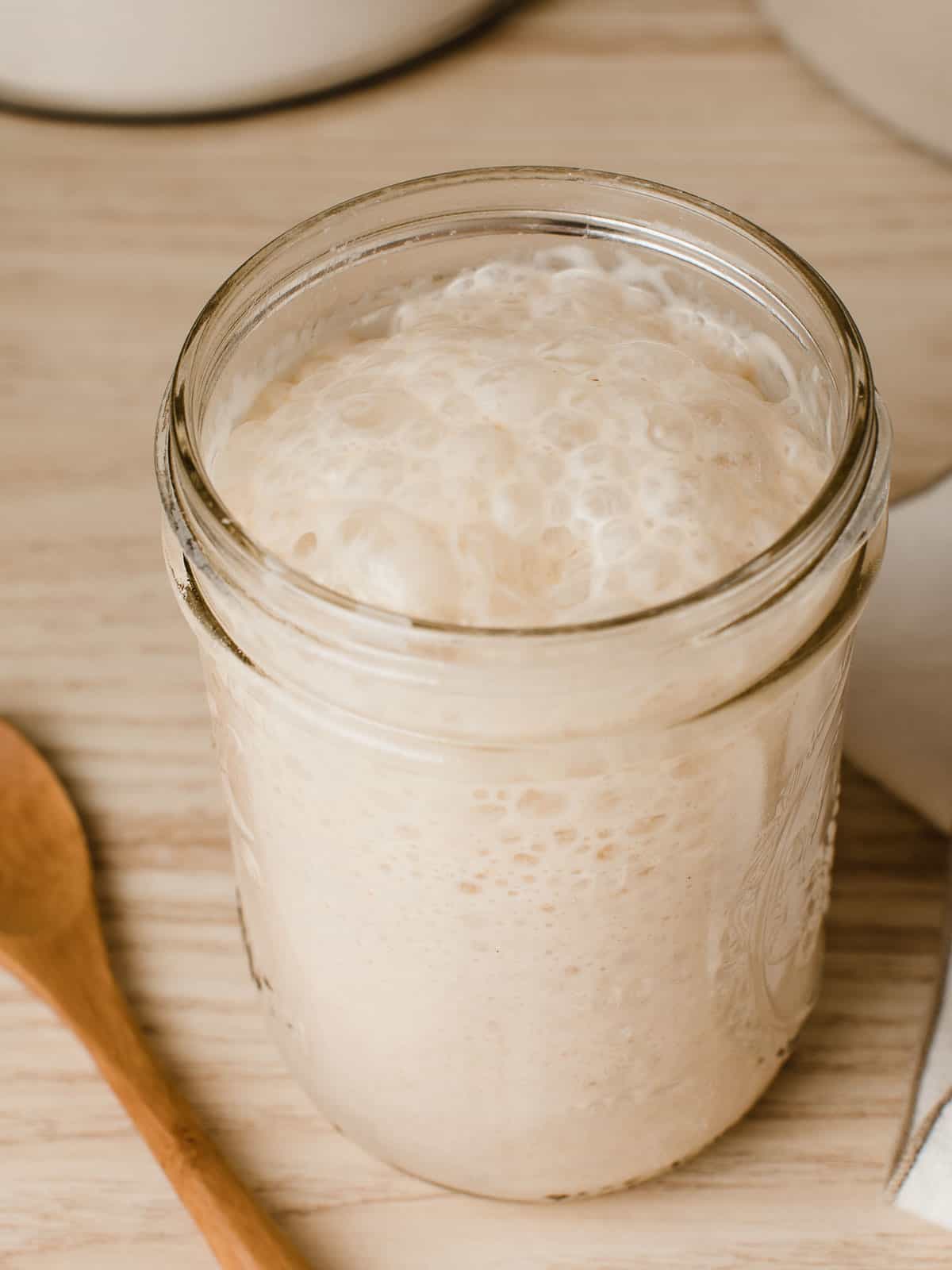
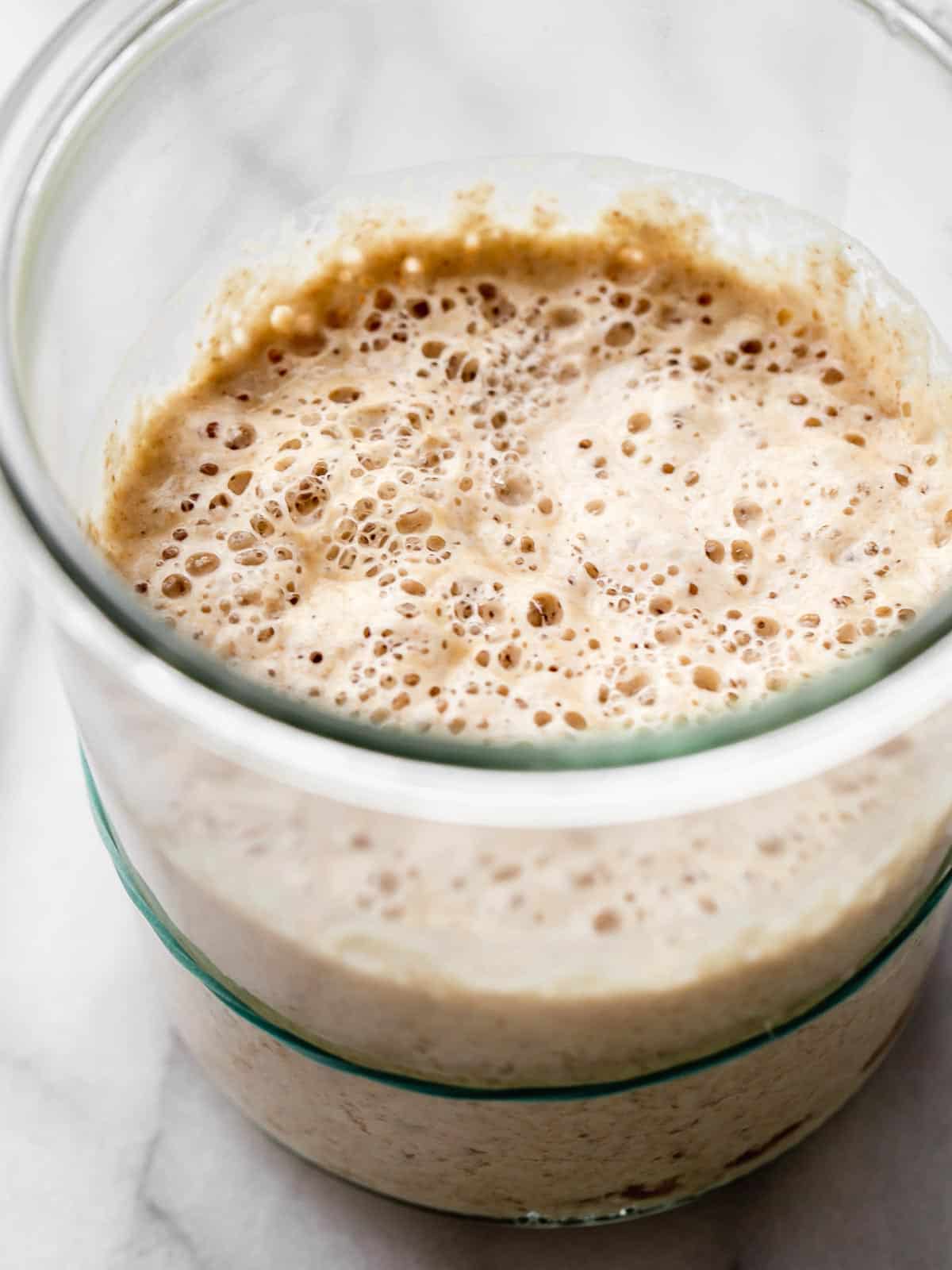
After feeding your starter, it should double or triple in size with bubbles visible on the surface and sides of the jar.
Sign #2
The starter should have a light and airy texture. When you scoop a spoonful or take a small amount, it should be fluffy and slightly stretchy.
Sign #3
A mature and healthy sourdough starter will have a pleasant, slightly tangy aroma. It might have hints of acidity and fermentation, but it should not have any off-putting or unpleasant odors, such as a strong vinegar-like smell or a foul odor.
Sign #4
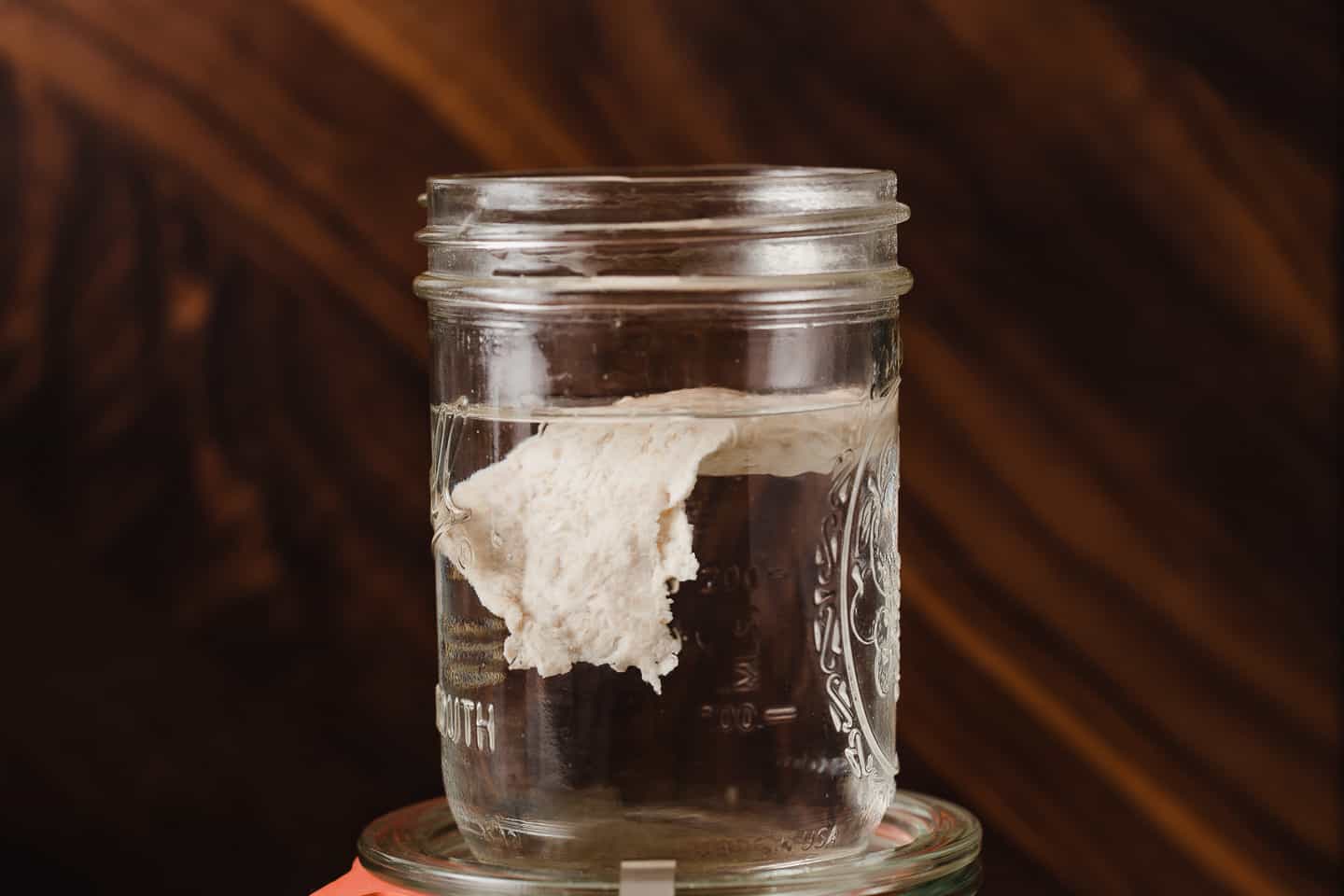
You can perform a float test to check if your starter is ready. Drop a small spoonful of the starter into a glass of water. If it floats, it indicates that the starter is sufficiently active and ready for use.
It's important to note that the readiness of a sourdough starter can vary based on factors such as temperature, feeding schedule, and the specific characteristics of your starter.
As you gain experience and become more familiar with your particular starter's behavior, you'll better understand when it's at its peak activity and readiness for baking.
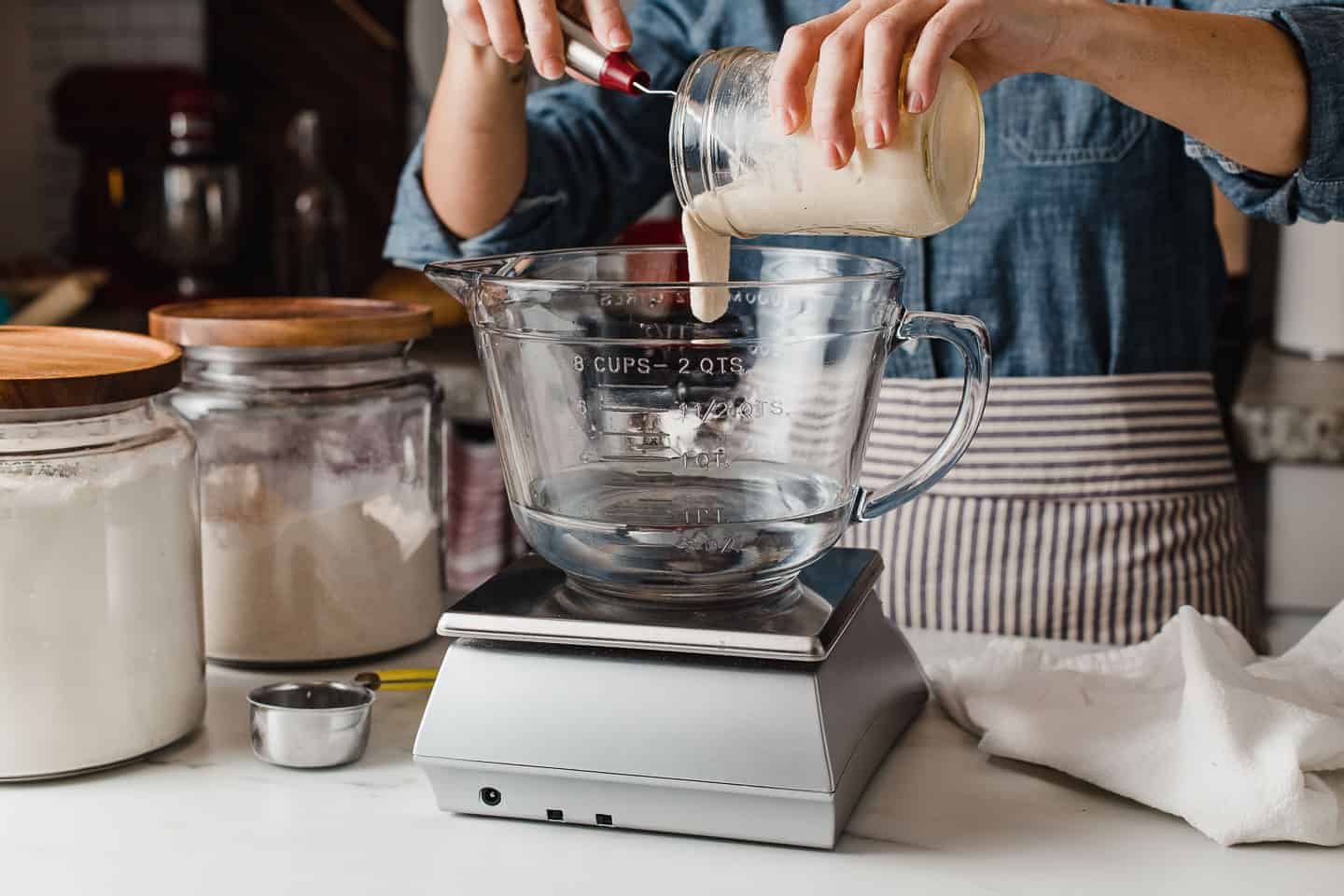
How can I give my sourdough starter a boost?
If you want to give your sourdough starter a boost in activity, here are a few techniques you can try:
Adjust Feeding Frequency
Increase the frequency of feedings. Instead of feeding once daily, consider feeding twice daily, approximately every 12 hours.
Adjust Feeding Ratios
If you are currently using a 1:1:1 ratio of starter:flour:water by weight, try using a 1:2:2 ratio to give the starter more food between feedings.
I typically feed my starter in a 1:4:4 ratio, which allows it to rise slowly for about 12 hours. With this ratio, I can feed my starter before bed and mix my dough in the morning.
If I want to make dough within a few hours of feeding my starter, I will feed it in a 1:1:1 ratio, which will help it rise faster.
Use Warmer Temperatures
Sourdough fermentation thrives in a warm environment. If your kitchen is cooler, you can create a warmer spot for your starter by placing it near a mildly warm area like the top of a fridge or on a countertop with a gentle heat source. Just ensure it's not too hot to damage the starter.
Incorporate Whole Grains
Introduce whole grain flours like whole wheat or rye into your feeding routine. Whole grain flour tends to have higher levels of natural yeasts and bacteria, which can contribute to increased fermentation activity and flavor complexity.
I feed my sourdough starter with 75% all-purpose flour and 25% whole wheat flour mixture.
Pineapple Juice Method
Some bakers successfully give their starter a boost using the pineapple juice method. Substitute a portion of the water in your feeding with pineapple juice for a few feedings.
Maintain Consistent Feedings
Keep a regular feeding schedule and consistency in your feeding routine. This helps establish a stable and healthy environment for your starter, allowing the microbial population to thrive.
Every sourdough starter is unique and may respond differently to various methods.
Observing and adapting these techniques to suit your starter's specific needs and behavior is important.
Patience and consistency are key as you experiment and fine-tune your approach to boosting your sourdough starter's activity.

All your Emails are amazing.
Thank you for your generosity and sharing your passion. I am hooked and love all the extra uses for my mother.
Kind regards.
Julian in Tasmania.
.
Thank you for the great information. One tip I learned was to use a seed starter pad, (about $10 from Amazon) wrapped in a dish towel and draped over the side of a Styrofoam cooler. Watch the heat so that the starter doesn't too hot or the cooler doesn't melt. Adjust accordingly. For my Montana weather, I covered the pad, then put some potholders between the pad and the back wall of the cooler. Finally I placed the starter about 3 inches from the heat source. I also partially covered the top of the cooler with the Styrofoam lid to vent out some of the heat. Voila! for the first time, my starter came out perfect,
I am a very good cook and baker but for some reason am afraid to try my first loaf. I feed and record " Julia " daily, I just need to take the first step. Should I feed at night and bake in the morning. I have read everything available and keep second guessing myself. I love this site. Thank you
I feed my starter before I go to bed so that it is ready to mix in the dough in the morning. The dough will need to rise during the day and then bake in the evening!
Hello Amy,
I stumbled upon your website when I started my research on sourdough starter. I am on Day 4 and my starter looks great but I need to leave on business trip on Day 6 so I will not have a chance to feed it. What should I do? How do I keep it alive until I am back?
Thank you
Hi Susanna, I would feed it twice a day until you leave and then place it in the fridge until you get back. Just start feeding it again and it should be fine!
Hi AMY, My name is Wayne, I'm in Queensland Australia, where it can be 35deg i n the day and 14 at night.
I travel for work and have killed one starter, I use a "brewers" pad (24 to 26 deg) as I also do 'Kombucha' tea.
That's really good advice above, I'll try that next time I go on the road, Thanks Yours Wayne.
Thank you Wayne 🙂
My sourdough starter is never as fluffy and full of large holes as the starter in your photos. I use a 1:4:4 and mindfully keep track of how much it grows. It doubles then goes up another notch. My jar has markings so it doubles up to 4 then goes up to 5. It does not triple. It does dome and has tiny bubble. It is half rye and half malted bread flour. When I pull out discard it is very webby, full of gluten strands. It works fine, even the discard works great after a week, I've always wondered why it isn't picture-perfect like yours.
Hi Pam, my starter looks different depending on what type of flour I am feeding it. As long as it works I wouldn't worry about it!
I just found your site and now feel better with the starter being so slow and ite been going on three weeks.I was so surprised to find the amount of discard.It is upsetting but I got a few recipes that I can use the discard.I made the waffle recipe that you posted and the batter was so thick but I completed the recipe.Thanks for all your help Shirley
I feed 5 grams of starter, 15 grams of flour, and 15 grams of water twice a day (1:3:3) in a small, strait sided jar. That reduces waste. It is so little that I don’t even keep the discard. If you need more, don’t discard any at feeding and expand the volume with your usual ratio or make an overnight preferment.
About 68 degrees. I went ahead and baked it. It turned out ok! I rose a bit. The finished product looked exactly like yours. My husband wanted to cut into it while it was warm lol. It was a bit dense, and not sour at all, but was still good. Maybe the starter wasn't actually ready? Thanks for the help!
The first few loaves baked with a new starter will be that way but it gets better as your starter matures!
Amy,
So I'm a beginner and everything was very helpful. My starter took about 8-9 days. It floated and rose perfectly. But im on my second rise with my bread and it doesn't appear to be rising at all. I'm using Einkorn. Followed the directions to the tee. Any advice?
Einkorn is a little trickier to work with than regular wheat. What is the temperature of your kitchen?
About 68 degrees. I baked it anyway. It seemed to turn out pretty good. A little dense and no sour flavor at all. Do you think the starter wasn't ready?
Thanks for the help!
It will take time for the flavor of the starter to develop. 🙂
Dear Amy
Thank you for ALL of your helpful recipes and tips.I have made a sourdough starter with you and REALLY, I believe that you provide the most clear instructions on sourdough starter that I've ever seen. I am a retired teacher and your instructions are very organized and to the point and are the only instructions that I felt comfortable trying. I've also made your bagels, pancakes, English muffins, cinnamon rolls and artisan bread. I'm forever grateful to you. Ada. 😍
Thank you for such kind words, Ada. That makes what I do worthwhile!! 🙂
This is very helpful
Thank you Charlie!