Sourdough Pasta
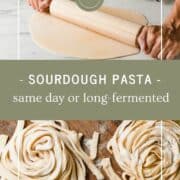
Learn how to make simple homemade sourdough pasta and whole wheat sourdough pasta with just a few ingredients and no special equipment needed.
With this simple recipe, you can create many delicious dishes like pasta with cherry tomatoes, lasagna, spaghetti, ravioli, tortellini, and more!
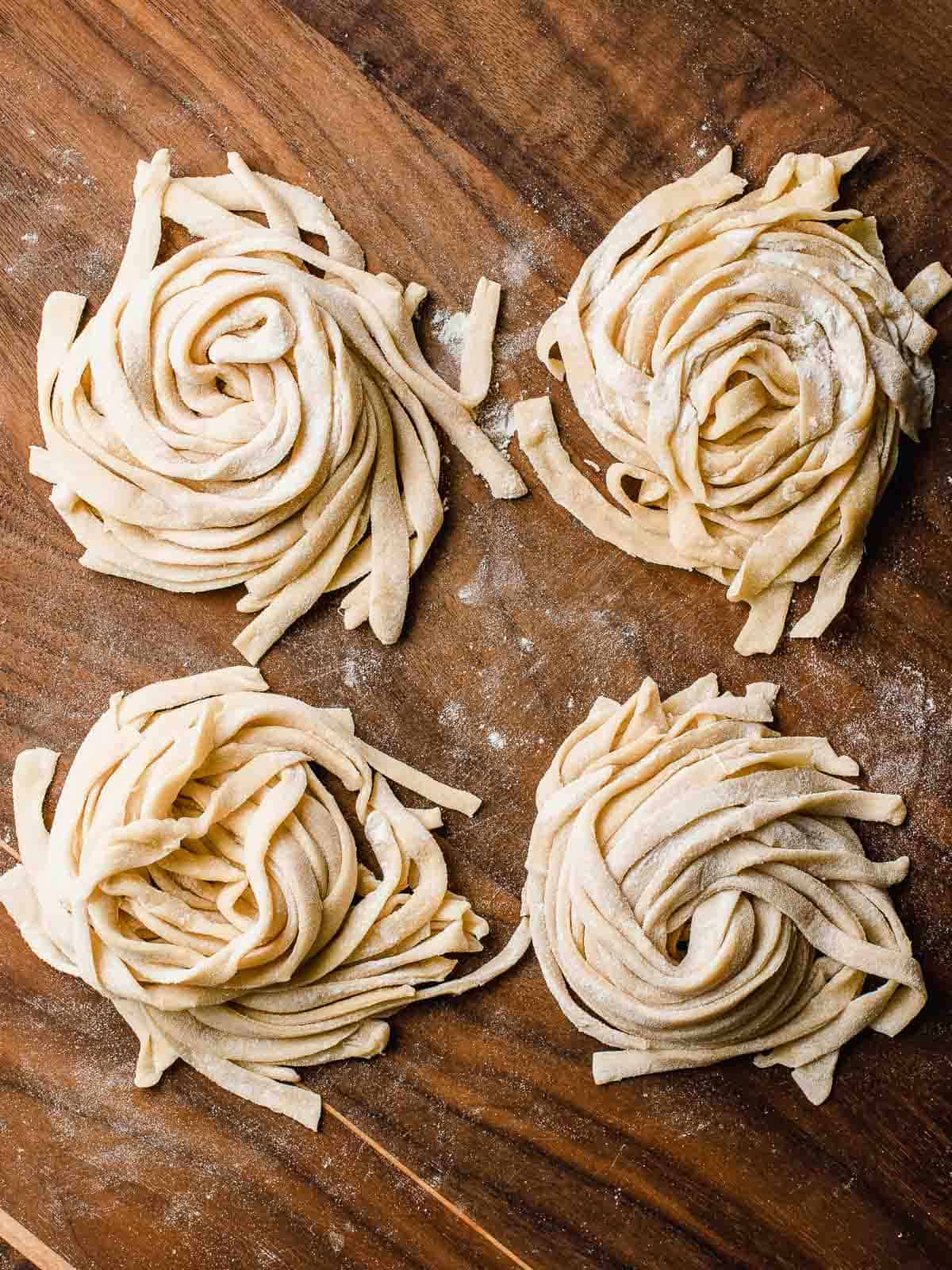
Sourdough pasta has a unique taste and texture that make it even better than store-bought pasta. The fermentation process enhances its delightful tangy flavor, boosting its nutritional value.
Using either an active sourdough starter or sourdough discard, this pasta can be cooked the same day or left to ferment for up to 24 hours for better digestibility.
Whether you like to make pasta dough by hand or prefer using a stand mixer, this easy recipe is perfect for you!
Ingredients needed
- sourdough starter: This pasta recipe is perfect for using leftover sourdough discard, but an active sourdough starter can be used as well.
- flour: Use any flour you prefer including all-purpose flour, whole wheat flour, spelt, kamut, and einkorn, or freshly milled flour.
- eggs: You will need about 150g of whole eggs. This is approximately 2 large eggs or 3 medium-sized eggs.
- salt: A teaspoon of salt enhances the flavor of the pasta but can be omitted if needed.
- olive oil: Any flavorless oil of your choice can be substituted for olive oil.
- water: You'll need a tablespoon or so of water to get the hydration of the dough just right.
Equipment needed
(Amazon affiliate links) - Check out my favorite kitchen essentials.
- mixing bowls
- kitchen scale
- measuring cups
- rolling pin or pasta roller
- bench scraper or sharp knife
- plastic wrap
How to make sourdough pasta from scratch
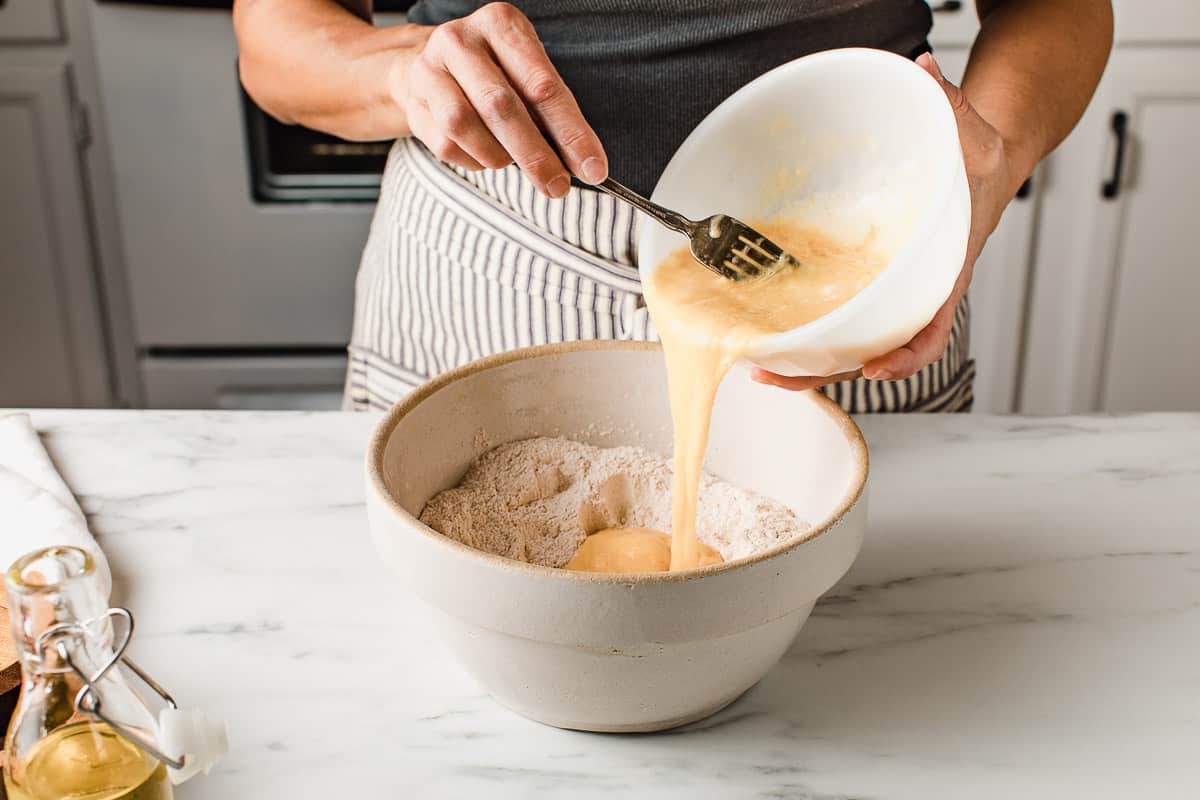
Step 1
To start, place the flour in a medium-sized mixing bowl. In a separate small bowl, combine the sourdough starter, eggs, olive oil, and salt, and then pour this mixture over the flour.
Use a fork to mix the ingredients until they form large clumps.
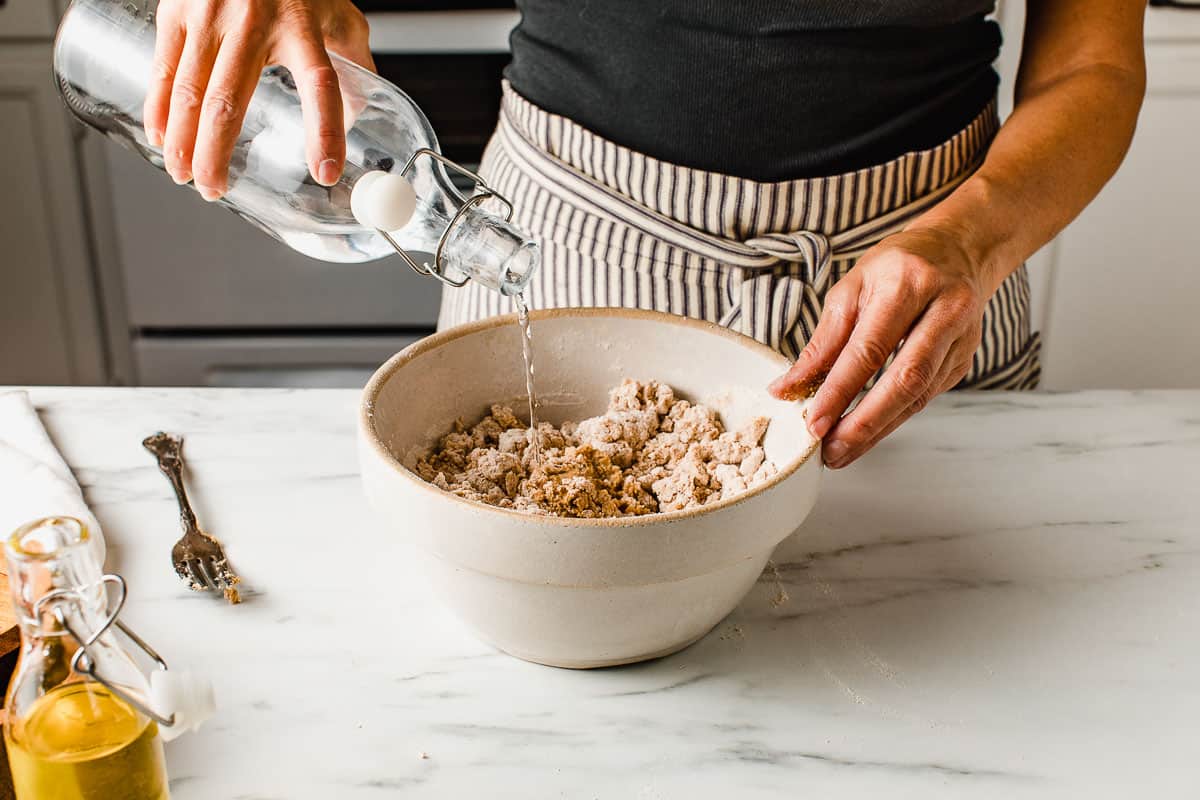
Step 2
Gradually add one teaspoon of water at a time to the dough, using your hands to incorporate it until the dough starts to come together.
Remember to avoid a sticky dough consistency. If you discover that too much water has been added, simply work in a small amount of flour onto the dough.
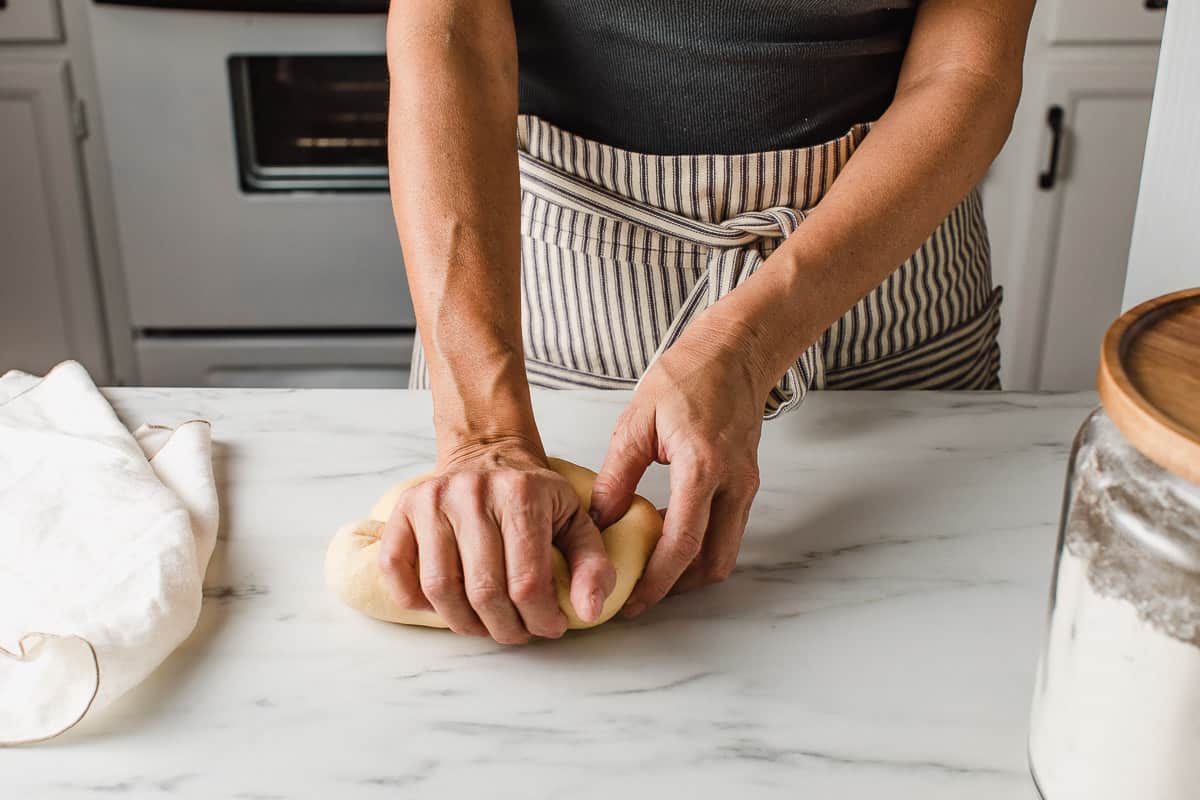
Step 3
Transfer the dough onto a clean work surface and begin kneading it by hand for about 5 to 10 minutes, or until it becomes smooth and elastic.
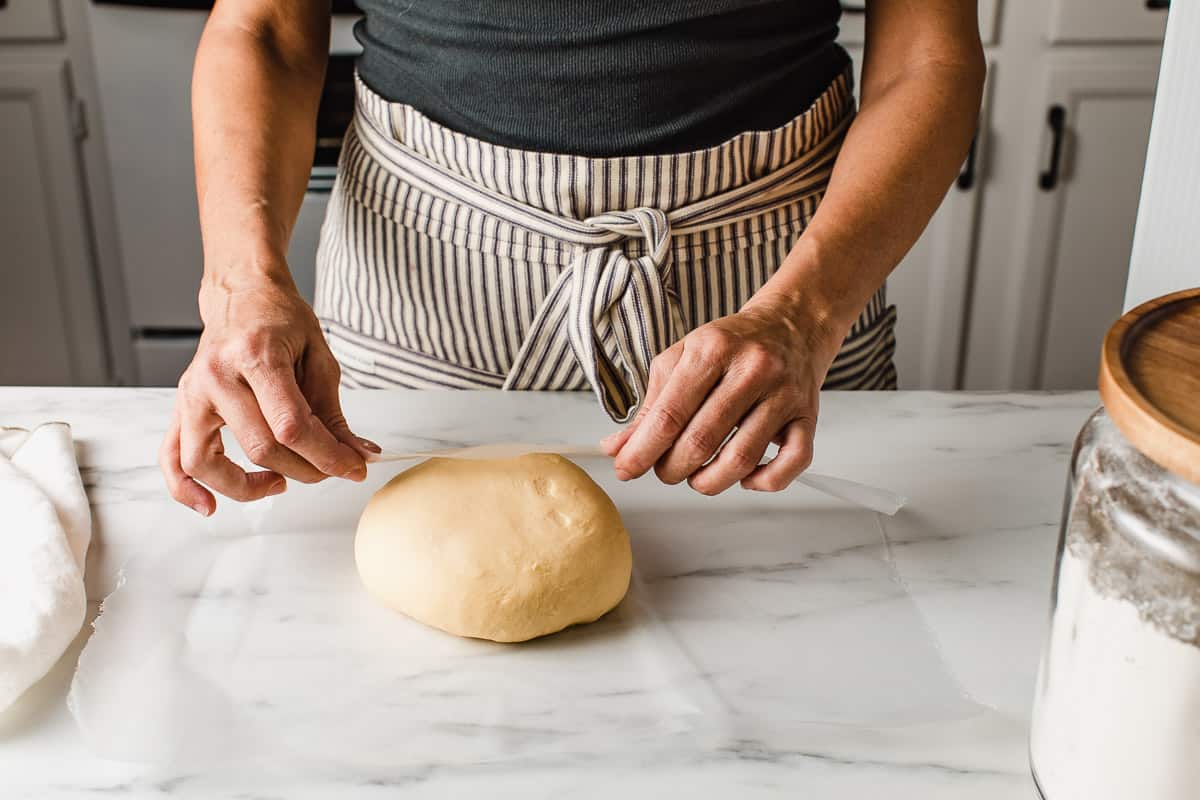
Step 4
Shape the dough into a disc and tightly wrap it with plastic wrap. Allow it to rest on the counter for approximately 1 hour.
Alternatively, if you prefer a more extended fermentation process, you can let it rest at room temperature or in the fridge for up to 24 hours.

Pro Sourdough Tip
Pasta dough made with whole wheat flour will not be as smooth after kneading as dough made with all-purpose flour. The whole wheat pasta dough will relax and be soft and pliable after it's rested for one hour.
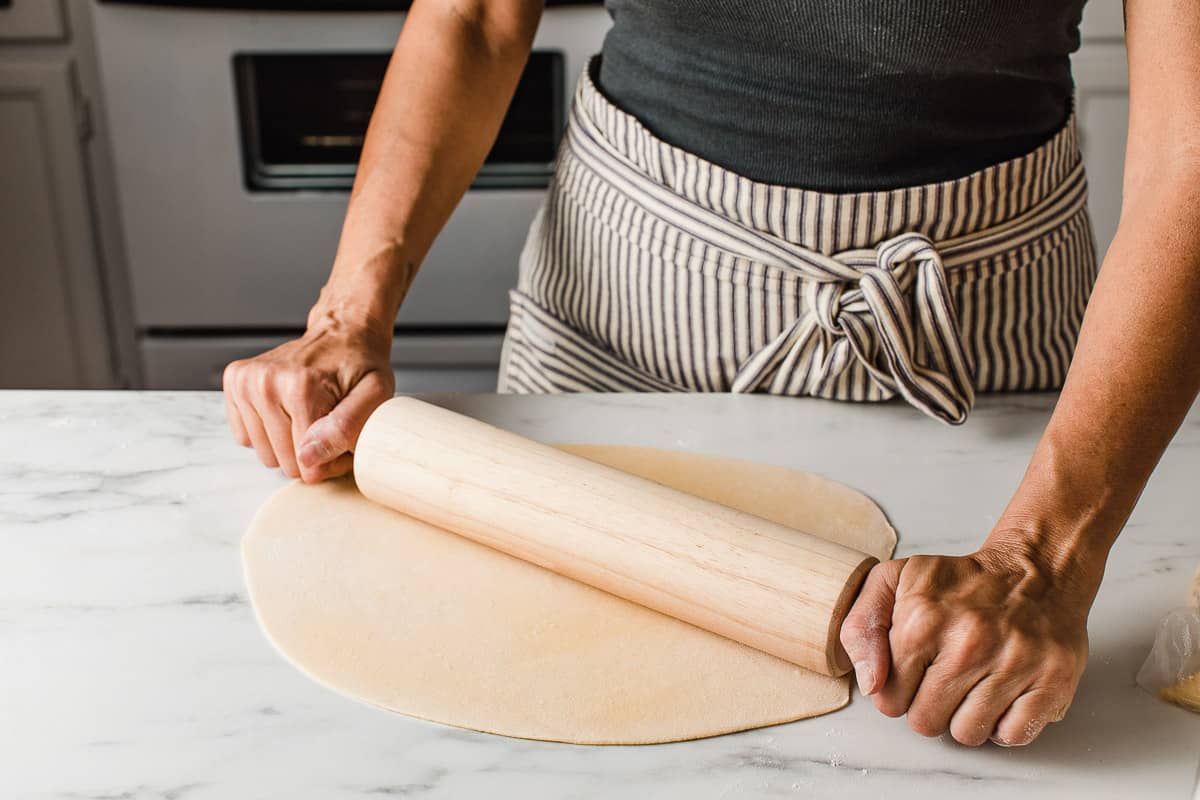
Step 5
Divide the disc into 4 equal portions, wrapping them in plastic to prevent them from drying out.
Take one portion of the dough at a time and roll it out to your desired thickness using a rolling pin or pasta machine.
Remember to generously sprinkle flour on both sides of the dough during the rolling process to prevent sticking.
If you encounter difficulty rolling the pasta dough, allow it to rest for 10 minutes to allow the gluten to relax. During this period, ensure the dough is covered with a tea towel to prevent drying.
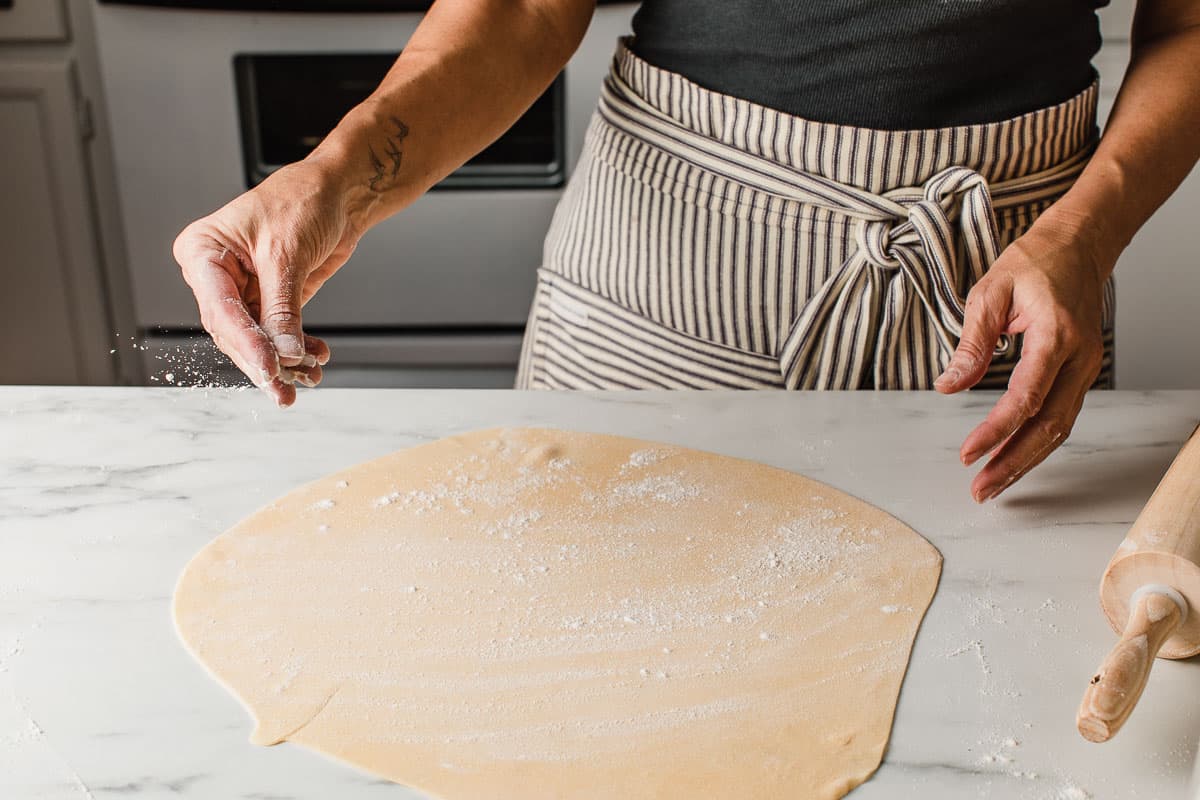
Step 6
Once you are ready to cut the pasta, dust both sides of the dough with flour before rolling it into a log. The flour will make it easier to separate the noodles after they have been cut.
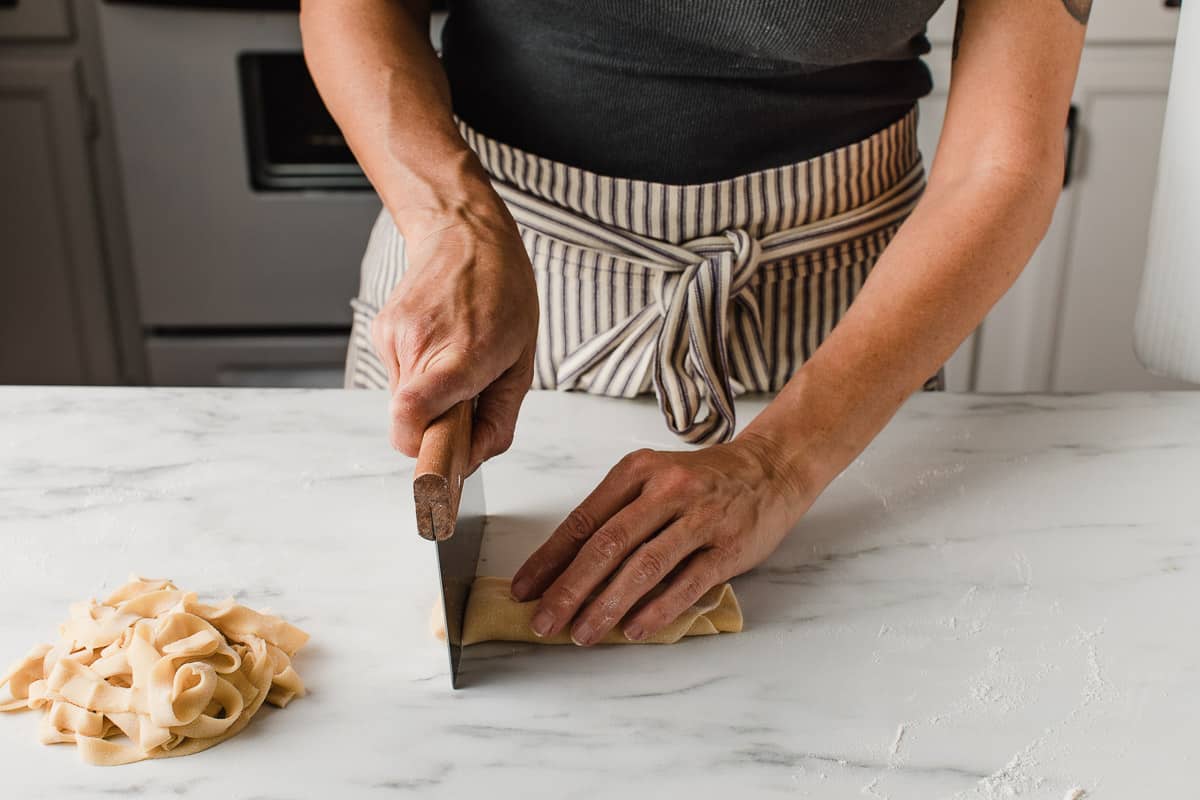
Step 7
Proceed to cut the dough into your desired shape using a sharp knife, pizza cutter, bench scraper, or pasta cutter.
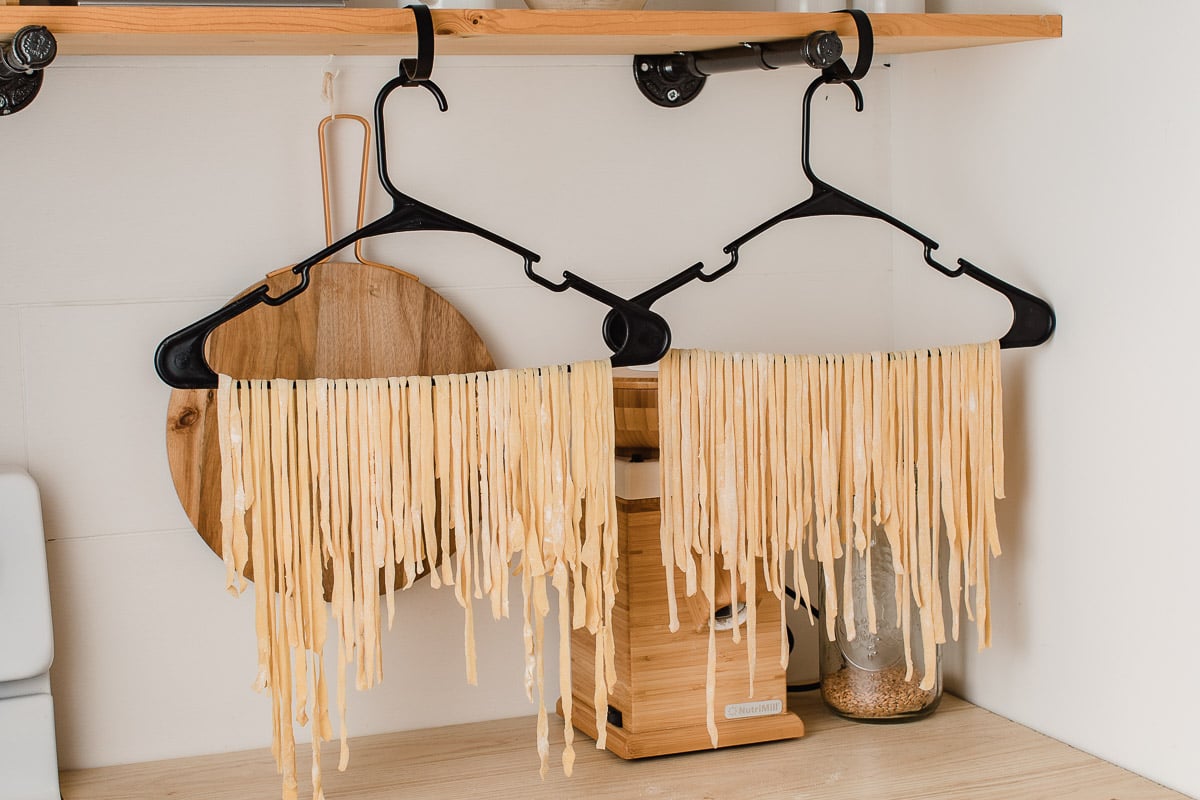
Step 8
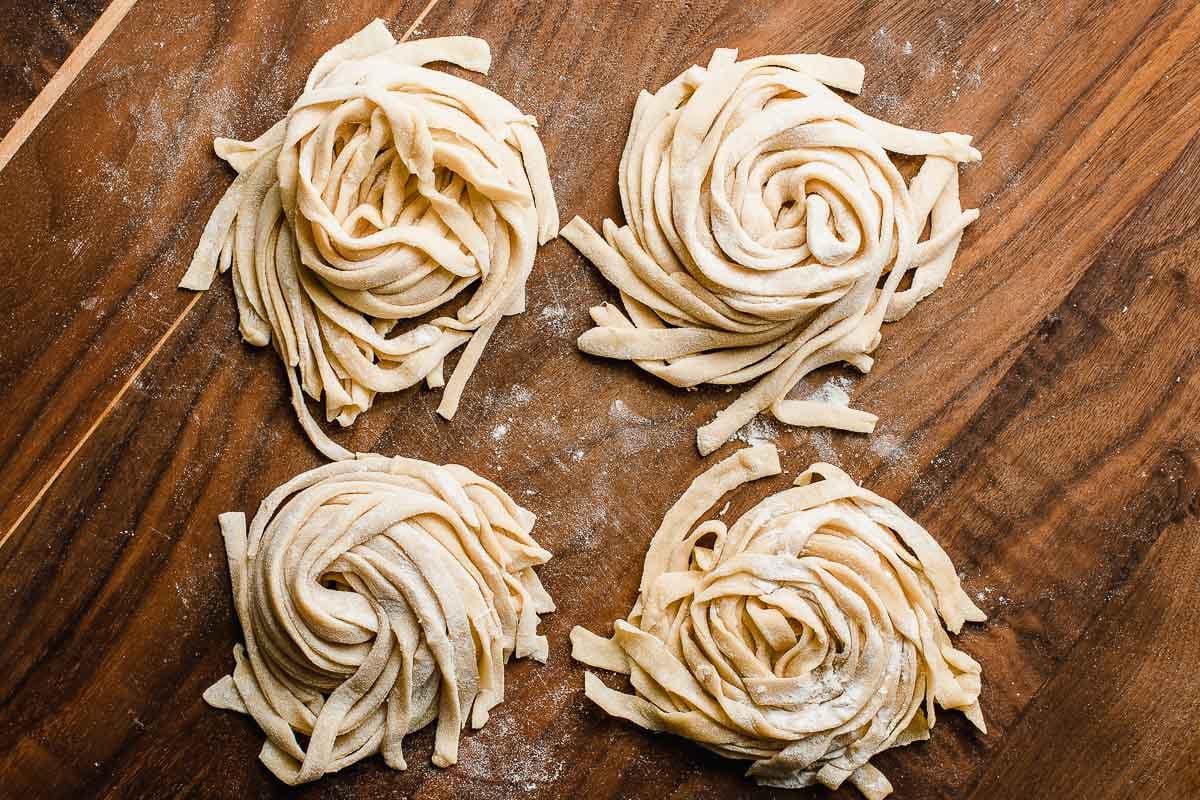
Place the cut pasta on a cutting board or cookie sheet, or hang it on a drying rack or plastic clothes hangers to rest for approximately 30 minutes before boiling it or incorporating it into your chosen recipe.
Stand mixer instructions
Combine all the ingredients in the bowl of a stand mixer fitted with the dough hook attachment. Mix on speed 2 for about 8-10 minutes or until the dough comes together into a smooth ball. Let the dough rest for 30 minutes before proceeding to roll it out.
How thin should I roll the pasta dough?
Here are some general guidelines to assist you in determining the ideal thickness for rolling your pasta dough, tailored to suit the specific dish you intend to create.
- spaghetti - ⅛"
- fettuccine - ⅛"
- pappardelle - 1/16"
- linguine - ⅛"
- lasagna - 1/16"
- ravioli - ⅛” - 1/16"
- tortellini - 1/16"
How to cook fresh sourdough pasta
Cook fresh pasta in a large pot of boiling water seasoned with salt for approximately 4 to 5 minutes, adjusting the cooking time based on the thickness of the pasta.
How to Store Fresh Pasta
Fresh sourdough pasta can be stored in the refrigerator, tightly covered, for a maximum of 2 days.
To freeze fresh noodles, generously dust them with flour and arrange them in a single layer on a baking sheet. Transfer the sheet to the freezer and let the noodles freeze for approximately 1 hour.
Once frozen, transfer the pasta to an airtight container or bag, labeling it with the contents and date. If used within 8 months, frozen pasta will have the best texture and flavor.
When you're ready to use the pasta, add the desired amount directly to boiling water or soup, cooking for about 8-10 minutes.

How to dry fresh pasta
Suspend the pasta on a suitable hanging rod, such as a clothing hanger, and let it dry for a duration of 24 hours.
Remember that pasta's drying time can change based on humidity, temperature, and how thick the noodles are. Well-dried pasta should snap when broken, rather than bend.
more sourdough discard recipes




Subscribe to our newsletter and we'll send you more fresh recipes, valuable troubleshooting advice, useful tips, and other information we believe will be helpful to you!


Sourdough Pasta
INGREDIENTS
- 3 cups (360 g) all-purpose flour or whole wheat flour (or a mix of the two)
- ⅓ cup (100 g) sourdough starter discard
- 2 large (150 g) eggs (or 3 medium eggs)
- 1 tablespoon (15 g) extra virgin olive oil
- 1 teaspoon (5 g) sea salt
- 1-2 tablespoons (20 g) water
INSTRUCTIONS
To make fresh sourdough pasta
- Begin by placing the flour in a medium-sized mixing bowl. In a separate small bowl, combine the sourdough starter, eggs, olive oil, and salt, and then pour this mixture over the flour. Use a fork to blend the ingredients until they form large clumps. Gradually add one teaspoon of water at a time to the dough, using your hands to incorporate it until the dough begins to come together. Take note that the dough should not be sticky. If you find that too much water has been added, lightly dust the dough with a small amount of flour.
- Turn the dough onto a clean work surface and proceed to knead it by hand for approximately 5 to 10 minutes until it reaches a smooth and elastic texture. Shape the dough into a disc and tightly wrap it with plastic wrap. Let it rest on the counter for a duration of 1 hour. (Alternatively, if you prefer a longer fermentation process, you may allow it to rest for up to 24 hours at room temperature or in the fridge. You may wish to place the dough into a closed container versus plastic wrap as the dough may expand as it ferments.)
- Divide the disc into 4 equal portions while ensuring they remain wrapped in plastic to avoid drying out. Take one portion of dough at a time and use a rolling pin or a pasta machine to roll out the dough to your preferred thickness. Remember to generously sprinkle flour on both sides of the dough throughout the rolling process to prevent it from sticking. (Refer to the notes below for recommended thickness guidelines.)
- After rolling out the pasta sheets, proceed to cut them into your desired shape using a sharp knife, pizza cutter, bench scraper, or pasta cutter. Place the cut pasta on a cutting board or cookie sheet, or hang it on a drying rack to rest for approximately 30 minutes before boiling it or incorporating it into your chosen recipe.
Stand mixer instructions
- Combine all the ingredients in the bowl of a stand mixer fitted with the dough hook attachment. Mix on speed 2 for 8-10 minutes or until the dough comes together into a smooth ball. Let the dough rest for 30 minutes before proceeding to roll it out.
To cook fresh sourdough pasta
- Cook fresh pasta in boiling water seasoned with salt for approximately 4 to 5 minutes, adjusting the cooking time based on the thickness of the pasta.
To store fresh sourdough pasta
- Fresh pasta can be stored in the refrigerator, tightly covered, for a maximum of 2 days.
To freeze fresh sourdough pasta
- To freeze fresh noodles, generously dust them with flour and arrange them in a single layer on a baking sheet. Transfer the sheet to the freezer and let the noodles freeze for approximately 1 hour. Once frozen, transfer the noodles into an airtight container or bag, making sure to label it properly. When you're ready to use them, simply retrieve the desired amount and add them directly to boiling water or soup, cooking for about 8-10 minutes.
To dry fresh sourdough pasta
- Suspend the pasta on a suitable hanging rod, such as a clothing hanger, and let it hang for a duration of 24 hours. Please consider that the drying time may vary due to factors such as humidity, temperature, and the thickness of the noodles. Properly dried pasta should exhibit a snap when fully dried, as opposed to bending. Store in an air-tight container for up to 2 months. I use tall glass jars with tight lids that can be vacuum-sealed. Dried pasta needs more cooking time than fresh pasta. Allow for 8-10 minutes depending on thickness.
NOTES
- spaghetti - ⅛-inch thick
- fettuccine - ⅛-inch thick
- pappardelle - 1/16" thick
- linguine - ⅛-inch thick
- lasagna - 1/16" thick
- ravioli - ⅛” to 1/16" thick
- tortellini - 1/16" thick
This made fantastic pasta, so easy to work with. I used 2/3 whole wheat and 1/3 AP flour. Had to use more water than specified, but otherwise followed as written. Made half into linguine and the rest into at angel hair.
This is my new favorite pasta! My husband and I loved it! Great taste and texture! And it held up really well the next day!
This was the best past I have ever made. I used a heritage whole wheat 00 pasta flour. I don’t think I can go back to regular pasta again. Thank you for this recipe.
So easy, my kids help me make this and they love eating it too!
can I use king arthur 00 flour or is it best to use AP?
Yes, you can.
I am gluten intolerant and have been re-exploring foods by long fermentation of sourdough (I can't eat any gluten regularly, can eat ~1 slice of 3-4 day bulk fridge fermented sourdough bread and as much as I want of 6-7 day bread without digestive issues).
Instead of 100g discard, I used 42 g active doubled starter, and I long fermented this pasta dough in bulk after mixing it together for 8 days in the fridge, then rolled it out and cut it, and IT WAS AMAZING! Made it with sage butter, lemon zest, and cheese. Thank you for the recipe!!! This is my first real pasta in 4 years!
So happy to read your comment! Am wanting to try sourdough pasta for a friend who is gluten intolerant and is so sad about her current pasta options. Can’t wait to try your extended ferment suggestion!
This was so easy to make in the stand mixer and the results were incredible. Fresh pasta may now become a regular occurance in my household.
Obsessed. My family loved this. My noodles turned out chewy and so divine (I put them in the chicken noodle soup recipe also from little spoon farm. It was so divine on a rainy night. An excellent way to use up a good chunk of sourdough discard, I will be making this again and again.