Cinnamon Raisin Sourdough Bread
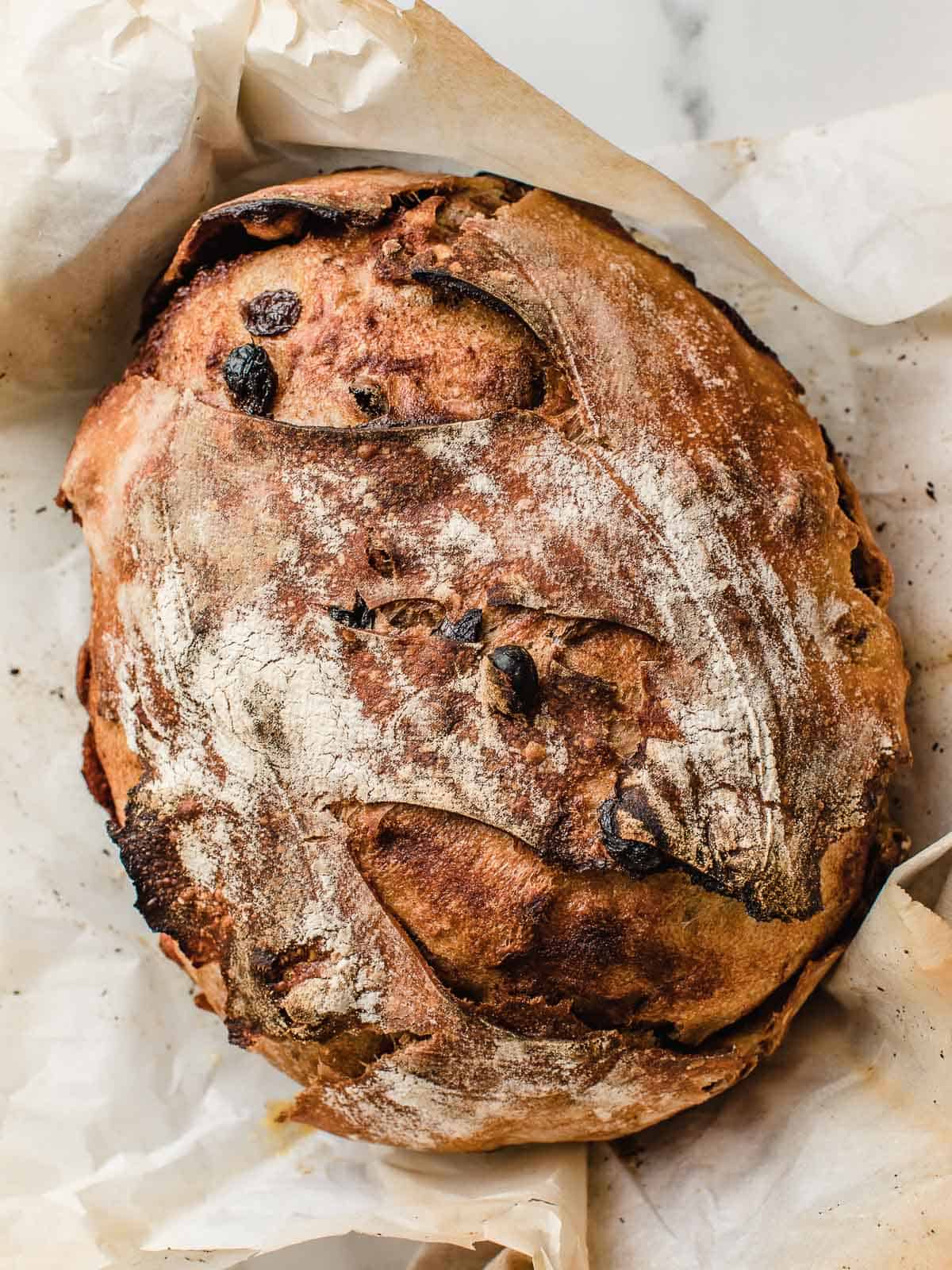
Learn how to make cinnamon raisin sourdough bread the easy way, without a stand mixer. Sweetened swirls of cinnamon and brown sugar combined with plump raisins and walnuts are irresistible!
Bake the same day or allow the dough to ferment in the fridge overnight for even more flavor!
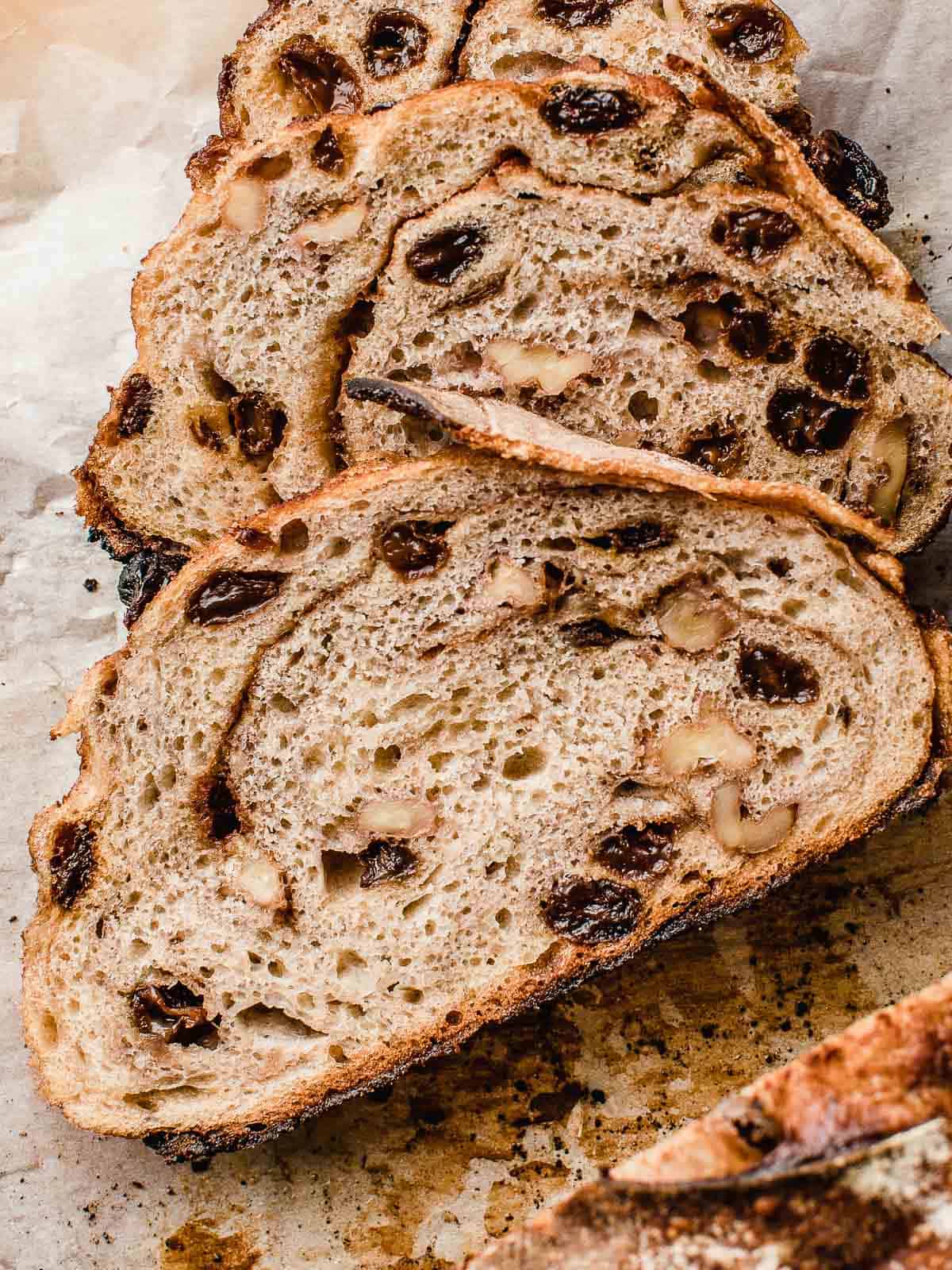
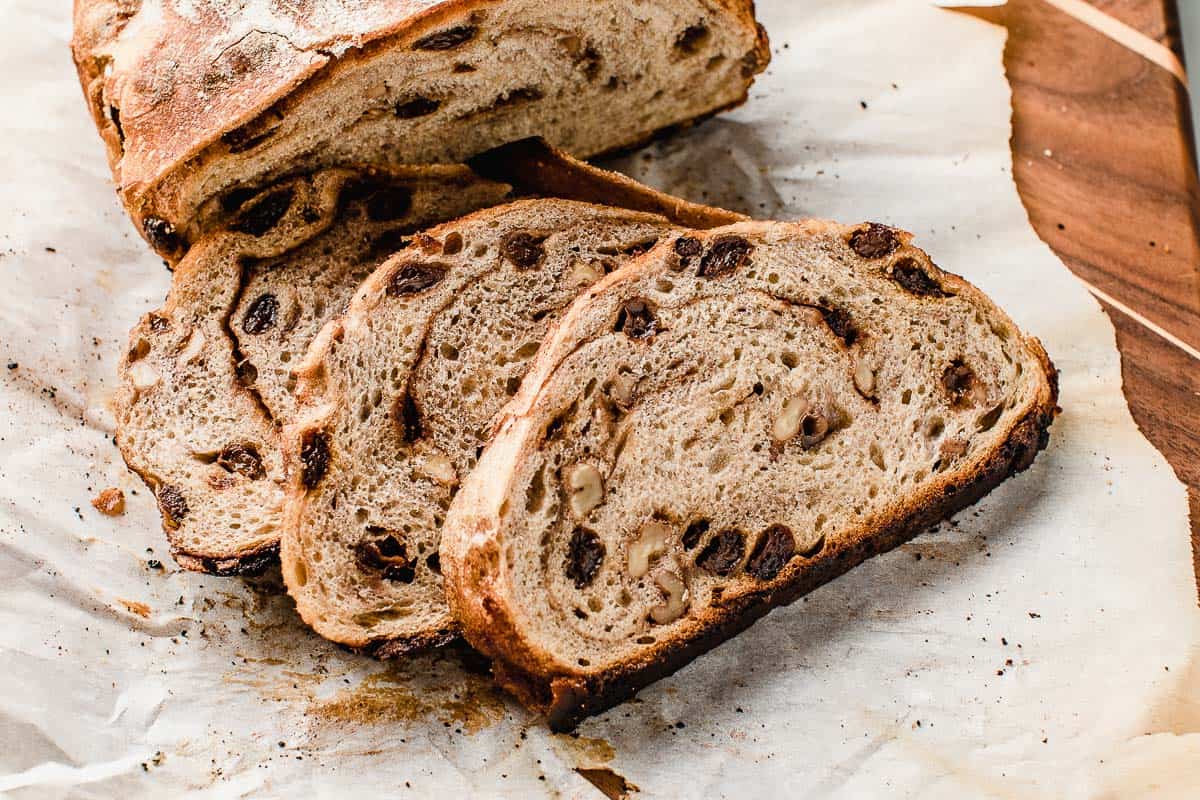
This sourdough cinnamon raisin bread is soft, moist, and full of flavor and textures.
Toast thick slices and slather them in butter or use them to make decadent sourdough french toast instead of traditional sourdough bread!
Ingredients needed
- active sourdough starter
- organic bread flour
- organic whole wheat flour
- organic rye flour - if you don't have rye flour sub it with bread flour
- water
- salt
- raisins
- walnuts
- butter
- brown sugar
- cinnamon and nutmeg
- vanilla extract
Sample baking schedule
- 7:00 PM: Feed your sourdough starter.
- 7:00 AM: Mix the dough, cover, and let rest for one hour. Soak raisins and walnuts in warm water.
- 8:00 AM: Perform one set of stretches and folds. Cover and let the dough rest for 30 minutes.
- 8:30 AM: Drain the raisins and walnuts and work them into the dough. Cover the dough and let rest at room temperature until it has risen by 30-50%. Take butter out of the fridge to soften at room temperature.
- 1:00 PM: Make the cinnamon butter spread. Spread onto dough, shape, and let rise in the banneton. (Let rise at room temperature and bake the same day OR cold ferment in the fridge and bake the next day.)
- 7:00 AM: Bake.
This recipe was tested in a kitchen with an ambient temperature of 70°F (21°C). Cooler kitchens will need more time and warmer kitchens will need less time.
How to make cinnamon raisin sourdough bread
Step 1: Feed your starter
12 hours before you plan to mix the dough, add the ingredients to make ½ cup (100 g) of active sourdough starter to a clean jar. Stir until combined, loosely cover the jar and let the starter rise at room temperature.
Step 2: Mix the dough
In a large mixing bowl stir together 100 grams of active sourdough starter, 375 grams of water, and 10 grams of salt. (This step will ensure the starter is evenly distributed throughout the dough.)
Next add 50 grams of whole wheat flour, 50 grams of rye flour, and 400 grams of bread flour to the bowl.
Use your hands to combine the ingredients until there are no dry bits and the dough looks like a shaggy mass.
Cover the bowl and let the dough rest on the counter for one hour.
Step 3: Prepare the walnuts and raisins
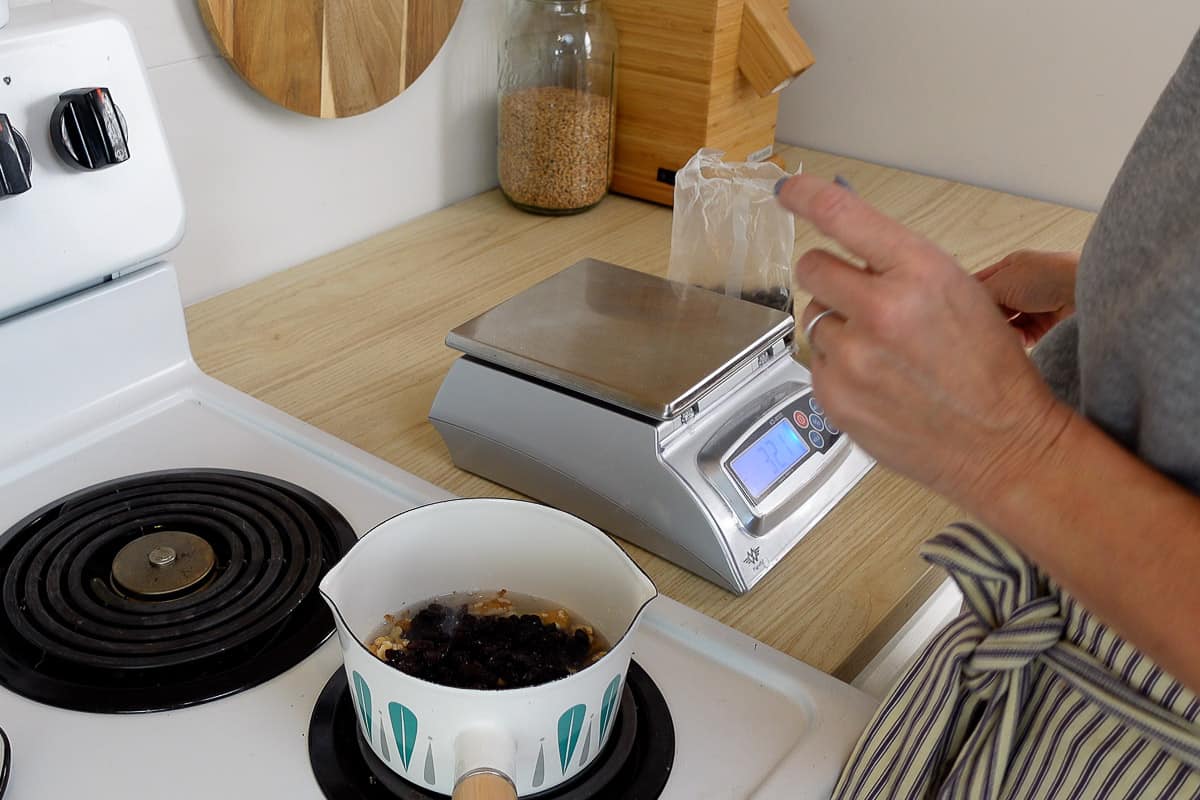
While the dough is resting, prepare the raisins and walnuts. Bring a small pot of water to a simmer and turn the burner off.
Add ½ cup of walnuts and ½ cup of raisins to the pot, making sure they are covered by the hot water.
Allow them to sit in the hot water until it's time to mix them into the dough.
Step 4: Stretch and fold
Perform one set of stretches and folds to the dough. To perform a set, while the dough is still in the bowl, pick up one side with a wet hand.
Pull it up and over itself. Turn the bowl and repeat this action on 4 sides of the dough until the bowl has come full circle.
Cover the bowl and let the dough rest for 30 minutes.
Step 5: Add walnuts and raisins to the dough
Drain the water from the raisins and walnuts and then add them to the bowl of dough.
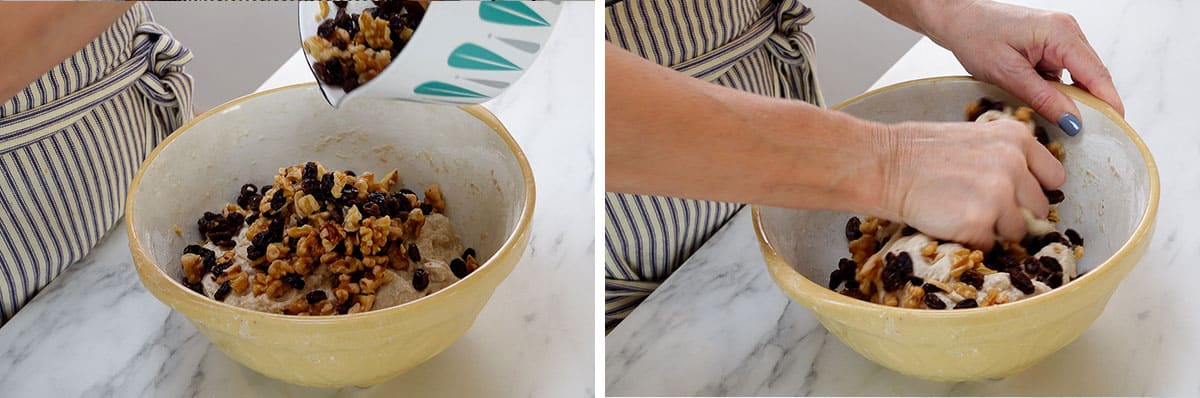
Use your hands to mix them into the dough until they are evenly incorporated.
Cover the bowl and let it rise 30-50% at room temperature, for 3-5 hours depending on the temperature of your kitchen. This is the bulk fermentation stage.
Step 6: Prepare the butter spread
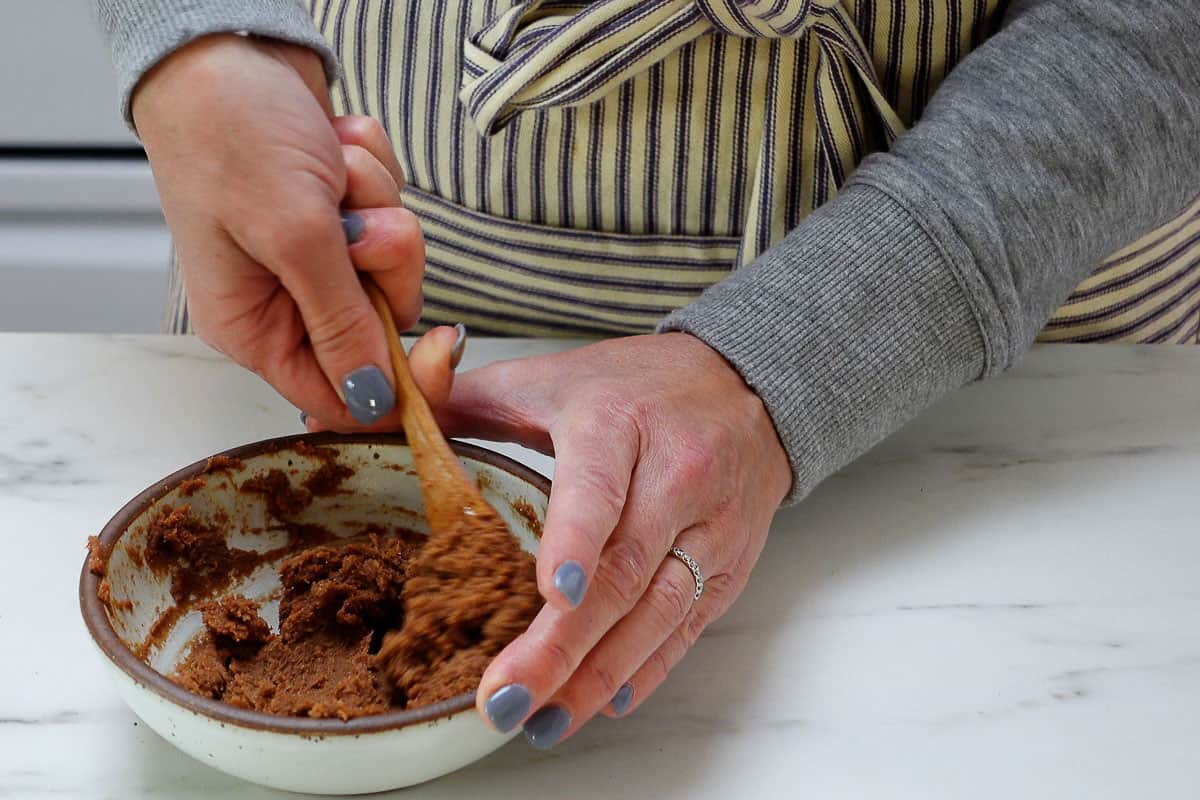
Right before the dough is ready to shape, mix 4 tablespoons of softened butter with ¼ cup of brown sugar, 2 teaspoons cinnamon, ½ teaspoon vanilla extract, and a pinch of nutmeg. Set aside.
Step 7: Spread the butter mixture on the dough
Turn the dough out onto a floured work surface. Use your hands to gently press the dough out into a 12 x 10"rectangle. Flour your hands to prevent the dough from sticking. (There's no need to use a rolling pin.)
Spread the butter mixture over the dough being careful to keep it 1-1 ½ inches from the edges.
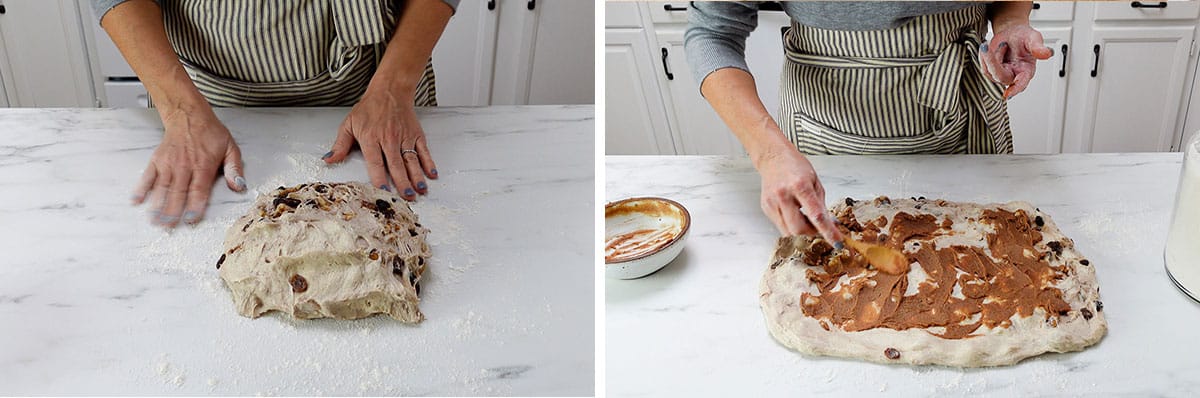
Step 8: Fold the dough
Pick the right side of the dough up and fold it towards the center and repeat with the left side. (photos 1-2)
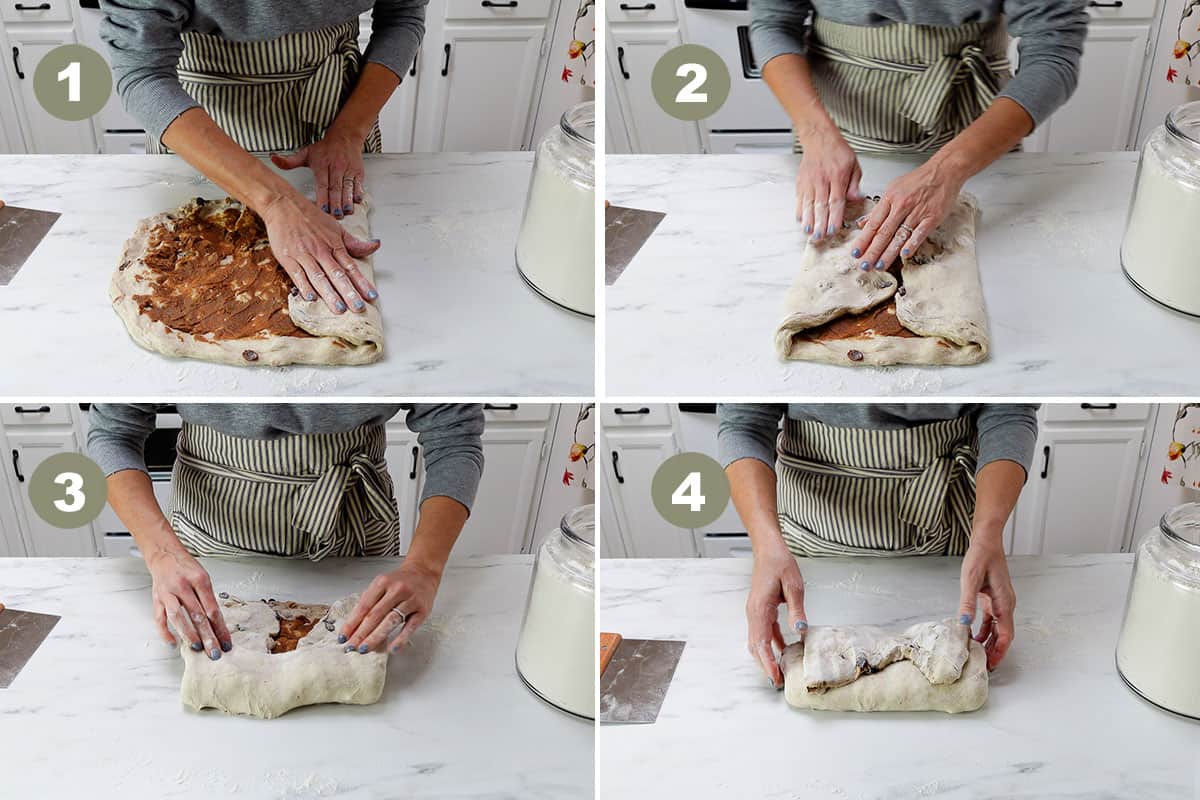
Pick the top side up and fold it towards the center and repeat with the bottom side. (photos 3-4)
Fold the dough in half and then flip it over so that the seam-side is facing down. (photos 5-6)
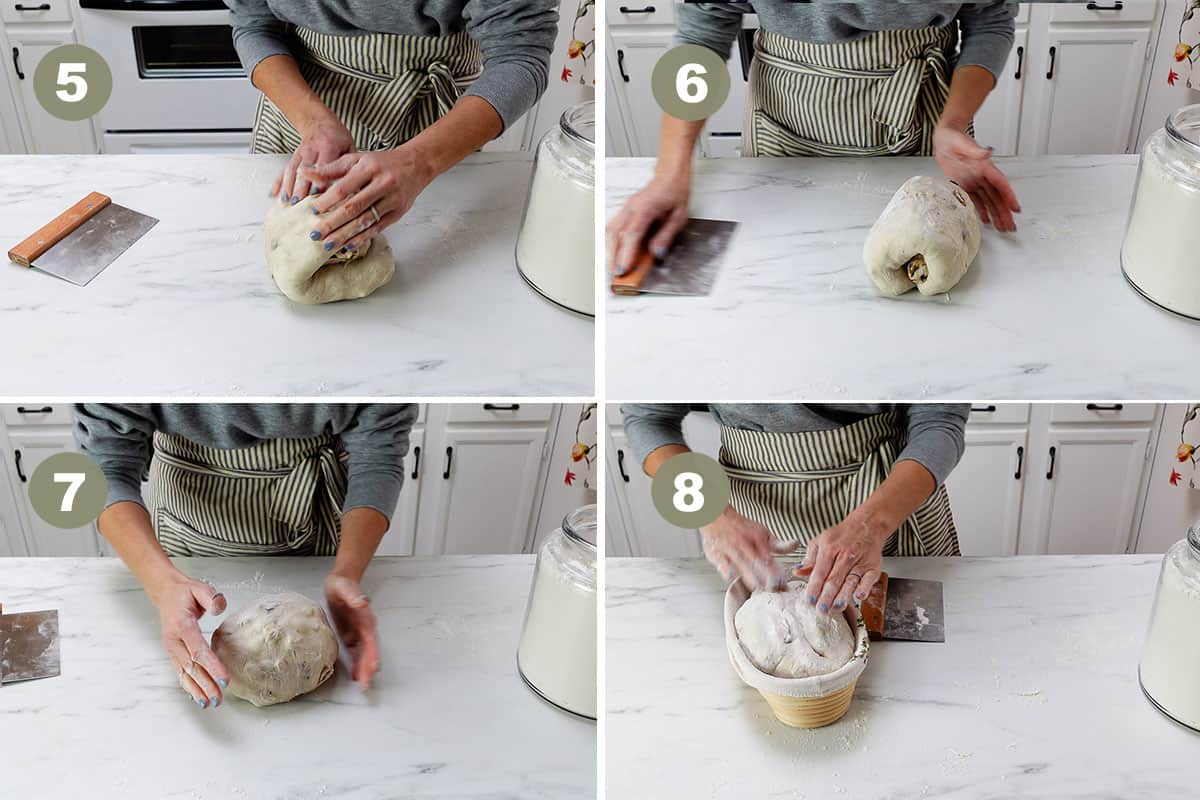
Pull the dough towards you while turning it to create a taut skin on the outside. Dust flour on the outside of the dough and flip it into a lined banneton that has been floured. (photos 7-8)
Cover the banneton with plastic wrap or a damp tea towel.
Step 9: Rise
If you'd like to bake the same day, allow the dough to continue to rise at room temperature until it has reached the top of the banneton.
For a long ferment, let the dough sit on the counter for 30 minutes before placing it in the fridge overnight.
Step 10: Bake
Preheat your oven to 450°F (232°C) with a dutch oven inside. Once the oven is hot remove the dutch oven and set it on top of the stove.
Turn the dough out onto a piece of parchment paper. Use a razor to make 3 very shallow slits across the top of the dough.
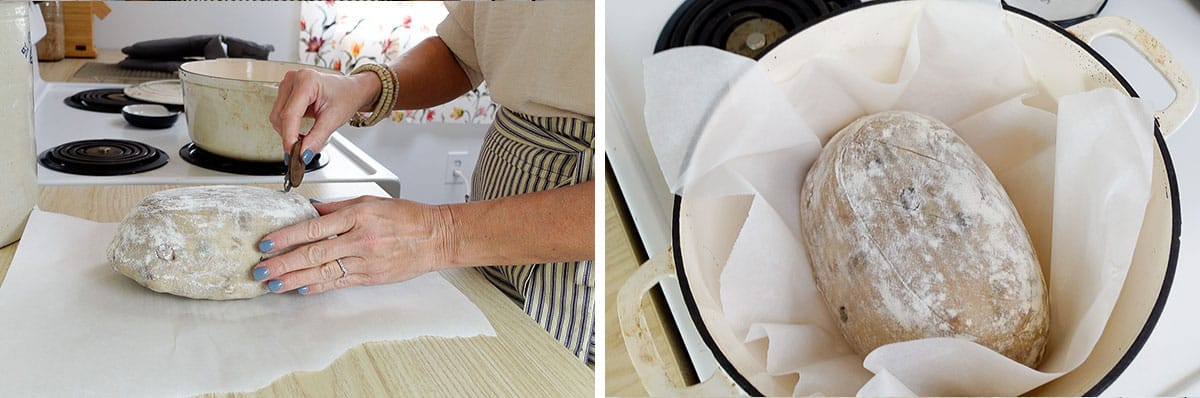
Using the parchment paper as a sling, lift the dough up and into the dutch oven. Bake covered for 30 minutes and uncovered for 20 minutes.
Step 10: Cool
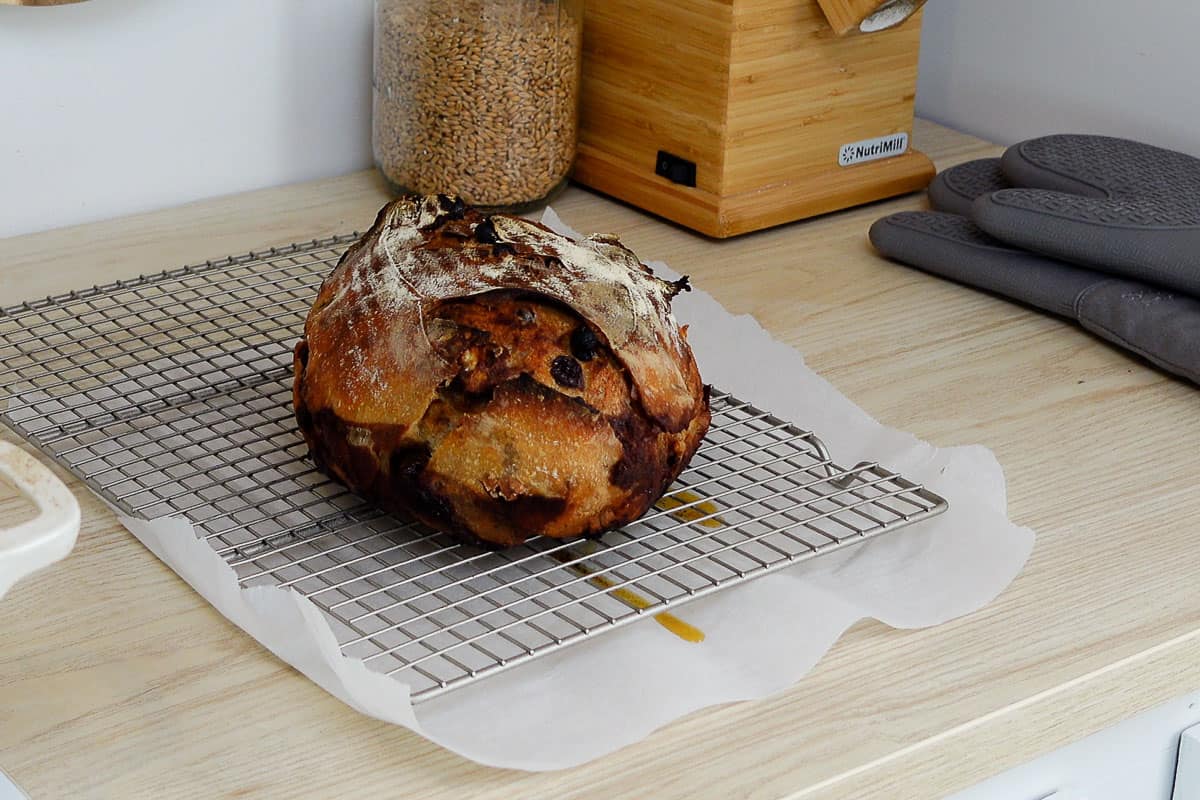
Place a cooling rack onto a piece of parchment paper or baking sheet. (This will catch any melted butter that may drip from the baked loaf.)
Transfer the loaf to the wire rack and allow it to cool completely.
Tips for making cinnamon raisin sourdough bread
As tempting as it might be, don't cut into the bread before it cools. (Trust me, I know it will be hard. Your kitchen is going to smell divine!)
Because there is essentially melted butter on the inside, if you cut it while it's still hot, you'll end up with a gummy mess!
The butter and sugar in the dough will also create a darker crust on the bottom of the bread. I've not found a way to get around this. (Please share tips in the comment section if you have any!)
This cinnamon raisin sourdough bread recipe can be baked in a loaf pan lined with parchment paper. Place it into the loaf pan seam-side down after you have shaped it. Bake at 400°F (204°C) for 35-40 minutes.
How to store and freeze
Store the bread in a plastic bag or bread bag at room temperature for up to 2 days.
I love to store slices of sourdough bread in the freezer. Place small sheets of parchment paper between each slice so that they do not freeze together. Store in a freezer-safe bag in the freezer for up to a month.
When you are ready to eat, simply take whatever portion you need out of the freezer and allow it to thaw to room temperature.
More easy sourdough recipes to try: beginners sourdough bread / sourdough cinnamon rolls / jalapeno cheddar sourdough bread / olive and walnut sourdough bread
Subscribe to our newsletter and we'll send you more fresh recipes, valuable troubleshooting advice, useful tips, and other information we believe will be helpful to you!


Cinnamon Raisin Sourdough Bread
INGREDIENTS
Ingredients to make ½ cup (100 g) of active sourdough starter
- 1 tablespoon (15 g) sourdough starter
- ⅓ cup + 1 tablespoon (50 g) all-purpose flour
- 3 ½ tablespoons (50 g) water
Dough Ingredients
- ½ cup (100 g) active sourdough starter
- 1 ½ cups + 1 tablespoon (375 g) water
- 2 teaspoons (10 g) salt
- 3 ⅓ cups (400 g) bread flour
- ⅓ cup + 1 tablespoon (50 g) whole wheat flour
- ⅓ cup + 1 tablespoon (50 g) rye flour
Add-ins
- ½ cup raisins
- ½ cup walnuts
Cinnamon Sugar Filling
- 4 tablespoons butter (room temperature)
- ¼ cup brown sugar
- 2 teaspoons cinnamon
- ½ teaspoon vanilla extract
- pinch of nutmeg
INSTRUCTIONS
Feed your starter
- 12 hours before you plan to mix the dough, add the ingredients to make ½ cup (100 g) of active sourdough starter to a clean jar. Stir until combined, loosely cover the jar and let the starter rise at room temperature. (The ingredients will create a total of 115 g active starter but, because some of it will stick to the sides of the jar during the transfer, we are making a little more than needed.) The sourdough starter is ready to use when it has doubled in size and there are plenty of bubbles on the surface and sides of the jar.
Make the Dough
- Mix the dough: In a large mixing bowl stir together 100 grams of active sourdough starter, 375 grams of water, and 10 grams of salt. (This step will ensure the starter is evenly distributed throughout the dough.) Next add 50 grams of whole wheat flour, 50 grams of rye flour, and 400 grams of bread flour to the bowl. Use your hands to combine the ingredients until there are no dry bits and the dough looks like a shaggy mass. Cover the bowl and let the dough rest on the counter for 1 hour.
- Prepare walnuts and raisins: While the dough is resting, prepare the raisins and walnuts. Bring a small pot of water to a simmer and turn the burner off. Add ½ cup of walnuts and ½ cup of raisins to the pot, making sure they are covered by the hot water. Allow them to sit in the hot water until it's time to mix them into the dough.
- Stretch and fold: Perform one set of stretches and folds to the dough. To perform a set, while the dough is still in the bowl, pick up one side with a wet hand. Pull it up and over itself. Turn the bowl and repeat this action on 4 sides of the dough until the bowl has come full circle. Cover the bowl and let the dough rest for 30 minutes.
- Add walnuts and raisins to the dough: Drain the water from the raisins and walnuts and then add them to the bowl of dough. Use your hands to mix them into the dough until they are evenly incorporated. Cover the bowl and let it rise 30-50% at room temperature, 3-5 hours depending on the temperature of your kitchen.
- Prepare butter spread: Right before the dough is ready to shape, mix 4 tablespoons of softened butter with ¼ cup of brown sugar, 2 teaspoons cinnamon, ½ teaspoon vanilla extract, and a pinch of nutmeg. Set aside.
- Spread butter mixture on the dough: Turn the dough out onto a floured work surface. Use your hands to press the dough out into a 12 x 10"rectangle. Flour your hands to prevent the dough from sticking. Spread the butter mixture over the dough being careful to keep it 1-1 ½ inches from the edges.
- Shape the dough: Pick the right side of the dough up and fold it towards the center and repeat with the left side. Pick the top side up and fold it towards the center and repeat with the bottom side. Fold the dough in half and then flip it over so that the seam-side is facing down. Pull the dough towards you while turning it to create a taut skin on the outside. Dust flour on the outside of the dough and flip it into a lined banneton that has been floured. Cover the banneton with plastic wrap. (I use a reusable shower cap.)
- Second rise: If you'd like to bake the same day, allow the dough to continue to rise at room temperature until it has reached the top of the banneton. For a long ferment, let the dough sit on the counter for 30 minutes before placing it in the fridge overnight.
- Bake: Preheat your oven to 450°F (232°C) with a dutch oven inside. Once the oven is hot remove the dutch oven and set it on top of the stove. Turn the dough out onto a piece of parchment paper. Use a razor to make 3 very shallow slits across the top of the dough. Using the parchment paper as a sling, lift the dough up and into the dutch oven. Bake covered for 30 minutes and uncovered for 20 minutes.
- Cool: Place a cooling rack onto a piece of parchment paper or baking sheet. (This will catch any melted butter that may drip from the baked loaf.) Transfer the loaf to the cooling rack and allow it to cool completely.

To combat burning the bottom, I put a cookie sheet on a lower rack and covered the Dutch Oven floor with old fashioned oats...a solid covering.....and cooked the bread on a silicone sling. Absolutely no burning at all.
Also, the oven read 450, and an internal, added thermostat, registered 450' too. After putting the bread in and during the cooking process the thermostat never registered above 435'. I also left it covered for the 50 minutes to an internal temp of 205. It was perfectly brown.
Thanks for sharing! As far as the brown bottom, try putting a pan of water on the rack below your Dutch oven. Works like a charm.
my brown sugar was solid so scraped what I could in amd then added some honey and OMG this is the best bread I've ever made! Amazing, thank you!!
Beautiful tasty recipe!
Made this for my son’s first communion, and currently it’s in the over to bring for Easter. It was a hit then and am so excited to share it today! I used coconut sugar the first time and came out amazing.
Thank you for this!
This recipe is a favorite in our house! The smell of it baking in the oven is amazing. I’ve made it several times with currants and pecans instead of walnuts. I’ve made a few changes, not soaking the pecans, giving the currants plenty of time to drain, and adjusting the water down to lower the hydration of the dough to 70%. But I’ve found the dough to be a bit tricky, sticky and soft every time I make it. Shaping it has to be done quickly and gently placed into a loaf pan. My starter is strong, and I give it plenty of time to do its work, and the dough rises nicely, so I’m perplexed.
Is there a reason to only do one set of stretch and folds? If I do more would it help with the consistency of the dough when it comes to shaping? I’m still learning and trying to improve.
Hi, I'd love to try out this recipe for Easter. Can I use honey or maple syrup instead of brown sugar?
Yes
Thank you for answering my question.
I read some article 'honey is quite sticky and heavy, so to reduce liquid in the recipe to balance the dense consistency' So I used 2/3 portion of brown sugar, which is 30g.
The result is just lovely!!
This is my new favorite breakfast!
I’m newish to the sourdough world and the Little Spoon Farm recipes have been great! I’m actually make the jalapeno cheddar right now! Can’t wait to try it!
Hi I tried your jalapeno cheddar recipe and it was amazing. My dough felt so smooth and glossy and the crumb came out beautifully. Just curious about the thought process behind why that recipe had the fermentolyse step and this one doesn’t. Can you add the fermentolyse step to this recipe?
Hi Tian, the recipe for the olive walnut bread uses my country loaf recipe as the base. That's the way I've always made the country loaf so I kept it in the olive and walnut bread recipe. With my newer recipes, I've tried to reduce steps when I can to make it easier. With this recipe you can definitely do an autolyse but remember to factor that time into the total time that is called for rising to prevent the dough from over-proofing.
hello, I do not use a banner on. can you tell me approximately how long you let it rise at room temp on the second rise?
This was my first ever sourdough bake and I’ve made it multiple times since (along with many other Little Spoon recipes)! The instructions are clear and easy to follow, and can be adapted. I prefer pecans so I always use those instead of walnuts. I sometimes soak the raisins in rum. One time I used only bread flour for someone who isn’t a fan of wheat/rye. Today I did the overnight proof in the fridge for the first time. Can’t wait to see how it turns out!
Amazing results used sour cherry and dark chocolate without the butter and cinnamon spread. Watching the sugar count as hubby is diabetic. Cold fermentation overnight baked after an hour on the counter. Love love love your recipes.